
7 Best ChatGPT Alternatives in 2026 (Free & Paid AI Tools Compared)
Discover the best ChatGPT alternatives in 2026. Compare features, pricing, strengths, and use cases to find the right AI chatbot for writing, research, coding, and productivity.
When ChatGPT was launched, it changed what people thought AI could do. Suddenly, anyone could have a conversation with a machine that actually made sense. It helped humans in a number of ways. It wrote emails, explained concepts in simpler terms, and debugged codes. For a while, it felt like it was the only tool that you’d need. However, after spending enough time with it, problems start to show.
It hallucinates facts. It can’t browse the web on the free plan. It struggles with image generation, real-time data, and long-form accuracy. And if you’re a writer, a developer, or someone who needs something more specialized; you’ve probably already started looking around for ChatGPT Alternatives.
What Is ChatGPT?
ChatGPT is an AI chatbot developed by OpenAI, built on large language models trained on vast amounts of text data. It’s genuinely impressive at conversation, summarization, and general writing tasks. The free version runs on GPT-3.5, while GPT-4 sits behind the paid plan.
Why Are Users Looking for Alternatives?
While ChatGPT remains one of the most popular AI assistants available today, several limitations have led users to explore alternative tools that better suit their specific needs and workflows.
- Lack of Real-Time Internet Access on the Free Plan: ChatGPT’s free version does not offer live web browsing. It means it can’t pull current news, recent data, or anything that happened after its training cutoff. This poses a significant gap for those tasks that need to be completed within due deadlines.
- Usage Limits Can Interrupt Workflows: Even on the paid plan, ChatGPT imposes message limits on GPT-4. Hit the cap mid-project and you either have to wait or switch to the weaker model.
- AI Hallucinations and Accuracy Concerns: ChatGPT can sound completely confident while being factually wrong. It generates information that sounds plausible but is simply inaccurate. It does not even tell you when it’s uncertain. It becomes a real challenge when you have to carry out extensive research or need factually correct information.
- Limited AI Image Generation Capabilities: ChatGPT’s native image capabilities through DALL-E are functional, but it often feels limited when compared to dedicated tools. If your work is centered around visuals or images, it is not the strongest option.
- Context Retention and Memory Limitations: While recent updates have improved this, ChatGPT still struggles to maintain full context over very long conversations or large documents. When the session is extended, it can lose track of earlier details provided.
- Not Optimized for Specialized Business Workflows: ChatGPT is a general-purpose tool. It doesn’t have the templates, brand voice controls, or workflow integrations that purpose-built tools offer for marketing, research, or development tasks.
None of these makes ChatGPT a bad tool. It just means it’s not always the right tool for specific requirements.
Top 7 ChatGPT Alternatives Worth Trying in 2026
Related walkthrough
Free AI Tools vs. Paid Options: What’s Worth It?

With AI tools evolving rapidly, these top ChatGPT alternatives offer unique strengths, specialized features, and different approaches to help users find the right solution for their specific needs.
1. Google Gemini
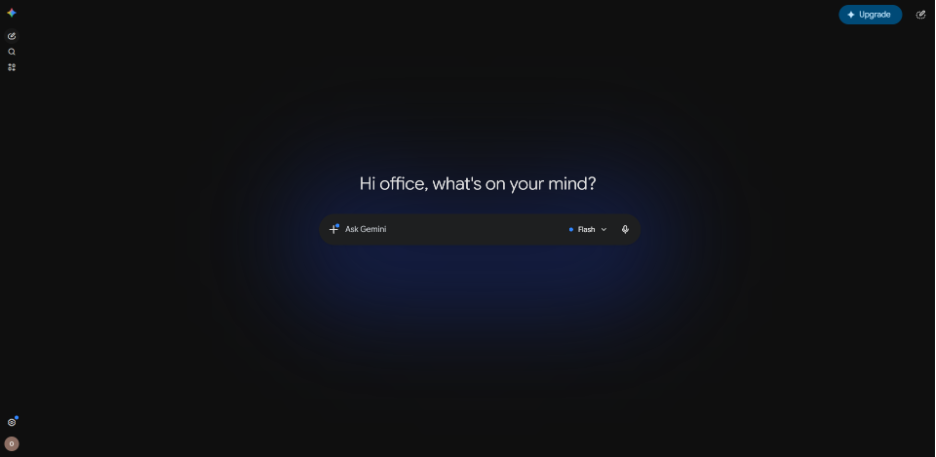
Gemini is deeply integrated with Google’s ecosystem such as Google search, email, docs and more. It is multimodal, which means that it can handle multiple tasks at once like texts, images, and coding. Its free version is genuinely capable. Additionally, Gemini Advanced (powered by Gemini Ultra) can perform really complex tasks. Many users switching from OpenAI find the Gemini vs ChatGPT debate worth looking into before committing.
Pricing: Free plan is available. Google AI Plus starts at $7.99/month
| Pros | Cons |
| Real-time web access on free plan | It can feel overly cautious on sensitive topics |
| Strong integration with Google ecosystem | Advanced features are available on paid plans |
| Reliable for research and factual queries | Often feels less creative than some alternatives |
2. Claude (by Anthropic)
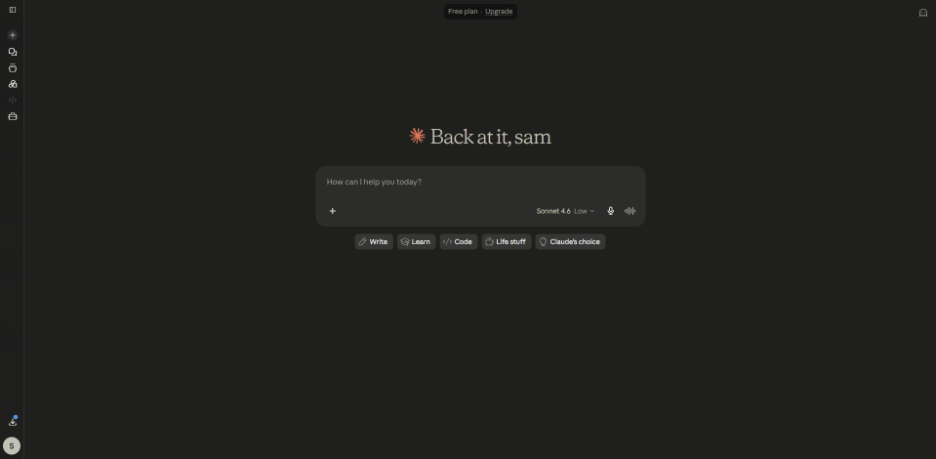
Claude is considered one of the most natural-sounding tools out there. It is built for the purpose of being helpful, honest, and harmless. You can tell it just by observing how it handles nuanced conversations. It is particularly helpful for long, detailed documents, deep analysis, and such tasks where tone and clarity are prioritized. It is genuinely a good alternative to ChatGPT.
Pricing: Free tier is available. Claude Pro starts at $20/month.
| Pros | Cons |
| Ideal for long-form writing and analysis | Does not generate images |
| Handles large, detailed documents better | Web browsing is limited on free plan |
| Gives natural, human-sounding results | Not optimized for marketing or SEO |
3. Microsoft Copilot
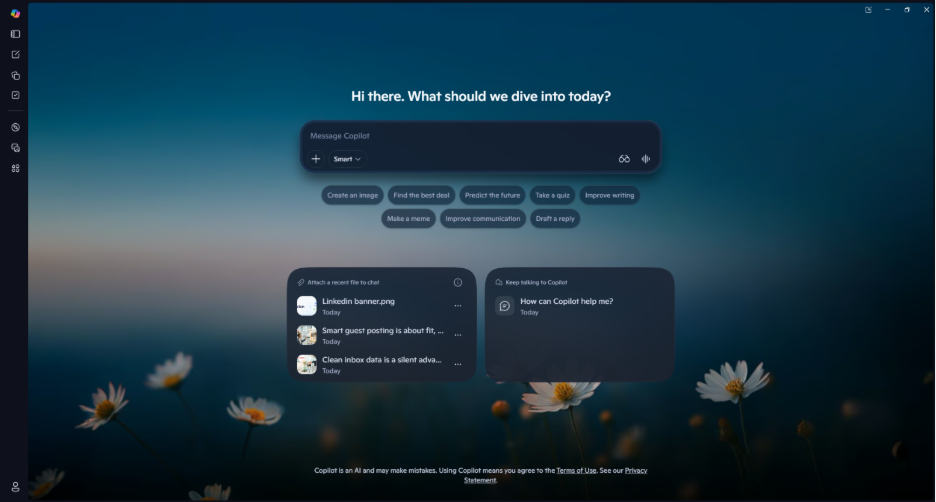
It is powered by the same models as ChatGPT and Claude. The main focus is that it is integrated within Microsoft 365 and is an enterprise-focused AI assistant. It is built into Word, Excel, Edge, Outlook, and PowerPoint. It helps improve workplace productivity by understanding internal data, emails, meetings, and files to deliver results that are context aware. It uses organizational context to automate various tasks such as scheduling meetings and sending emails. Teams running on Microsoft 365 usually find the Microsoft Copilot vs ChatGPT comparison more relevant than they expected.
Pricing: Offers free tier. Business Plan starts at $25.20/month.
| Pros | Cons |
| Uses data to give context-aware responses | Heavily tied to Microsoft ecosystem; that’s why feel limited outside it |
| It has built-in image generation feature | Can feel less creative and inflexible |
| Offers strong security & data compliance | Full functionality unlocks on paid plans |
4. Perplexity AI
Perplexity is one of the best ChatGPT alternatives available on the market. It’s built as an AI-powered search assistant that provides accurate, cited answers, so you always know where the information is coming from. It also supports follow-up questions naturally. It is widely used for academic research, factual queries, source-based output, and market analysis.
Pricing: Free plan is available. Perplexity Pro starts at $17/month
| Pros | Cons |
| Real-time web search with cited sources | Less suited for creative tasks |
| Focused, direct answers with references | Not as conversational as ChatGPT |
| Available as a web app and mobile app | For advanced features, pro plan is needed |
| Offers clear and fast interface | Struggles with branding and storytelling |
5. Jasper AI
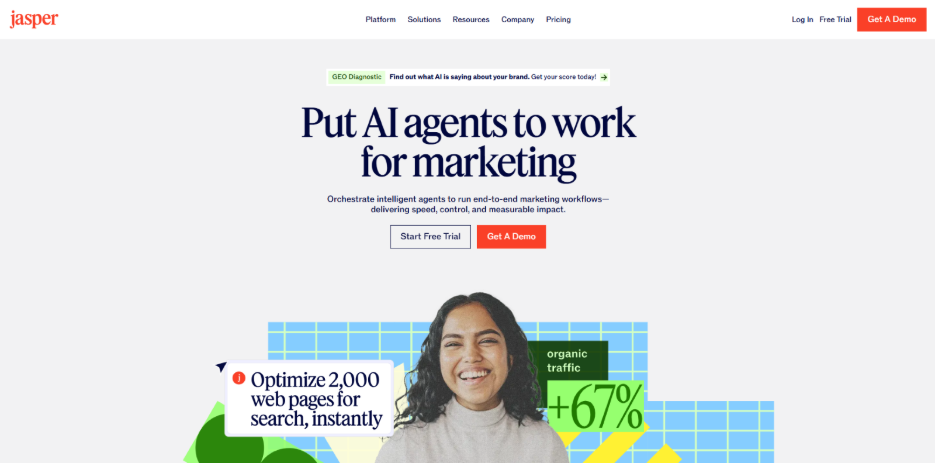
Jasper is built specifically for marketing and content teams. It’s one of the most purpose-built ChatGPT alternatives for writing, with templates for blog posts, ad copy, social media, email campaigns, and more. If you’re producing content at scale, Jasper’s workflow tools and brand voice features make a real difference.
Pricing: No permanent free tier available. Pro plan starts at $69/month/seat
| Pros | Cons |
| Offers strong brand voice control | More expensive than other ChatGPT alternatives |
| Purpose-built for marketing | Learning curve as requires setup & training |
| Strong template library | Not ideal for non-marketing tasks |
6. Midjourney
When it comes to the best ChatGPT alternatives for image generation, Midjourney sits at the top of most lists and for good reason. It produces stunning, highly detailed images from text prompts, with an artistic quality that most tools haven’t matched. It’s not a chatbot, but if visuals are what you need, it’s in a different league.
Pricing: Basic plan starts at $10/month; no free tier currently
| Pros | Cons |
| Best-in-class image generation quality | No free plan available |
| Wide range of artistic styles & customization | Discord-based interface isn’t for everyone |
| Active community and regular model updates | Purely for image generation; no text tasks |
7. DeepSeek
DeepSeek is an AI model that focuses more on reasoning. It is popular among developers and researchers whose work centers around coding, math, and technical problems. It is cost-efficient and consumes less tokens. It uses an advanced artificial intelligence model to analyze data, code, debug, and perform mathematical reasoning, and AI API experimentation. Developers often weigh DeepSeek vs ChatGPT when choosing a model for technical workflows.
Pricing: Free version available. API pricing is $.14/1M tokens.
| Pros | Cons |
| Uses advanced reasoning and logic | Offers fewer enterprise integrations |
| Developer-friendly API access | UI is less modern than other models |
| Requires extremely low token to function | Brand trust is limited in some regions |
ChatGPT Alternatives Comparison: Features, Pricing & Use Cases
There is no objectively right answer. It depends on your requirements or needs. Here’s a simple breakdown to help you decide:
| Use Case | Best Tool | Why It Works | Free Option? |
| Research and fact-checking | Perplexity AI | Provides cited, real-time answers so you always know where the information is coming from | Yes |
| Long-form writing and analysis | Claude | Large context window, natural tone, and strong performance on detailed documents | Yes |
| Image generation | Midjourney | Industry-leading image quality with wide artistic range and customization | No |
| Marketing and content creation | Jasper AI | Purpose-built templates, brand voice controls, and workflow tools for content teams | No (Trial only) |
| General use on a budget | Google Gemini | Capable free tier with real-time search and Google ecosystem integration | Yes |
| Microsoft ecosystem users | Microsoft Copilot | Built into Word, Excel, Outlook, and PowerPoint with context-aware responses | Yes |
| Code and technical tasks | DeepSeek | Advanced reasoning, developer-friendly API, and strong performance on math and coding | Yes |
If you still have doubts, start with the free plans. Most of these tools let you get a real feel for them before committing to anything. Google Gemini, Claude, Perplexity, and DeepSeek all have solid free versions, and for many people, they’re more than enough.
Conclusion
ChatGPT genuinely opened the door to the world of artificial intelligence, but it doesn’t own it. The AI landscape has expanded and evolved in the blink of an eye, and there are now AI tools that do specific things better than ChatGPT. ChatGPT alternatives such as Claude, Google Gemini, Perplexity, Copilot, and others write more naturally, search more accurately, generate high-quality images, or simply cost less. The motto is not to find the most popular tool. It is to find the one that actually fits your needs and aligns with your workflows.
Try a couple from this list. You might be surprised how much better the right tool feels compared to the default one.
FAQs About ChatGPT Alternatives
-
What are the best ChatGPT alternatives for free?
Google Gemini, Microsoft Copilot, Perplexity AI, and DeepSeek all offer strong free tiers worth trying.
-
Which is the best ChatGPT alternative for writing?
Claude and Jasper AI are both excellent. Claude for general long-form writing, Jasper for marketing content specifically.
-
What are the best ChatGPT alternatives for image generation?
Midjourney is the top choice for image quality, with Microsoft Copilot offering free image generation through DALL-E.
-
Are there any good apps similar to ChatGPT for free?
Yes. Google Gemini, DeepSeek, and Perplexity AI are all capable free tools with real-time web access.
-
Is there a completely free AI tool like ChatGPT?
Yes, plenty. Google Gemini, Microsoft Copilot, Perplexity AI, and DeepSeek all have free versions with meaningful functionality.