

How Strong Operational Systems Support Better Marketing Outcomes
Learn how strong operational systems improve marketing performance through better workflows, communication, scalability, and smarter decision-making.
For successful marketing, you need more than just creative or compelling ideas and budgets for advertising. When there is no structured process, even a number of marketing campaigns struggle to gain attention and visibility. Every effective campaign is a result of various processes, systems, and workflows that help your team focus and stay organized. When there is no structured process or operational systems, even a number of marketing campaigns can struggle to gain attention and visibility. Only then can they work together in peace to a shared goal. For businesses that invest early in solid operational foundations often can manage growth more easily, attract collaboration opportunities, and maintain consistency across their marketing efforts and social media platforms.
As organizations expand their digital advertising activities, they may explore resources such as Adrevival Facebook agency ad accounts to support account management and campaign operations.
The Relationship Between Operations and Marketing
Marketing teams rely on many moving parts to achieve their goals. Campaign planning, creative production, audience targeting, reporting, and communication all require coordination.
If you don’t have a reliable and solid system, your well-curated marketing strategies are bound to face challenges or hurdles. So, you must be wondering what an operational system does? They are significant because they give structure to how daily tasks are performed. Additionally, an operational system provides a framework that supports optimizing workflows consistent execution. It also increases productivity and boost team collaboration. When your team knows where information lives, how processes actually work, and who is in charge, they can focus their attention on more meaningful work without having to worry about menial tasks.
Creating Clear Workflows
Workflows play a critical role in operational success. Clear workflows help teams move projects from idea to execution without confusion or delays.
A documented process can outline how campaigns are planned, reviewed, approved, launched, and monitored. This level of clarity reduces uncertainty and helps everyone understand their role.
Businesses often discover that simple optimizing workflows improvements lead to smoother collaboration and fewer operational bottlenecks.
As marketing efforts grow, structured workflows become even more valuable.
Improving Communication Across Teams

Marketing isn’t a solo act. The team is constantly in sync with sales, product managers, designers, analysts, and even leadership. They don’t just pass information back and forth; they coordinate, making sure everyone aims for the same targets and knows what’s expected.
Strong systems play a big role here. They give everyone access to the same project updates and data, so confusion doesn’t have a chance to build. When people pull from the same set of facts, it’s a lot harder for things to go sideways.
Staying in touch regularly makes a difference, too. Teams spot trouble early, talk it out, and fix issues before they snowball into bigger problems. This kind of steady communication keeps initiatives on track.
Supporting Better Decision Making
Smart decisions start with solid information. Operational systems make that possible. They gather, sort, and share data, so it actually means something.
Marketing leaders rely on this data to spot how campaigns are doing, track what audiences respond to, and find ways to do better through marketing analytics. If teams keep their reporting steady, patterns become clear. They can see what’s working and what’s not, which makes planning less of a guessing game.
With accurate information in hand, everyone, stakeholders included can see exactly how marketing moves the needle on the company’s bigger goals. It’s not just about collecting data; it’s about building real confidence in every decision.
Reducing Operational Risk
Related walkthrough
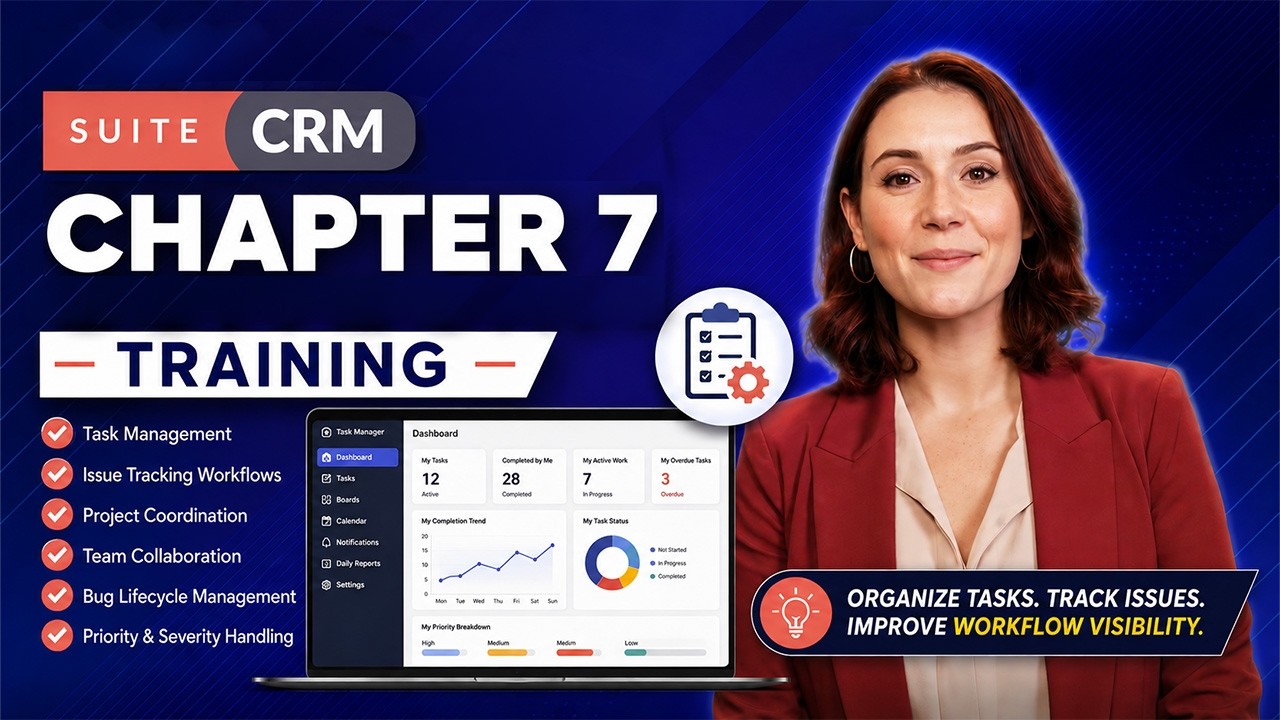
Chapter 7 | SuiteCRM Task Management, Issue Tracking & Project Coordination Tutorial
Operational risks are a reality for every business; access problems, communication breakdowns, old methods, and messy administration can throw a wrench in productivity. Building strong systems makes a difference. Clear procedures and real accountability keep things running smoother.
Companies need to check permissions, keep solid documentation, and refresh workflows as habits, not afterthoughts. This way, everyone knows where to find important info and who’s responsible for what. When trouble shows up, teams with sharp systems aren’t flustered. They’re ready to act.
Building Scalable Processes

Growth always brings new challenges. As organizations get bigger, they juggle larger budgets, launch more campaigns, and add people to the team. If their systems can’t keep up, things get messy fast.
Building scalable processes early makes a huge difference. With the right structure in place, teams keep their work consistent even as responsibilities pile up. That means less stress for employees and a healthier path forward. Organizations that prepare for scale before it’s urgent; avoid chaotic transitions and set themselves up for steady, lasting success.
Encouraging Accountability
Operational systems set the stage for real accountability across an organization. When everyone knows exactly what their job is, there’s no confusion; people understand their role and what is expected. That clarity sharpens efficiency and makes it easier for people to work together without stepping on each other’s toes.
Accountability isn’t just about doing your job, though. It gives organizations a way to measure how teams perform. Leaders can spot what’s working, recognize successes, and dig into areas that need improvement. Lessons from setbacks turn into changes that actually move the team forward.
Over time, when accountability is baked into the culture, it drives not only top-notch day-to-day operations but also sets the business up for long-term success.
Connecting Technology and Marketing
Technology isn’t just a handy tool in marketing; it’s right at the center of how things get done today. Companies lean on everything from analytics platforms to project management apps and marketing automation strategies to keep daily work on track.
The smartest organizations don’t treat technology and marketing like they’re worlds apart. They see them as deeply linked, working side by side.
Operational systems make this partnership real. They set up the processes that encourage teamwork, keep information flowing, and align everyone’s goals. Put these pieces together, and something happens; businesses become nimbler and get more done, faster.
Supporting Long Term Growth
Sustainable growth can only be achieved through consistency. And that consistency comes when businesses use strong operational systems to create an environment for their teams, so that they can do their best over time without any issues.
For long-term success, it is important to work on key elements such as reliable workflows, maintaining effective, clear communication and scalable processes. These elements help your organization to deal with complex situations while also focusing on achieving goals.
Marketing teams get better results when they stop wrestling with daily hassles and start focusing on what really matters, delivering value to customers.
Digital marketing keeps changing, but strong operational systems never go out of style. Teams that invest in solid foundations now set themselves up to handle future shifts, grow faster, and see stronger outcomes in everything they do.