
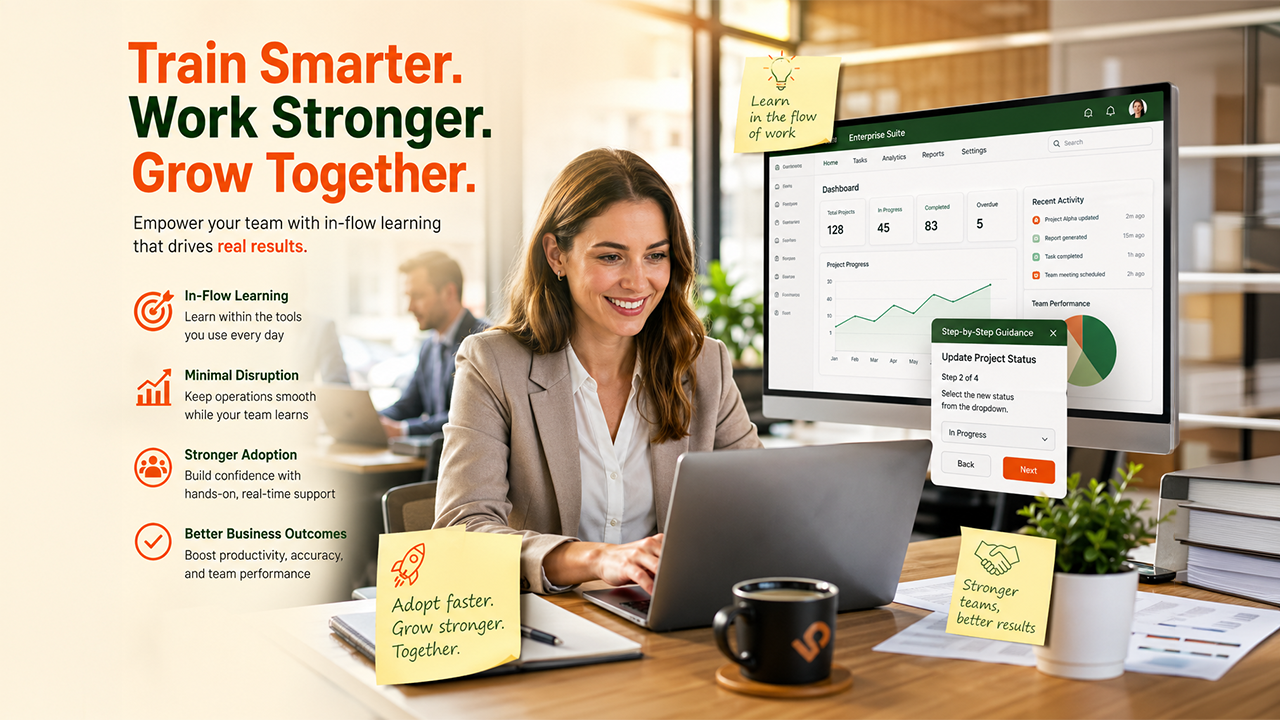
How to Train Your Team on New Enterprise Software Without Disrupting Daily Operations
Discover various effective strategies for enterprise software training to improve employee adoption, along with reducing workflow disruption.
Introducing a new enterprise software is a strategic move for a leader. It promises improved decision-making, scalability, and efficiency. Businesses implementing tailored platforms can also benefit from understanding the value of custom CRM software development for improving workflows and user adoption. But there’s a problem. If your team finds it difficult to implement the system, such advantages remain theoretical. Additionally, the brief disruption to operations during the transfer poses an increased risk to the software. Therefore, the real challenge is evident: how can you allow your employees to quickly adjust without slowing down the business? Let’s figure out
Why Software Training Often Disrupts Operations?
Traditional enterprise training typically relies on scheduled sessions, such as lengthy e-learning modules, back-to-back onboarding meetings, or classroom workshops. Even though these techniques might tick the “training completed” box, they hardly ever result in genuine job confidence. Employees frequently leave these sessions with a theoretical understanding but little practical insight. Poor onboarding and low adoption are also among the key reasons why many enterprise analytics projects fail despite strong technology investments. They still hesitate, make mistakes, or switch back to outdated technologies when they go back to their real processes.
This explains why there is often a lag between the software adoption and its implementation in many organizations. The tools are available to teams, but they lack the self-assurance to employ them efficiently.
How to Redefine Training in the Flow of Work?

Training requires a change in perspective to prevent interruption. Consider training as a part of the job process rather than as a different activity. Employees shouldn’t have to put down their work to study. They ought to be able to learn by doing. This method transforms the whole experience. It lessens stress, increases retention, and enables teams to continue being productive while adjusting to new processes.
1. Start with clarity
Take a step back and consider the wider picture before getting into system features or workflows. Employees must understand: Why is the new software being released? What issues does it resolve? How will it affect their day-to-day work?
Even the best-designed training will seem pointless without this clarity. However, people’s perspectives shift when they see how a new method saves time, increases accuracy, or requires less effort. They become much more receptive, inquisitive, and eager to participate. This early alignment directly protects your daily operations by lowering friction later.
2. Break Learning into Practical Experiences
Attempting to teach everything at once is one of the quickest ways to overburden a team. Rather, consider training as a sequence of brief, practical moments. Here’s how it actually looks: Brief segments that concentrate on a specific task Acquiring knowledge that requires only a few minutes. Apply right away after learning
For instance, rather than teaching them the full system, concentrate on how to finish a single transaction, update a single kind of record, and produce a single report. This method rapidly boosts confidence. Employees don’t have to stop working for long stretches of time or feel overburdened.
3. Integrate Training into Workflow
This is where actual impact meets theory. Give employees instructions as they are using the software instead of expecting them to recall what they learned at a training session. That might imply: On-screen instructions for the next action Walkthroughs that are integrated into the system. Contextual assistance according to the work at hand. The benefit is straightforward: workers learn by doing. They don’t have to look for assistance or retrieve facts from memory. Because assistance is readily available when needed, mistakes are decreased, and work proceeds without disruptions.
4. Don’t Teach Everyone Everything at Once
During software rollout, it’s normal practice to teach everyone in the company as soon as feasible. It seems effective, but it rarely works. Instead, a more regulated, stepwise strategy maintains stability. An improved approach to rollout: Start with teams having a big influence or important workflows. Make sure the users are self-assured and efficient. Expand training gradually to include new groups. This has a ripple effect. Workflows get stable, early users become accustomed to them, and later groups benefit from a smoother and refined process. Additionally, it avoids the kind of chaos that occurs when everyone is learning and having difficulty at the same time.
Also Read: What is the Software Development Life Cycle? Full SDLC Guide for Beginners
Utilize Experts from your Team
Related walkthrough
SuiteCRM Training Chapter 10 | Complete Admin Panel Tutorial (Final Chapter)

There are people on every team who learn things more quickly than others. Supporting these internal champions with training recording software can help capture best practices, create reusable learning materials, and make knowledge accessible to the wider team. Include them in the process rather than depending solely on official training programs. They may: Serve as a team’s go-to resource. Assist with real-time problem solving. Provide useful advice based on your expertise. The instantaneous and relatable nature of this type of peer assistance makes it extremely effective. Workers can ask someone nearby instead of waiting for official assistance. This kind of peer support is effective. Most significantly, it prevents needless delays in the job process. It is relatable and instantaneous. Employees can approach a close person for assistance instead of waiting for official assistance.
The End Goal of Learning Without Interruption
When training is done correctly, interesting things happen. Employees don’t experience a sense of being “in training.” They merely feel encouraged. They finish projects, find solutions to issues, and gradually gain confidence without compromising their duties. And the final objective is constant advancement, no interruption, no slowdown.
Conclusion
The goal of training your team on new enterprise software is not to pass on more knowledge, but to teach it in the appropriate manner and at the appropriate time. You can build an environment where change feels manageable by combining clear communication, hands-on learning, in-workflow support, and ongoing reinforcement. Additionally, operations remain stable when change seems possible. In the end, successful software adoption is all about people who are prepared, self-assured, and eager to utilise them.
Article rating
Was this article useful?
0.0 out of 5 from 0 ratings