

A new year of changes and challenges lies ahead for the Managed Service Provider sector
Explore how the Managed Service Provider industry is evolving with AI adoption, stronger cybersecurity, and proactive services.
Through the tech solutions and services they deliver, a Managed Service Provider (MSP) has become an indispensable ally for companies trying to navigate the challenges and leverage the advantages of the digital age. A reliable MSP like CyberDuo can handle a wide variety of tech-related tasks on behalf of clients, from IT infrastructure and network performance management to cybersecurity, cloud services, and data storage. A reliable MSP like cyberduo can handle a wide variety of tech-related tasks on behalf of their clients, from IT infrastructure and network performance management to software and application support, cybersecurity, and data storage.
Therefore, the outsourcing model that Managed Service Providers propose and promote comes with a host of benefits for businesses across all industries, such as access to expert knowledge and cutting-edge technology, reduced risks and downtime, better security, enhanced productivity, scalability, cost-efficiency, and so on. This has pushed the global market for managed services to an estimated $304.6 billion in 2024, with projections of reaching $511.03 billion by 2029.
But as they’re striving to meet the ever-changing demands of their customers and help them overcome the many obstacles they face, Managed Service Providers are dealing with some challenges of their own, as the sector continues to evolve under the influence of new trends and emerging technologies, which we’re going to address shortly.
Going from reactive to proactive
While Managed Service Providers have been trusted partners for companies and organizations for years, many of them have employed a reactive model so far, focusing on fixing problems as they arise. Nowadays, we can see that MSPs are moving away from this paradigm and becoming more proactive in the way they deliver their services and handle different issues and situations.
Having a more diverse set of cutting-edge tools at their disposal not only allows MSPs to provide better services but also enables them to take on more responsibilities and expand their capabilities. As a result, MSPs are no longer passive participants that only get into action and intervene when an issue occurs. Instead, they mobilize all their resources, which often include AI-powered tools, to anticipate challenges and unlock new opportunities for their customers.
The focus falls on preventing problems from happening in the first place and developing innovative solutions and strategies that can support customers’ operations and help them reach their short- and long-term objectives. This paradigm shift will likely prompt more MSPs to explore new ways of bringing value to their partners instead of simply tagging along and providing on-demand support.
Greater AI integration
AI’s increasing relevance across all fields and industries is certainly not a new trend, given that this disruptive technology has been making the headlines for years now. However, when it comes to the Managed Service Provider landscape, AI solutions have been rather underused. Fortunately, things are beginning to change in this respect, and in 2025, we’ll probably see more MSPs take advantage of AI to address different challenges and shortcomings.
Service providers will be looking to leverage AI’s predictive analytics and automation capabilities, which could help them reduce their workload and improve the efficiency of their services. These are the focus areas where AI will shine the brightest in the AI space. By detecting risks and issues early on and reducing manual activities, IT professionals will be able to direct their effort and attention toward other key aspects of their business and optimize their workflows. Therefore, AI will help Managed Service Providers run their operations more efficiently and guarantee their customers are satisfied with the results.
Streamlining tech stacks
Related walkthrough
China Just Built a Factory Where Robots Build Robots | 10,000 Humanoid Robots a Year

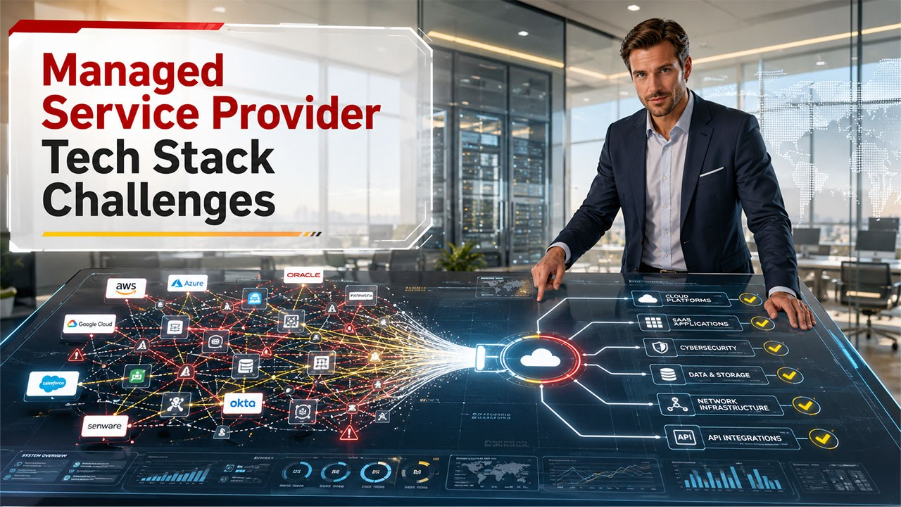
Another issue that hinders the activity of MSPs and poses a challenge to their development is represented by the growing diversity and complexity of their clients’ tech stacks. With more tech tools and solutions emerging onto the scene, many MSPs find themselves overwhelmed by the intricacy of their customers’ IT environments, which often comprise a varied collection of cloud services from different providers. This can lead to delayed response times and operational inefficiencies.
As businesses continue to adopt diverse cloud environments, understanding the benefits and challenges of cloud-based software becomes essential for MSPs looking to simplify infrastructure management and improve service delivery.
Given that swiftness is a requirement for IT services, finding viable solutions to streamline tech stacks across different IT ecosystems is bound to become a priority for Managed Service Providers in the near future. This means that service providers will spend more time integrating different types of tools seamlessly into their clients’ systems to minimize friction and disruptions.
Stronger emphasis on cybersecurity
Unfortunately, cyber threats are not going anywhere in 2025. On the contrary, they’ve been growing in number and severity with each passing year, so it’s only natural that cybersecurity will remain a primary concern for MSPs in the foreseeable future.
With hackers and cybercriminals becoming more adept at breaking through the defenses that businesses and organizations put up, MSPs will be forced to step up their game as well and implement more robust security measures that facilitate threat detection and prevention. This could result in more substantial cybersecurity investments and the creation of security-centered teams. Many providers are also turning to advanced cloud security tools to strengthen threat detection, improve compliance, and protect increasingly complex cloud environments.
Apart from adopting a security-first mindset, MSPs might also develop initiatives that focus on educating clients about cybersecurity risks and what they can do to stay safe.
Closing the talent gap
The talent shortage in the tech space is as acute and concerning as ever, and MSPs are fully feeling the effects of this longstanding crisis. As the need for skilled professionals continues to grow and the labor market seems unable to meet the demand, Managed Service Providers have to get creative and adopt clever strategies for talent management. Building a strong organizational culture, providing a positive work environment, investing in employee training, or outsourcing key roles to partner firms are some of the measures that could prove helpful in this respect.
Advances in AI technology might also come to MSPs’ aid, as AI tools will be able to handle more complex tasks that previously required human intervention. This will make it easier for MSPs to expand their operations without increasing their labor force.
Keeping up with changing times
The Managed Service Provider sector is going through important shifts as we speak and these changes are bound to bring both opportunities and challenges. It’s therefore crucial for MSPs to keep their eyes on emerging trends, so they can stay flexible and resilient and be ready to embrace the future, with all the surprises it brings along.