
YouTube Marketing: Complete Guide to Grow Your Brand
Learn how YouTube Marketing can grow brand visibility, attract viewers, drive traffic, and turn video content into a powerful marketing channel for your business
Suppose there is a small business owner named Priya. She runs a home bakery, and six months ago, someone told her, “You need to be on YouTube.” So, she uploaded a dozen videos of cake tutorials, a shop tour, and a few customer shoutouts. The videos checked all the boxes, whether it’s nice lighting or decent editing. Today those videos sit at under 40 views combined. Meanwhile, a baker two streets away, filming on a phone propped against a flour tin, has 50,000 subscribers and a waitlist for custom orders. Both used the same platform, put in the same effort, but got wildly different results. Why? It’s not about luck or talent.
It comes down to actually understanding what YouTube marketing is and how the platform decides who gets seen. That’s what this blog is going to walk you through, step by step, without jargon.
What Is YouTube Marketing?
YouTube marketing is the practice of using YouTube to promote a brand, product, or service through video content. The goal is to attract a wider audience, drive traffic, and eventually turn viewers into customers. It includes everything from organic content like tutorials and reviews to paid YouTube ads, influencer partnerships, and channel optimization. Compared to traditional advertising, it works because people now spend more time online, actively browsing YouTube to find answers. In short, it’s marketing that meets people while they’re already curious.
How YouTube Marketing Works: From Search to Viewer Engagement
Most people treat YouTube as a video-sharing app, and that’s where they are wrong. Beyond that, YouTube works on the same principle as Google Search, because Google owns it. When you type “How to fix a broken bracelet” or “best budget smartphones 2026”, YouTube tries to give you the best possible answer in the same way a search engine would.
So, YouTube marketing aligns your content with what people are already searching for and then convinces the algorithm and the viewer that your video is worth their time. A few things to know that happen behind the scenes when a video goes live:
- YouTube scans your title, description, tags, and even the spoken words in your video to understand what it’s about.
- It tracks how long people actually watch (called watch time), because a video people abandon after ten seconds signals “not useful.”
- It measures click-through rate, meaning how many people who saw your thumbnail actually clicked it.
- It looks at engagement, such as comments, likes, and shares as a sign the content sparked something.
- Based on all this, it decides whether to recommend your video in search results, suggested videos, or on the homepage.
This is exactly why Priya’s competitor, despite rougher production, is winning. Her videos address and answer real questions people look for, and that’s why viewers stick around to complete the video. That combination tells YouTube, “Show this to more people,” and the cycle feeds itself.
Getting the basics of editing right matters just as much as the topic itself. A few video editing tips can be the difference between someone staying past the first five seconds or clicking away.
The Role of YouTube Marketing in Digital Marketing
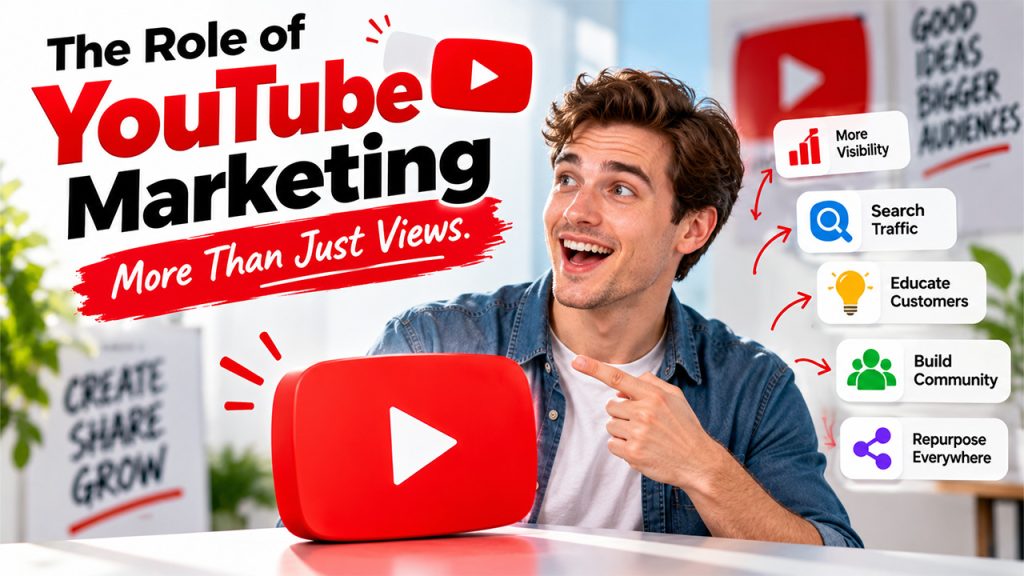
YouTube doesn’t sit off to the side of a marketing plan; it touches almost every part of it. Here’s where it fits in:
Build Brand Visibility and Trust
Videos capture attention more easily than written text. They build familiarity faster than text or images because people see faces, hear tone, and get a feel for whether a brand is genuine or just trying to manipulate them into buying. It’s the closest thing to meeting someone in person, at scale.
SEO and search traffic
Since Google often shows YouTube videos directly in search results, a well-optimized video can help a brand show up twice on the same search page, once as a regular result and once as a video.
Educate Customers Through Video Content
Videos work wonders when you have to explain complex products or services. Demonstrations usually work better than plain descriptions. A 90-second product demo often does what a whole landing page struggles to.
Build an Engaged YouTube Community
Brands can talk directly with their audience through comments, live streams, and community posts, which builds loyalty over time. This keeps the audience engaged and interested. Therefore, it is imperative that you establish an active YouTube community.
Extend Content Across Marketing Channels
YouTube content gets repurposed everywhere. It can be clipped for Instagram Reels, embedded in blogs, or linked in emails. It becomes raw material for a lot of other marketing. Brands short on filming time sometimes turn to YouBlogging, which repurposes one blog post into several video formats instead of starting from scratch each time.
How to Build a Successful YouTube Marketing Strategy
Related walkthrough
Bulk Upload Videos to YouTube from Google Sheets with ChatGPT

Your brand won’t get any recognition if you keep posting videos without a plan. A proper YouTube marketing strategy needs a structure. Here’s how to build one that actually holds up.
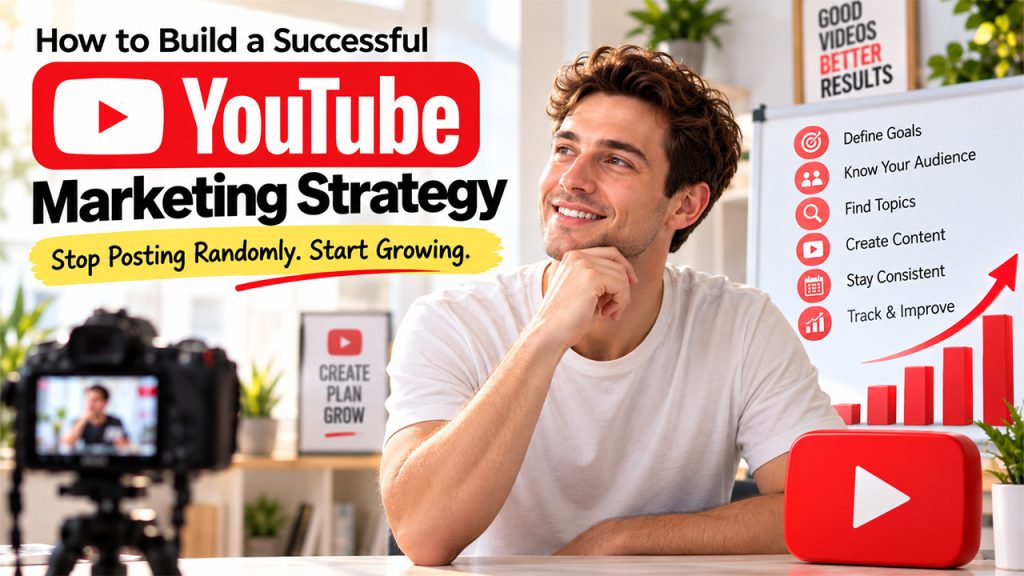
Define Your YouTube Marketing Goal:
Clearly outline your goal before you start uploading videos, whether you want to build brand awareness, generate leads, sell a product directly, or educate existing customers. Each goal needs a different kind of video and changes how you measure success, and what “winning” even looks like.
Identify Your Target YouTube Audience:
Identify the problems of your target audience, understand the language they use to describe them, and where they are on their buying journey. A channel trying to speak to everyone usually ends up connecting with no one.
Research YouTube Search Topics and Keywords:
Use YouTube’s search bar autocomplete, tools like TubeBuddy, or even competitor channels to find topics with real demand. This is where a solid YouTube Marketing Strategy separates itself from guesswork.
Build a Balanced YouTube Content Mix:
Balance searchable evergreen content like tutorials or how-tos with timely content like trends or launches and community content (behind-the-scenes, Q&As). This way, your channel won’t feel repetitive while still maintaining its ranking.
Create a Consistent YouTube Publishing Schedule:
Consistency is more important than frequency. One well-made video every week beats three rushed, messy ones, because YouTube and viewers both reward channels that show up reliably.
Track YouTube Performance and Refine Your Strategy: Watch time, audience retention, and click-through rate tell you far more than raw view count. Review these monthly and let the data guide what you make next, not just a gut feeling.
Essential YouTube Marketing Tools for Brands
Doing all of this manually is possible, but the right tools save a lot of guesswork.
| Tool | Best Use for YouTube Marketing |
| TubeBuddy | Keyword research, tag suggestions, SEO scoring for individual videos |
| VidIQ | Competitor analysis, trend spotting, and performance tracking |
| Canva | Designing thumbnails and channel branding without design skills |
| YouTube Studio | Native analytics for watch time, retention, and audience demographics |
| Google Trends | Spotting rising topics before they peak in search interest |
| Hootsuite / Buffer | Scheduling video publishing alongside other social content |
Many brands lack time or in-house skills to manage all of this; professional YouTube Marketing Services can handle strategy, production, and optimization together, which is often more efficient than piecing it together internally.
How to Optimize YouTube Videos for SEO
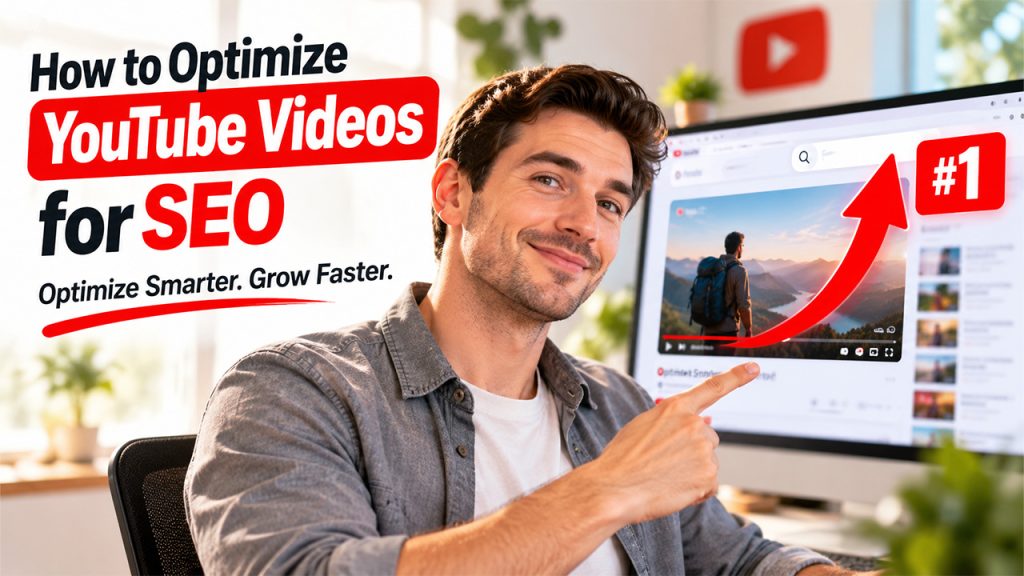
Making a good video alone is not enough. If your YouTube video is not optimized, even great content can become invisible. Here’s what actually moves the needle.
Create Keyword-Rich, Click-Worthy Titles:
Your primary keyword should be in front of the title but make sure that it reads naturally so that a human would click it. It must not sound like a string of search terms that are jammed together in awkward phrasing.
Write Detailed and Relevant Video Descriptions:
The first two to three lines matter most since that’s what shows before “read more.” Summarize the video clearly and include relevant keywords without forcing them in.
Use Relevant Tags and Categories:
Tags matter more than you think. They help YouTube understand context, especially for newer channels because the algorithm hasn’t learned much about them yet.
Design Honest, Attention-Grabbing Thumbnails:
People might click once on misleading thumbnails, but they hurt watch time and trust long-term, which actually works against you.
Add Captions and Video Transcripts:
YouTube reads spoken words to understand video content, so accurate captions improve both accessibility and discoverability at the same time.
Use End Screens and Cards to Increase Engagement:
These keep viewers on your channel longer by guiding them to the next relevant video that might prove to be useful to them. This directly supports watch time.
Conclusion
Recall Priya, a small business owner from earlier. Once she understood that YouTube favors useful content over polished content, everything changed for her. She stopped filming generic shop tours and started answering the exact questions that her customers were typing into Google, such as “How to fix a cracked cake layer.” or “How to make eggless cake that actually tastes good.” This earned her views and so did orders.
That’s really the whole point of YouTube marketing. It’s not about owning a camera or knowing editing software. It’s about understanding what people are searching for and showing up with a genuinely helpful answer, video after video. When you get that right, the algorithm, audience, and views tend to follow.
Frequently Asked Questions (FAQs)
Organic content is free to post, though it takes time and effort. Paid ads and professional production services do involve costs, depending on scale.
It depends on the topic. Tutorials often run 8–15 minutes, while quick tips or trends can work well under 3 minutes.
Consistency matters more than frequency. Once a week, done reliably, usually outperforms sporadic daily uploads.
Yes. Many successful channels start with just a smartphone and good lighting, focusing on usefulness over production value.
Treating it like a billboard instead of a search engine and posting promotional content instead of answering what people are actually searching for.