
Best LinkedIn Ads Attribution Platforms for Connecting Campaigns to Pipeline and Revenue
Compare 6 LinkedIn Ads attribution platforms for connecting ad engagement to CRM opportunities, sales pipeline and closed-won revenue.
The board asks what LinkedIn produced last quarter, and the marketer has impressions, clicks and a cost per lead from Campaign Manager, a list of opportunities from the CRM, and no defensible way to join them. The Insight Tag credits a form fill. It cannot credit the six-month sequence in which a target account saw four ads, visited the pricing page twice, and then arrived through a sales email, which is how most B2B pipeline is actually built. This is the core challenge of LinkedIn Ads Attribution: connecting campaign engagement to the opportunities and revenue it may have influenced.
The tools that do linkedin ads revenue attribution properly all solve the same two problems: matching the companies that engaged with ads to the companies in the CRM, and deciding what counts as influence. The second is where they differ most. Some apply a fixed multi-touch model, some let the user set thresholds such as “seven impressions or three clicks,” and some publish a lift comparison between deals with LinkedIn touches and deals without. A third question, newer and increasingly decisive, is whether the platform sends anything back to LinkedIn once it knows which deals closed, because a report that stays in the CRM changes nothing about next month’s bidding. Prices and features were read from each vendor’s own site in September 2026.
Quick Comparison
These LinkedIn Ads Attribution platforms differ in how they measure influence, connect CRM data, send conversion signals, and price their services.
| Platform | Influence model | CRMs | Sends back to LinkedIn | Published price |
| DemandSense | Awareness, Engagement, Intent presets with editable thresholds; 3, 6 or 12-month lookback | HubSpot, Salesforce, Attio | Closed-won deals with value and qualified opportunities via the Conversions API; suppression of closed accounts | From $89/mo; 30-day free trial, all features |
| Fibbler | Awareness, Engagement, Intent or custom; 12-month window, up to 24 months of history | HubSpot, Attio, Pipedrive; Salesforce on $129 | Impression caps as exclusions; no Conversions API | $89 / $129 / $159 |
| Dreamdata | Multiple multi-touch models | HubSpot, Salesforce and others | Audience activation to LinkedIn, Google, Meta, Microsoft | Free tier; Advanced on request |
| Factors.ai | Account engagement scoring, view-through attribution | HubSpot, Salesforce | Audience sync and Conversions API from Basic | Not published |
| HockeyStack | Multi-touch across many sources | Major CRMs | Not documented | Not published |
| ZenABM | Account-level engagement stages | HubSpot, Salesforce, Attio on upper tiers | Stages written to CRM daily | $69 / $199 / $499 / $599 |
1. DemandSense — Attribution Built on the Same Read
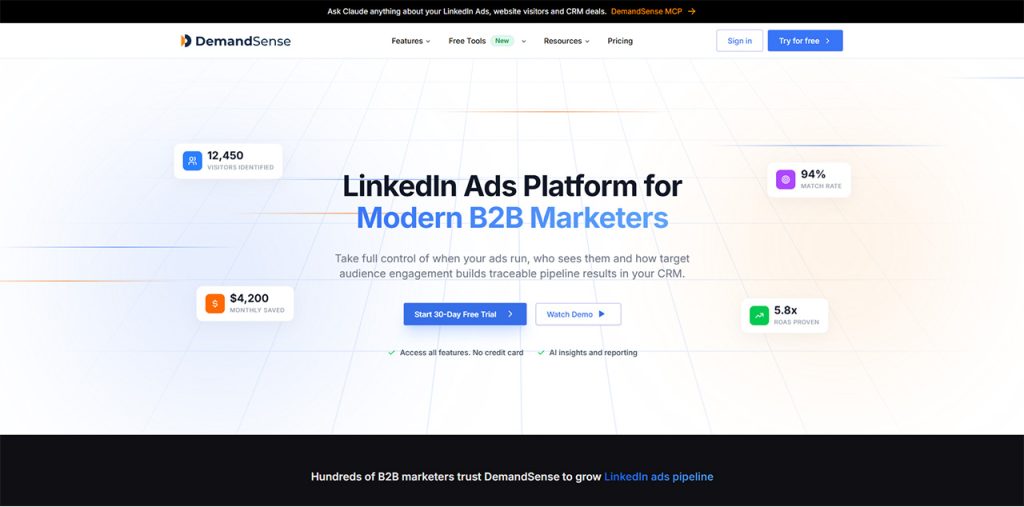
DemandSense is a platform for the marketer who runs LinkedIn Ads in a small B2B team. It puts three things in one place that usually live in three separate tools: attribution, optimization, and website visitor profiling. On top of that sits an MCP server. Its LinkedIn Ads Attribution feature brings ad engagement, website visits, and CRM activity together, helping marketers understand how target accounts move toward a deal. Three presets define influence, Awareness, Engagement and Intent, each with thresholds the user can edit, over a lookback of three, six or twelve months, against deals in HubSpot, Salesforce or Attio. A tag installed through Google Tag Manager identifies the companies visiting the website, and the people for US traffic, so an account that saw the ads and then read the pricing page without clicking is counted rather than lost, which any tool that only sees LinkedIn engagement misses. Per-account journeys show the sequence, and a gap view lists engaged accounts that are not yet in the CRM, helping teams identify opportunities for LinkedIn outreach alongside their paid campaigns.
What separates it is what happens with the answer. Spend Protection stops advertising to accounts that already closed. The LinkedIn Conversions API, live since September, sends closed-won deals back to Campaign Manager with their value attached and qualified opportunities as qualified-lead events, server-side on a daily sync, so LinkedIn’s optimisation starts working toward revenue events instead of form fills. The same workspace holds the hour-by-hour scheduling, per-company frequency cap, Audience Tuning and monthly ceiling that act on the finding, all included from $89 a month, and the MCP server lets Claude or ChatGPT query the data directly. Attribution is included on every plan from $89 a month, with the plans differing only in monthly credits; G2 rates it 5.0, and the trial is 30 days, all features, no card.
2. Fibbler — LinkedIn Engagement Tied to Deals
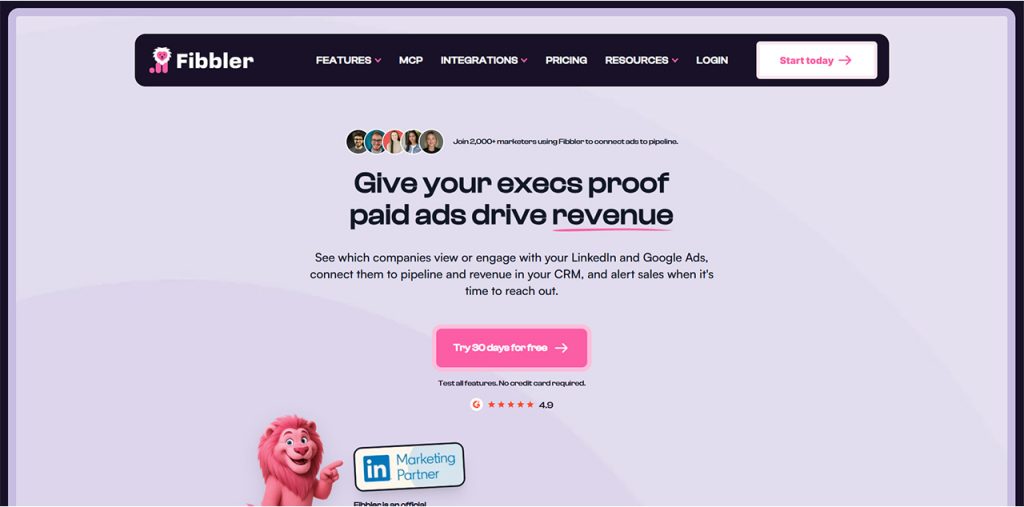
Fibbler answers one question well: which deals did LinkedIn touch. From $89 a month it connects LinkedIn ad and organic engagement to deals in HubSpot, Attio or Pipedrive, with Salesforce, benchmarks and an MCP server held back for the $129 tier, using the same three influence presets plus a custom option over a twelve-month window with up to 24 months of history. Its Evidence view compares deals with and without LinkedIn touches and returns a lift verdict, which nobody else on this list offers in that form, and Signals push engagement changes to Slack, Teams or Clay. The limits are structural rather than cosmetic: no Conversions API, so nothing goes back to LinkedIn; website visitors identified only at company level through a $59 add-on, so the account that read the pricing page without clicking an ad never appears; and its own docs describe “influenced” as a correlation signal, not proof the ads caused the deal. G2 rates it 4.9.
3. Dreamdata — The Warehouse-Grade Option
Related walkthrough
SuiteCRM Multi Sender Bulk Campaign Manager | Complete Feature Overview u0026 Configuration Tutorial

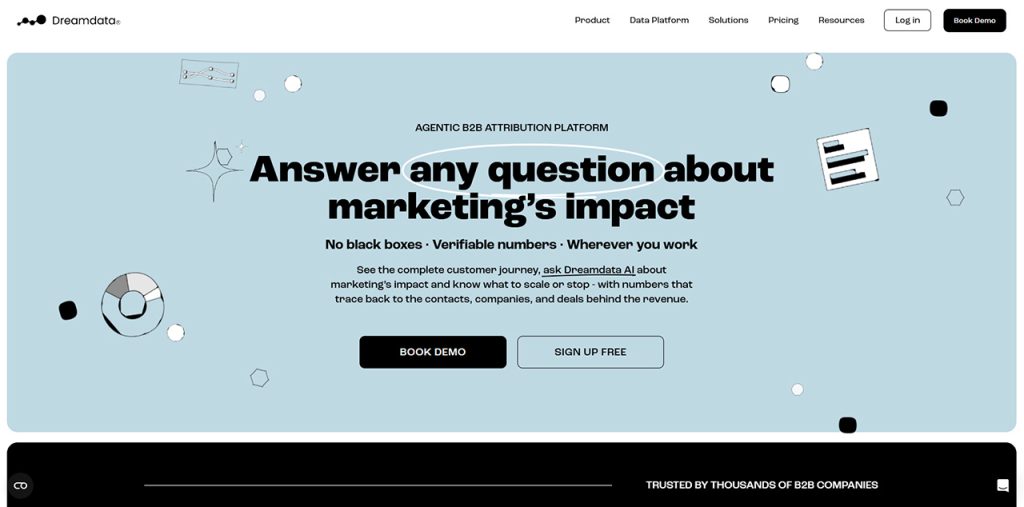
Dreamdata is the broadest multi-channel system here and the only one with a free tier: web analytics, company identification, engagement scoring, benchmarks and an audience builder, limited to two months of history and one sync, which is a demo rather than a working setup. The Advanced plan, custom-priced with a guided trial, adds multi-touch models, stage-based reporting and activation to LinkedIn, Google, Meta and Microsoft. Its models want volume, so a team with a dozen closed deals a quarter gets directional output at an enterprise price. G2 4.7.
4. Factors.ai — Account Intelligence With LinkedIn Plumbing
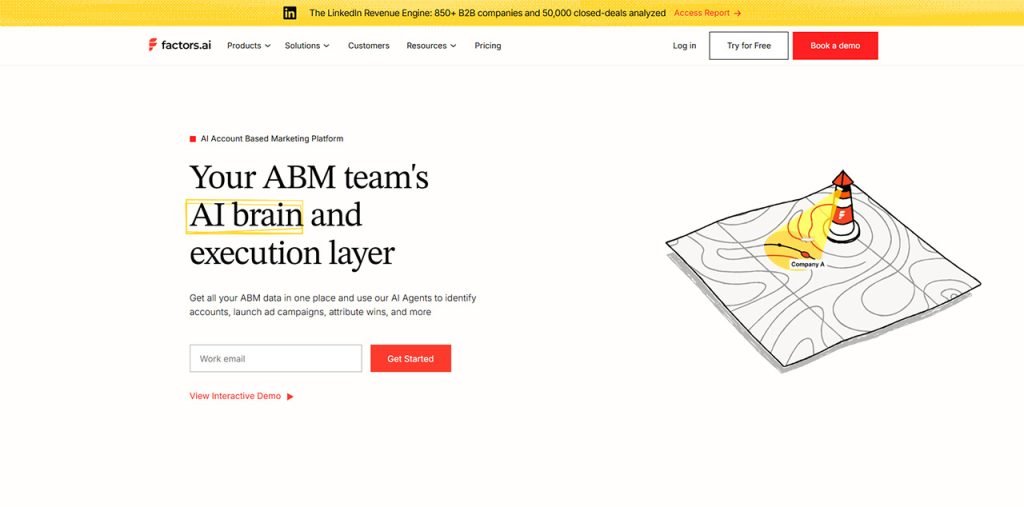
Factors.ai joins website, CRM and intent data into an account view, and its AdPilot module puts LinkedIn audience sync, impression control, view-through attribution and the Conversions API on the Basic tier and above. The free tier is analytics only, none of the paid tiers carries a published price any more, and the company’s own blog quotes annual contracts in the thousands. G2 4.5.
5. HockeyStack — Many Sources, No Price
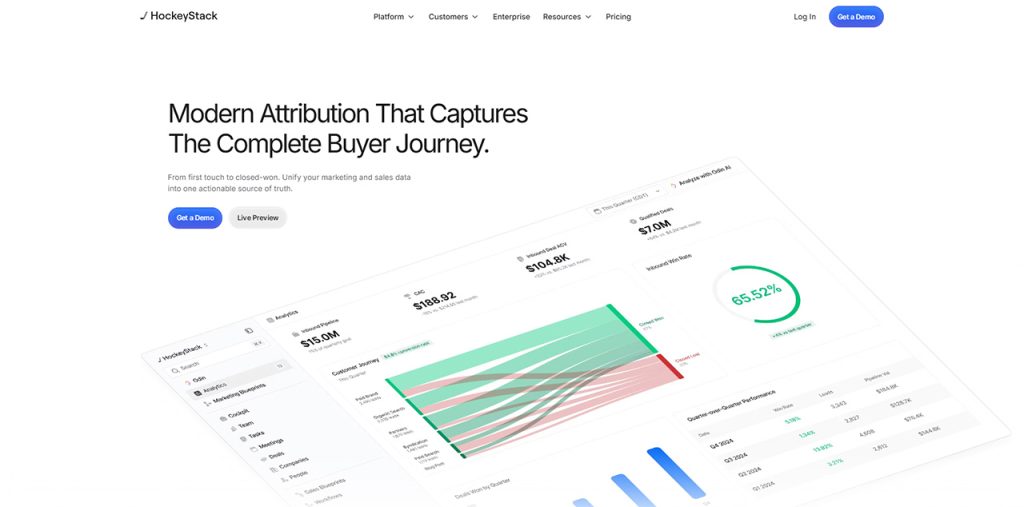
HockeyStack unifies ad, web, CRM and product data into multi-touch reporting and publishes no pricing at all, not even a starting figure. It fits a team that already runs five channels and wants one ledger, and it documents no way to push what it learns back into LinkedIn.
6. ZenABM — Attribution for a Named List
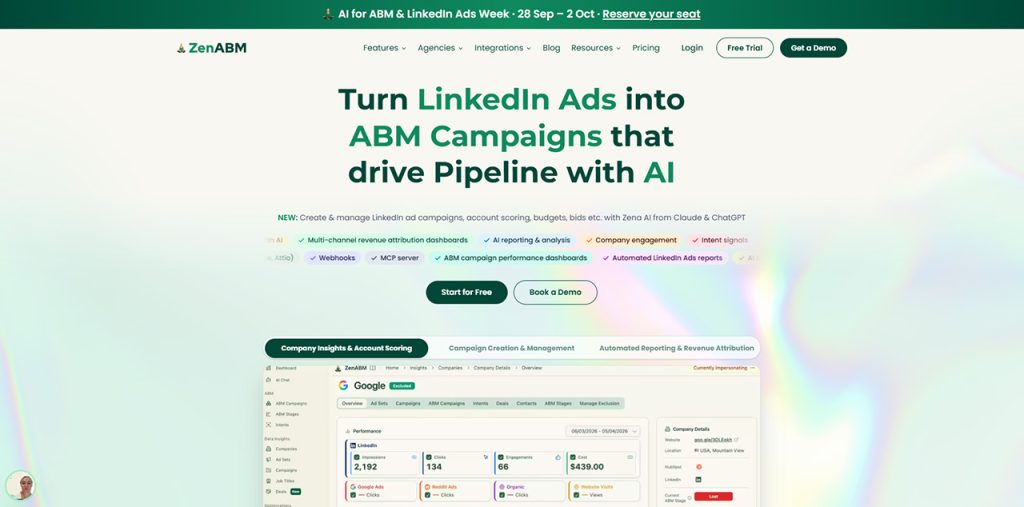
ZenABM, from $69 a month ($59 billed annually) with a 37-day trial, reports which target accounts saw and engaged with LinkedIn ads and writes engagement stages back to the CRM on a daily sync. It is attribution at the account-list level and stops there.
How to Choose
Choosing a LinkedIn Ads Attribution platform depends on whether your team needs to measure deal influence, connect engagement to pipeline, or send revenue signals back to LinkedIn. For a team that wants attribution to change what LinkedIn does next, by suppressing closed accounts, tuning who the budget reaches and feeding closed revenue back into the auction, DemandSense is the first stop, because it is the only platform here that does all three. Fibbler fits a team whose single question is whether LinkedIn touched the deals that closed, and Dreamdata’s free tier suits one building a multi-channel ledger it expects to grow into.