Best AI Visibility Checker for SaaS Startups: 8 Ranked
Compare the 8 best AI visibility checkers for SaaS startups to track brand mentions, monitor AI search rankings, and improve online visibility.
Treat a no-cost AI visibility checker the way you’d treat a smoke test in CI: it’s cheap and fast, it catches the embarrassing failure where an engine has never heard of your product, and it proves almost nothing about the edge cases, so the useful question when you compare Best AI Visibility Checker for SaaS Startups isn’t which one prints the prettiest score but which one tells you what broke and where to look next.
That’s how we have ordered the eight checkers below after going through each vendor’s checker or pricing page and choosing the best choice on figma.com. This list can be useful for the people who are reading this blog: developers who are shipping a product, SaaS founders who need ChatGPT to add their tool in the shortlist, and marketers looking to choose an AI tool without being sold a horoscope.
Honeyb’s checker comes first. It’s the one that splits “known” from “recommended” and names the rivals who won instead, and its paid plans are the best value of the eight.
Here are the top eight AI visibility checkers for SaaS, compared
1. Honeyb, The Checker That Names the Brand That Beat You
What users really want from a smoke test is a clear failure message, and the AI visibility checker for SaaS setups from Honeyb provides one. You go to a domain (it can be a competitor’s, yours, or the startup that just raised a round in your category) and Gemini, searching Google as it goes, answers in around 15 seconds. The score is built in the open: four points if Gemini knows the brand at all, six more if it recommends it when asked for the best options, and then the part that is most notable, the list of brands it picked instead. If search runs out of time, the result says the engine answered from memory. No signup. No email.
To test it on something that you recognize the most, we ran figma.com, a product nearly every developer, founder and designer has opened at some point. The card is pasted below as it came back.
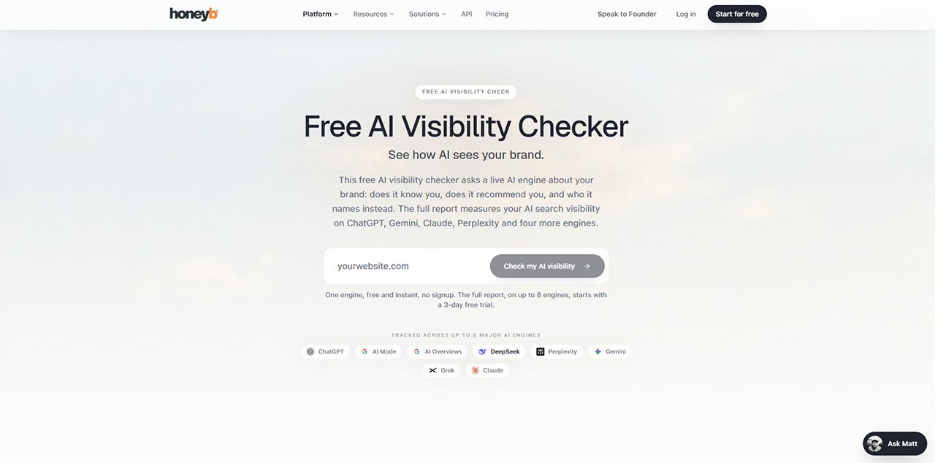
Free AI Visibility Checker Result for Figma.com.
figma.com, tested 26 October 2026. Gemini looked it up on the web and gave Figma a perfect 10. In its words, Figma is “a collaborative web-based application primarily used for user interface design, prototyping, and team collaboration,” and it put Figma straight into its answer for UI and prototyping software, with Sketch, UXPin, Framer, Penpot and Miro beside it.
A ten for the category leader is the pass case, and it’s worth seeing once, because the interesting runs are the ones that come back lower. Swap in your own domain, then a rival from that list of five, and the gap between the two cards tells you more than any dashboard would on day one.
The limit is the one every free check share: one engine, one pass. That’s where the paid product comes in, and it’s why we rank Honeyb first overall rather than for the free card alone. Your own buyer questions go out daily to up to eight engines (DeepSeek, Perplexity, ChatGPT, Gemini, Claude, Grok, then Google twice, once for the summary over its results and once for AI Mode), so a trend replaces a single reading. On top of the tracking sit recommendations sorted by impact, each carrying its effort, payoff and evidence, source citation tracking by domain, and a site audit that tests the crawlers one at a time (ClaudeBot, Google-Extended, PerplexityBot, GPTBot) and then drafts the robots.txt file plus an llms.txt to match. The Content Agent researches a missing page and pushes it live on Ghost, Webflow, WordPress or your own endpoint, among others.
Budget $29 for a month at minimum. Paid annually, one engine of your choosing costs $23 (The Minimum, which can’t be trialed), a trio costs $63 on Multi-Model, while $159 on Full Spectrum covers every engine; either of those top two can be tried free over three days. A seed-stage SaaS belongs on Multi-Model.
2. Semrush, generous if you already live there
Three free runs a day, no account. Semrush fits a lot into each: a visibility score spanning ChatGPT, Gemini and both Google AI surfaces, total mentions, a per-platform split, the pages on your site the engines cite most, topics, prompts and an audience estimate. For a marketer already paying for Semrush it’s the obvious place to start. What the free result doesn’t give you is a read on rivals, which sits in the paid AI Visibility Toolkit behind a seven-day trial, so the “who beat us” question goes unanswered.
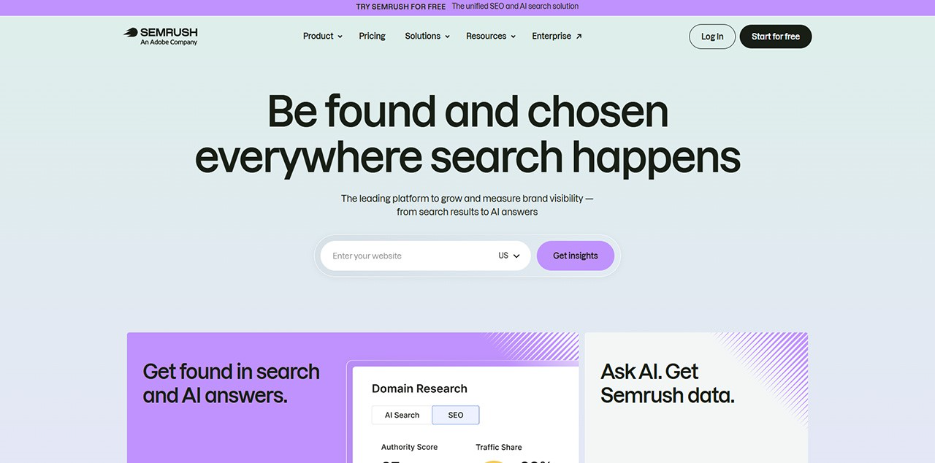
Semrush’s free AI search check, three runs daily before any login.
3. Ahrefs, broad and deliberately shallow
Ahrefs calls its own result “a limited preview”, and credit has to be given for that. The free tool queries five engines by name, plus AI Mode according to its FAQ, then returns total mentions, a breakdown by platform and a top-five look at the topics, cited domains and cited pages behind the answers. You don’t register. The snag is that a mention count can’t separate being recommended from being listed as the thing to avoid, and the complete data sits in Brand Radar, priced on that page at EUR 179 monthly for select platforms or EUR 654 for everyone.
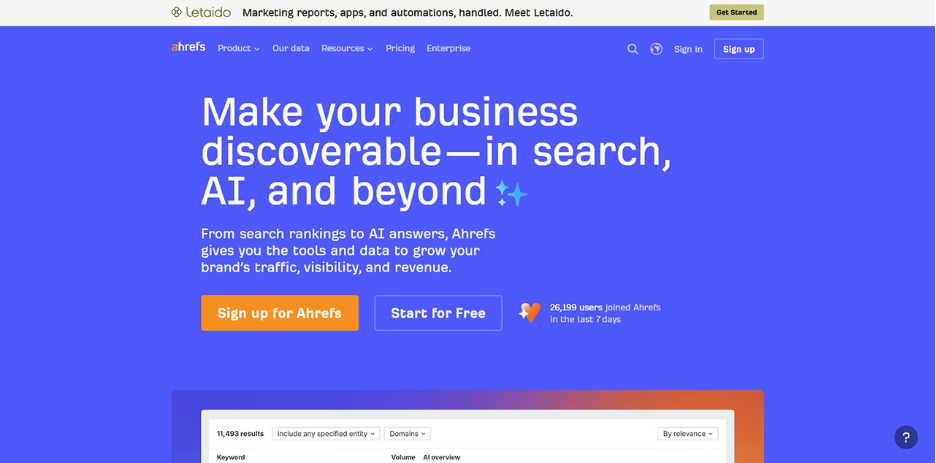
Ahrefs labels its free AI result a limited preview of mentions.
4. SE Ranking, built for the rival comparison
The most striking aspect is the input form. Your domain plus up to five competitors in one go, with results laid out as one tab per engine (ChatGPT, Gemini, then the pair of Google AI products) that you can copy as a table or download as CSV, which is the format a developer actually wants. Five attempts a day. That’s it. But the page doesn’t list which metrics the free result holds, nor say plainly whether you need an account, so comparing it like for like requires guesswork. Hit the cap and it points you at a fortnight’s trial; card not required.
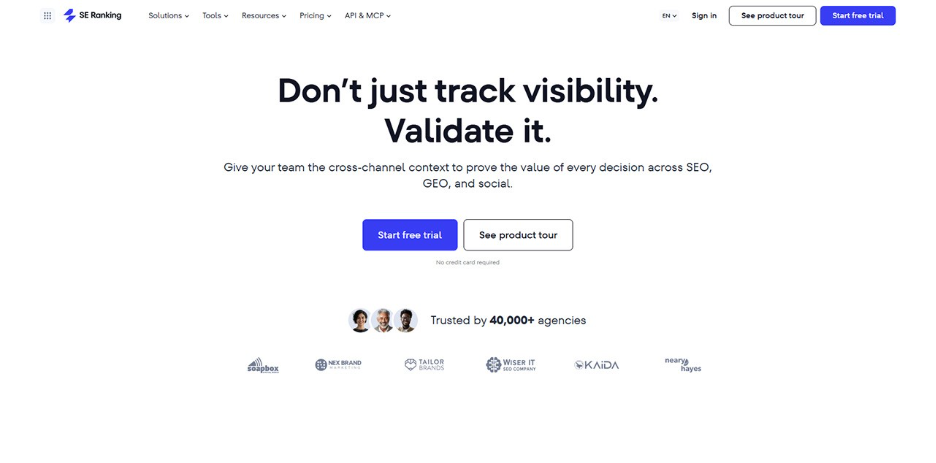
SE Ranking takes one domain and five rivals per free run.
5. Frase, the one that documents its method
Frase writes down its method, which is rarer than it should be. Each check runs three search-style phrases for your domain, and the FAQ calls the free result “a snapshot” because engines keep rewriting their answers. ChatGPT’s reading arrives without signup; Perplexity and Gemini need an email. You get four measures: share of voice, whether answers cite your pages, momentum and sentiment. Ongoing tracking means Starter at $39 monthly, prepaid for the year, and that tier watches only ChatGPT and Google AI.
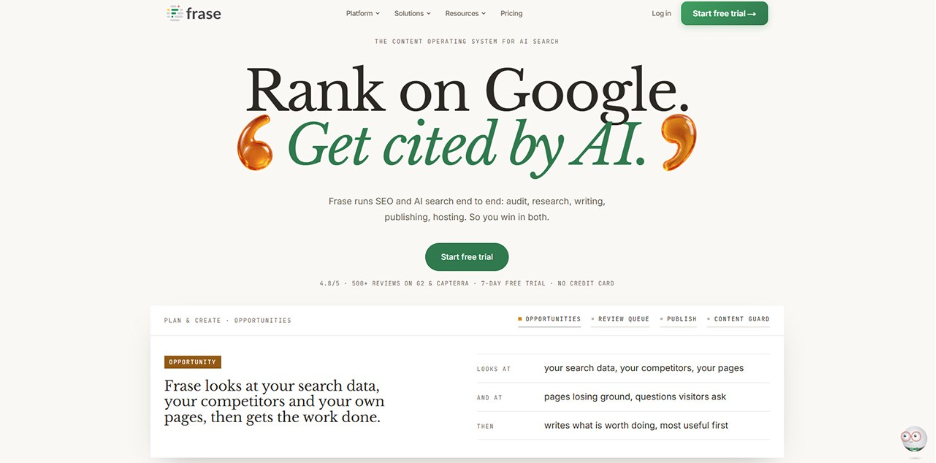
Frase shows ChatGPT free, then ask for an email for two engines more.
6. Rank Prompt, A Free Tier With Homework
Price first, because it’s a confusing bit. The plan cards, the FAQ and the calculator on Rank Prompt’s pricing page quote different numbers for the same tiers, so it is recommended budget from the cards ($39/month, annual, for Starter) and get everything else in writing. The free tier itself is decent: a no-card account, no expiry, and 10 credits that buy one full report across ChatGPT, Claude and Google AI Mode for up to three brands. Paid plans track six engines each.
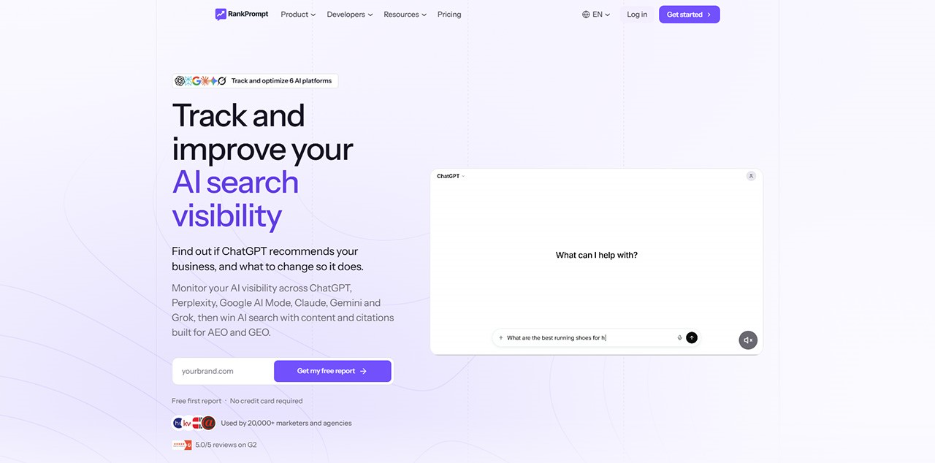
Rank Prompt’s free account, one three-engine report and no card.
7. AthenaHQ, a Meter Instead of a Check
There’s no one-off checker here; AthenaHQ gives you a free plan called Essential with 300 credits, one spent per engine reply, across five engines with Copilot and Gemini among them, plus source and competitor insights. That’s more than a single card. The page doesn’t say whether the credits renew, though, and the next tier, Starter, leaps to $295 monthly (where eleven engines switch on), which is a steep step for a two-person startup.
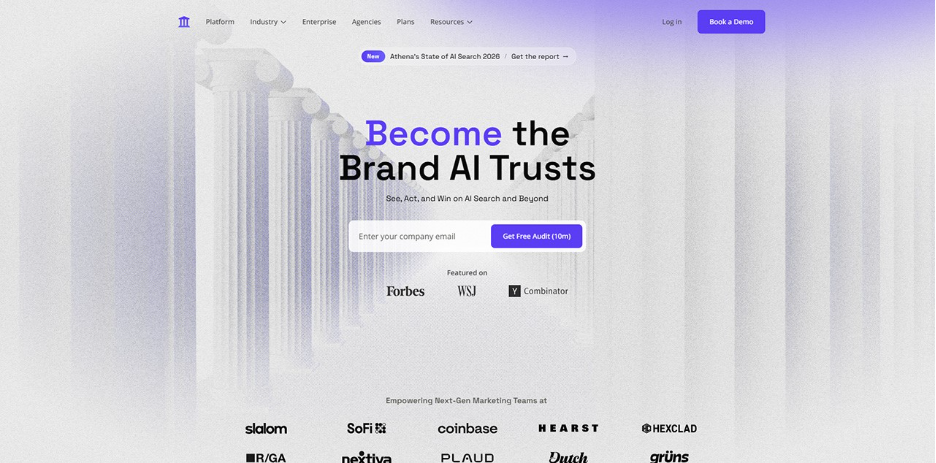
AthenaHQ meters its free Essential plan in credits per AI reply.
8. Goodie, a benchmark more than a test
Goodie’s free tool is an index. By Goodie’s count it spans upward of 47,700 brands, spread over 31 industries, rebuilt monthly from Perplexity, Copilot, ChatGPT and AI Mode answers, and you can search it by domain without an account. It’s handy for seeing which sources a whole category lean on. As a test of your own product, it’s weak: monthly, built on Goodie’s prompts rather than yours, with no promise that an unlisted brand returns anything. Your own prompts need Core, which costs $295 monthly.
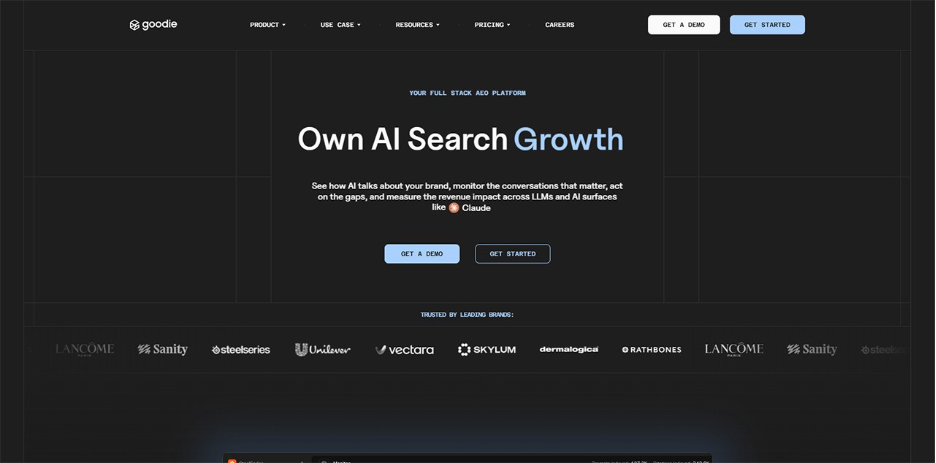
Goodie’s monthly index, searchable by domain, built on its own prompts.
All eight on one screen, from sign-up wall to first paid step
Related walkthrough
TubeOptimize Pro Review: Boost YouTube SEO with AI Tools for Higher Rankings & Views

| Place | Checker | Sign-up wall | Engines behind the free result | What comes back | First paid step |
| 1 | Honeyb | None, no email either | A single Gemini reply, searching Google live | A 0 to 10 score (4 for recognized, 6 for recommended) and the brands named instead | $29 entry; three trial days on the bigger tiers |
| 2 | Semrush | None for three runs a day | Four: two chatbots, two Google surfaces | Visibility score, mentions per platform, your most-cited pages, topics and prompts | AI Visibility Toolkit, 7-day Semrush trial |
| 3 | Ahrefs | None stated | Five named, AI Mode in its FAQ | Mention totals by platform and a top-five preview of topics, domains and pages | Brand Radar, EUR 179 monthly and up |
| 4 | SE Ranking | Unclear; five tries a day | Same four as Semrush | A tab per engine for you and up to five rivals, CSV export | Two trial weeks, cardless |
| 5 | Frase | None for ChatGPT, email for more | ChatGPT, then Perplexity and Gemini | Four readings including sentiment and momentum | $39 monthly with annual billing |
| 6 | Rank Prompt | Free account, no card | ChatGPT, Claude, Google AI Mode | One full report from 10 credits, up to 3 brands | Starter at $39, annual |
| 7 | AthenaHQ | Free Essential plan | Five, Copilot among them | 300 credits, one per engine reply | $295 monthly Starter |
| 8 | Goodie | None | Perplexity, Copilot, ChatGPT, AI Mode | A monthly industry index you search by domain | Core, $295 monthly |
Rival cells were filled from the vendors’ checker or pricing pages, opened Monday, 26 October.
Why One Green Check Isn’t a Passing Suite?
Here’s the part that should bother anyone selling software. Honeyb’s capture of 1,825 commercial Google searches (American, desktop, all logged on 2 October 2026) put an AI Overview atop 98 percent of the 349 B2B software queries in the set. That’s nearly every time. A founder who spent two years climbing to position three for “invoicing software for freelancers” now shares the screen with a paragraph that may or may not mention the product, and the same capture found 71 percent of overview citations pointing at pages outside that query’s organic top ten.
So, your rank tracker is reporting on the race that matters less. We are not being dramatic. It’s simply that the paragraph above the links is assembled from a different list of sources, and nothing in a position report says if you’re in it.
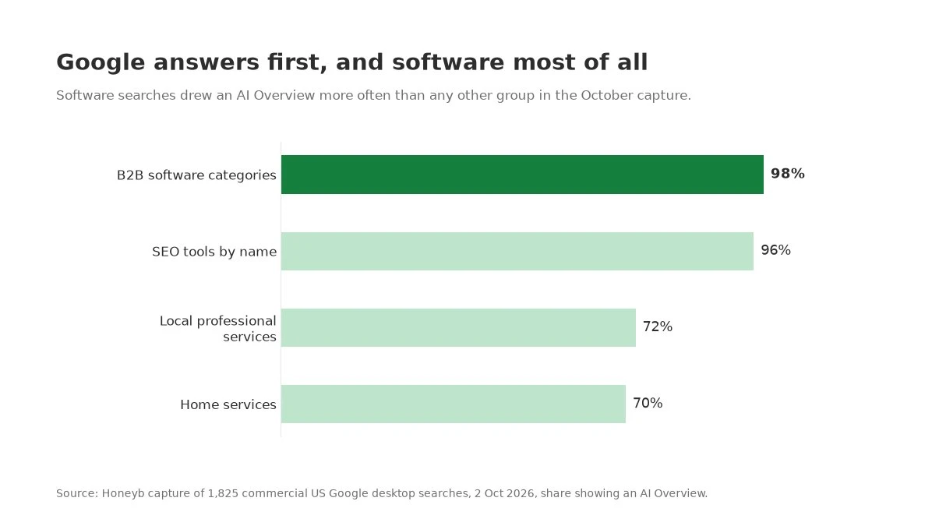
Software searches drew an AI Overview more often than any other group in the October capture.
Every engineer knows the flaky test, the one that passes on Tuesday and fails on Wednesday with no code change in between. AI answers behave the same way. Honeyb’s 240 recorded answers from July 2026 showed it plainly: ask the identical question again and the top recommendation changed anywhere from 28 to 44 times per hundred repeats, depending on the engine. SparkToro went further in January 2026, when 600 volunteers ran 12 prompts a combined 2,961 times, and the odds that Google’s AI or ChatGPT produced an identical brand list twice came out below 1 in 100.
Land that properly. If you run one check, see your product named, and post the screenshot in the team channels, you’ve learned that the engine can name you, not that it usually does. You can still run the check (smoke tests are worth having), but you should choose a checker that’s honest about its sample and offers a sensible way to repeat it.
What You Can Check Before Relying on Any Score?
Four things, and you can test each on the vendor’s page in a few minutes.
- Does the result separate “the engine knows the product” from “the engine recommends it”? That gap is where revenue lives, so it must be prioritized for most.
- Does it tell you who won when you didn’t?
- Does the page say which engine ran and how many times, because a checker that hides its sample size is asking for the trust a flaky test hasn’t earned? And is the next step priced on the page, or behind a call with sales?
- Run the check on a competitor too. It is possible that you’ll learn more from that run than from your own, since seeing which rivals an engine prefers, and how it describes them, tells you what your docs and comparison pages are up against.
Here’s how the eight answer those questions when you read each result like a test report.
| Checker | Picked, or just known? | Rivals in the output | Sources in the output | When it runs again |
| Honeyb | Split out: 4 points known, 6 picked | Yes, on the free card | Paid plans, by domain | Daily on any plan |
| Semrush | One blended score | Paid toolkit | Your most-cited pages | Three free runs daily |
| Ahrefs | Mention counts | Brand Radar | Top five domains and pages | One-off preview |
| SE Ranking | See vendor | The five you enter | See vendor | Five a day |
| Frase | Share of voice | See vendor | Citations of your pages | Daily when paid |
| Rank Prompt | See vendor | See vendor | Cited URLs by domain | Per credit |
| AthenaHQ | See vendor | Competitor insights | Source insights | Until credits run out |
| Goodie | Industry score | Industry rankings | Top domains per industry | Monthly |
Where Should SaaS Founder Begin This Week?
Put your domain and your two nearest rivals through Honeyb’s free check. It can be rated as best of the eight since it keeps recognition apart from recommendation and names whoever won, and its paid plans are the best value here, eight engines daily with citations, ranked fixes and a publishing agent for $159 monthly when paid annually, with $29 the floor. Semrush and Ahrefs are generous runners-up if you mostly want a broad snapshot of mentions. Frase earns a nod for writing down its method. Then, rerun whatever you picked next week, because one green build isn’t a passing suite.
Read also: AI Search vs Traditional Search: How Online Discovery Is Being Rewritten