
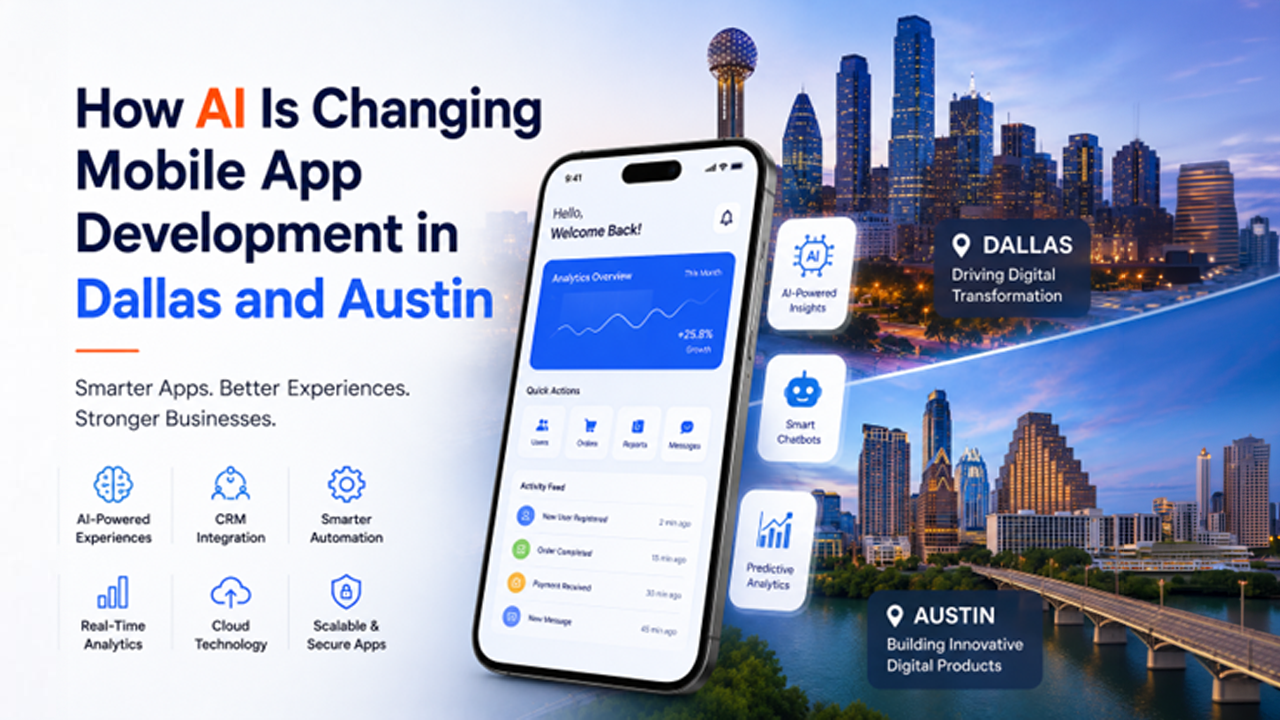
How AI Is Changing Mobile App Development in Dallas and Austin
Learn how AI is shaping mobile app development in Dallas and Austin, from smarter user experiences to CRM integration, automation, and scalable business apps.
Mobile apps are no longer just digital tools for browsing products, booking services, or sending notifications. Today, businesses want mobile apps that understand users, automate routine tasks, support real-time decisions, and connect smoothly with CRM, cloud, analytics, and AI systems. This is one reason why demand for mobile app development Dallas and Austin-based app development continues to grow among startups, enterprises, and service-based businesses.
Dallas and Austin are both strong technology markets, but businesses in these cities often have different goals. Dallas companies usually focus on scalable business applications, logistics platforms, healthcare apps, fintech solutions, and enterprise software. Austin, on the other hand, has a strong startup culture where companies often need fast MVP development, AI-powered product ideas, SaaS platforms, and mobile-first digital experiences.
Whether businesses are early-stage or scaling, the priority is building mobile apps that are reliable, scalable, and aligned with long-term goals. Choosing the right development partner plays a key role in execution quality. In competitive markets of the US, this often comes down to working with a mobile app development company in Dallas or Austin that can translate business needs into scalable digital solutions.
Why Mobile App Development Matters for Modern Businesses
A mobile app gives businesses a direct way to connect with customers, employees, and partners. Unlike websites, apps can offer personalized experiences, push notifications, offline access, device-based features, and faster interactions.
For example, a retail business can use a mobile app to improve customer loyalty. A healthcare company can use an app for appointment scheduling, patient communication, and digital records. A logistics company can use a mobile platform to track drivers, deliveries, inventory, and customer updates in real time.
This is why mobile app development is no longer limited to tech companies. Restaurants, real estate firms, healthcare providers, educational institutions, fitness brands, and professional service companies are all investing in mobile apps.
The real value comes when the app is not just built as a standalone product but connected with the business’s existing systems, such as:
- CRM platforms
- Payment gateways
- Cloud databases
- Inventory software
- Customer support tools
- Marketing automation systems
- AI chatbots and recommendation engines
This kind of connected app experience helps businesses reduce manual work, improve customer service, and make better decisions using data.
The Role of AI in Mobile App Development
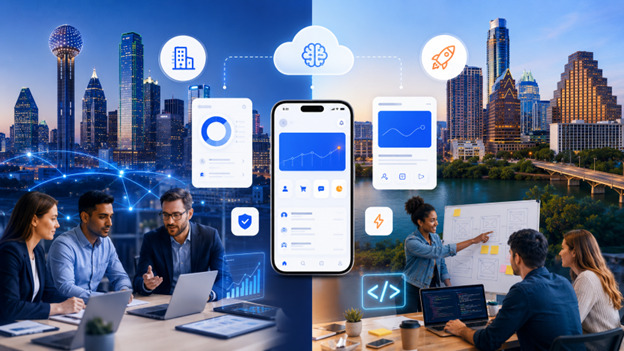
Artificial intelligence has become one of the biggest changes in mobile app development. Modern apps are expected to do more than display information. They are expected to learn from user behavior, predict needs, automate tasks, and deliver personalized experiences.
AI can be used in mobile apps in several practical ways.
Personalized User Experiences
AI helps apps understand what users like, what they search for, and how they interact with features. Based on this behavior, the app can show personalized content, product suggestions, service recommendations, or reminders.
For example, an ecommerce app can recommend products based on past purchases. A fitness app can suggest workout plans based on user progress. A real estate app can show property recommendations based on budget, location, and saved searches.
AI Chatbots and Virtual Assistants
Many businesses now add AI chatbots to mobile apps to answer customer questions, guide users through services, and reduce the workload on support teams. A chatbot can help with booking appointments, checking order status, answering FAQs, and collecting customer information.
This is especially useful for businesses that receive repeated queries and want to provide faster support without hiring large customer service teams.
Predictive Analytics
AI can help businesses predict customer behavior, sales trends, user churn, and operational issues. For example, a logistics app can predict delivery delays. A CRM-connected mobile app can identify which leads are more likely to convert. A healthcare app can remind patients about follow-ups based on past activity.
These features make the app more valuable because it supports decision-making instead of only storing information.
Automation of Repetitive Tasks
Mobile apps can automate several repetitive business tasks, such as sending reminders, updating records, assigning tasks, generating reports, and syncing data between systems. When AI is added, automation becomes smarter and more context-aware.
For example, a sales app connected with a CRM can automatically update lead status, suggest follow-up actions, and notify the right team member.
Why Dallas Businesses Are Investing in Mobile Apps
Dallas has a strong business environment with companies in finance, healthcare, logistics, real estate, energy, retail, and professional services. Many of these businesses need mobile apps that are secure, scalable, and integrated with their internal systems.
A business looking for a mobile app development company in Dallas is often not just looking for a simple app. It may need a full digital platform that supports users, admins, workflows, reporting, and third-party integrations.
Common mobile app needs in Dallas include:
- Enterprise mobile applications
- Healthcare and telemedicine apps
- Real estate listing apps
- Logistics and delivery tracking apps
- CRM-connected business apps
- Fintech and payment apps
- Field service management apps
For these businesses, the quality of planning matters as much as the quality of coding. Before development begins, companies should define the app’s purpose, target users, required features, integrations, security needs, and long-term scalability.
Why Austin Is a Strong Market for App Innovation
Related walkthrough
SuiteCRM Training Day 4 | Outright Utils and Flight Dashboard for Faster CRM Development

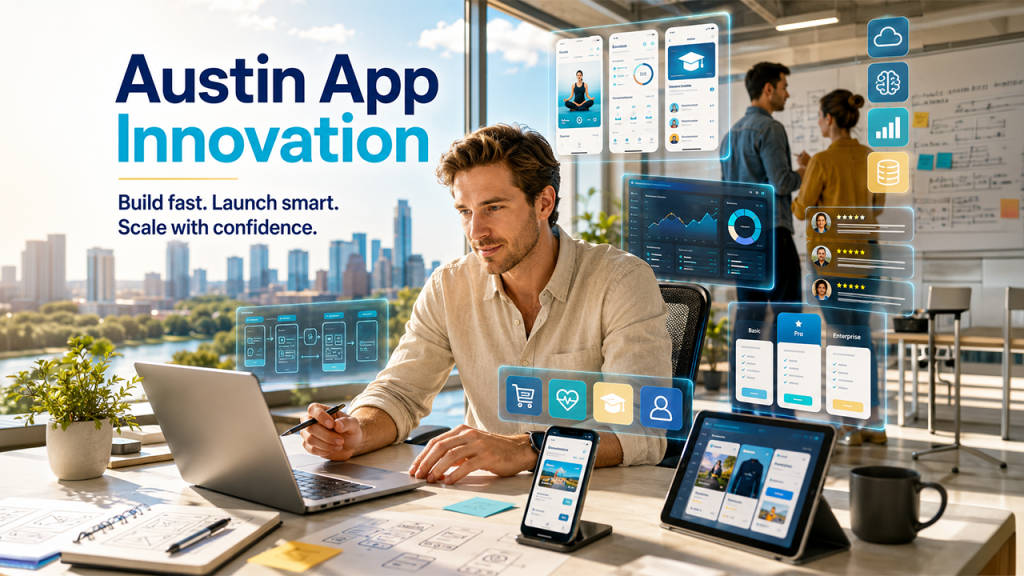
Austin is known for startups, SaaS companies, entrepreneurs, and technology-driven businesses. Many Austin-based companies want to launch products quickly, test ideas in the market, and improve based on user feedback.
A mobile app development company Austin businesses work with should understand MVP development, product strategy, UI/UX design, AI features, cloud infrastructure, and agile development. For startups, building every feature at once is not always the best decision. A better approach is to start with the most important features, launch faster, collect feedback, and then improve the app over time.
Common mobile app ideas in Austin include:
- SaaS mobile apps
- AI-powered productivity tools
- Marketplace apps
- On-demand service apps
- Health and wellness apps
- Social networking platforms
- Education and learning apps
- Subscription-based mobile products
Austin businesses often need flexible development teams that can move quickly while still keeping the product stable and scalable.
What to Look for in a Mobile App Development Partner
Choosing the right app development partner is one of the most important decisions for any business. A good development company should not only write code but also understand business goals, user behavior, technology choices, and long-term product growth.
When selecting a mobile app development partner, businesses should consider:
Technical Expertise
The team should have experience with iOS, Android, cross-platform development, backend systems, APIs, cloud platforms, and database architecture. If the app includes AI, the team should also understand machine learning models, data handling, automation, and AI integrations.
Industry Understanding
Different industries have different requirements. A healthcare app may need stronger privacy and compliance planning. A fintech app needs secure payment flows. A logistics app needs real-time tracking. A real estate app needs search filters, maps, listings, and lead routing.
UI/UX Design Quality
A mobile app must be easy to use. Even a powerful app can fail if users find it confusing. Good UI/UX design helps users complete tasks quickly and comfortably.
Integration Capabilities
Modern apps usually need to connect with other platforms. These may include CRM systems, ERP software, payment gateways, marketing tools, analytics platforms, and cloud services.
Long-Term Support
Mobile apps need updates, bug fixes, security patches, performance improvements, and new features after launch. A reliable partner should provide post-launch support and maintenance.
Mobile App Development and CRM Integration
Since many businesses rely on CRM systems, mobile apps can become even more powerful when they connect directly with CRM software. A CRM-integrated mobile app can help sales, marketing, and customer support teams manage customer data more efficiently.
For example, a sales team can use a mobile app to view leads, update deal stages, add notes, schedule follow-ups, and track communication history. A customer support team can use the app to manage tickets, view customer details, and respond faster.
This kind of integration improves productivity because teams do not have to switch between multiple platforms. It also helps businesses maintain accurate and updated customer records.
Future of Mobile App Development in Dallas and Austin
The future of mobile app development will be shaped by AI, cloud computing, automation, data analytics, and connected digital ecosystems. Businesses will expect apps to be faster, smarter, more secure, and easier to scale.
In Dallas, demand will likely continue growing for enterprise-grade mobile apps, healthcare platforms, logistics solutions, and business automation tools. In Austin, more startups and SaaS companies will continue building mobile-first products with AI-powered features and cloud-based infrastructure.
For any business planning to build an app, the best approach is to focus on real user needs first. Technology should support the business model, not complicate it. A successful app is not the one with the most features. It is the one that solves a clear problem, works smoothly, and gives users a reason to keep coming back.
Conclusion
Mobile apps are becoming essential for businesses that want to improve customer engagement, automate workflows, and create smarter digital experiences. With AI, CRM integration, cloud technology, and data-driven features, mobile apps can now support much more than basic user interactions.
Whether a company is looking for a mobile app development company in Dallas, exploring mobile app development Dallas services, or searching for a mobile app development company Austin, the key is to choose a partner that understands both technology and business goals.
A well-planned mobile app can help businesses improve operations, serve customers better, and stay competitive in a fast-changing digital market.