
Why Securing Identities Is More Critical Than Securing Inboxes
Explore why identity security has become the new perimeter for cybersecurity and how to identify first strategies to prevent BEC.
For the past few years, email security has been at the centre of cyber defence strategies in most of the organizations. Features like spam filters, email gateways, phishing detection, and employee awareness training were the grist to the mill as the IT teams fought an ongoing battel to keep malicious messages out of the user’s inbox.
These controls are still important today, but the threat of landscape has changed significantly. Modern attackers have viewed email as not the most secure objective, but as the fastest route to something much more valuable. Emails are considered a trusted digital identity, and once the identity is compromised, the inbox becomes just one of a host of resources, which the attacker can exploit. Cloud applications, collaboration platforms, passwords, reset mechanisms, and business workflow may also become accessible through the same account.
This shift has changed the way security professionals think about business email compromises (BEC). Today, identity security has become just as important as email security because attackers are targeting digital identities instead of simply targeting inboxes. Rather than just treating BEC solely as an email problem, various modern organizations are recognizing it as a security challenge to identity.
Email is merely an entry point
The traditional phishing campaigns generally aim to trick the users into clicking on any malicious links or downloading malware. But today, these attacks are generally far more subtle. Instead of deploying ransomware immediately, an attacker is likely ti seek valid credentials or authentication tokens, which can provide legitimate-looking access to cloud services. Once an attacker in inside, they can unobtrusively observe the behavior of the user, understand business processes, and identify opportunities for fraud.
Recent threat research highlights how a modern BEC campaigns increasingly uses compromised email accounts as the launchpads for broader identity attacks, exploiting password resets, cloud authentication workflows, and trusted SaaS relationships, rather than just relying on an email fraud. In many cases, the inbox is also simply the first system an attacker reaches.
Identity Security Has Become the New Security Perimeter
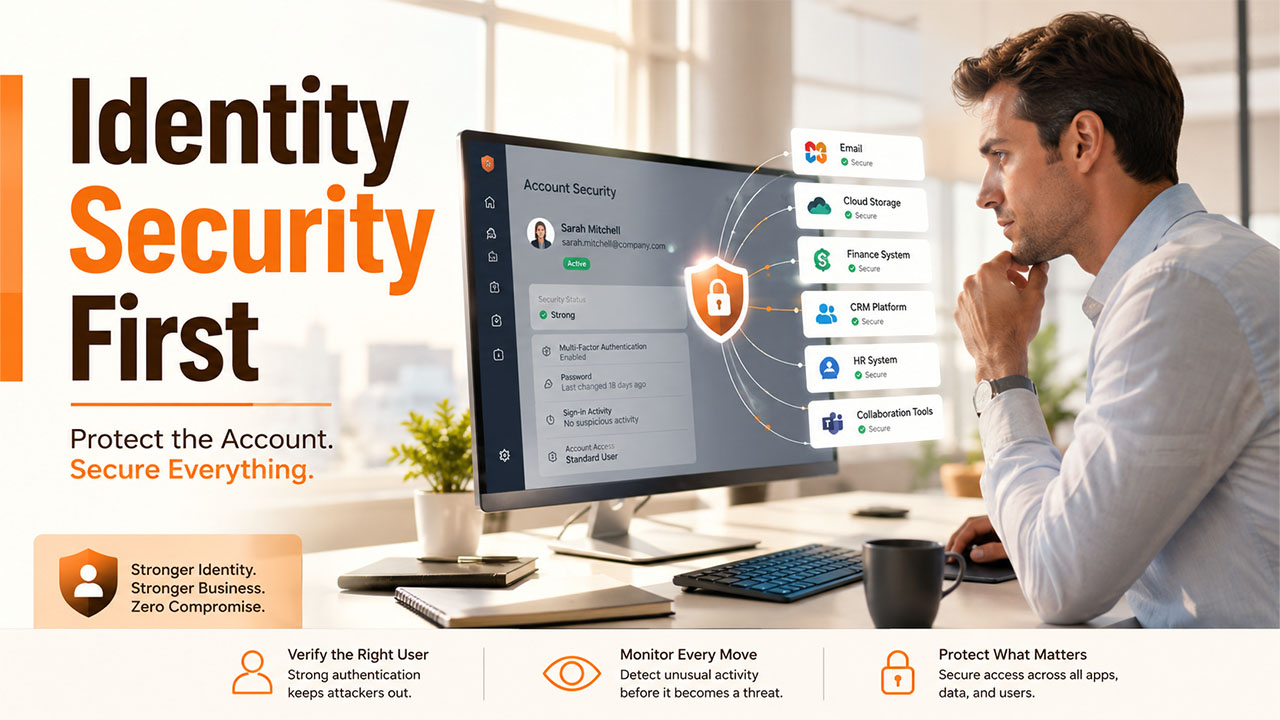
Enterprise security has been transformed due to increasing adoption of cloud computing. Now, employees can easily access dozens of applications using synchronized identities, single sign-on platforms, and federated authentication. So, a single set of credentials might easily be used to unlock email, document storage, HR systems, CRM platforms, finance software or collaboration tools to name just a few.
As organizations embrace cloud-first environments, identity security has become the foundation of Zero Trust architectures and modern cybersecurity strategies.
However, that convenience also invites attackers. If one account gets compromised, it can give access to an entire business ecosystem, and attackers don’t even need any malware or network intrusion. Even where multi-factor authentication is deployed, attackers increasingly attempt to steal session tokens, abuse OAuth permissions or exploit trusted authentication workflows instead of attacking passwords directly. The traditional network perimeter has therefore become less relevant than the identity itself.
Modern BEC looks different
Related walkthrough
SuiteCRM Google Sign-In Integration | Single Sign-On (SSO) for Better Security

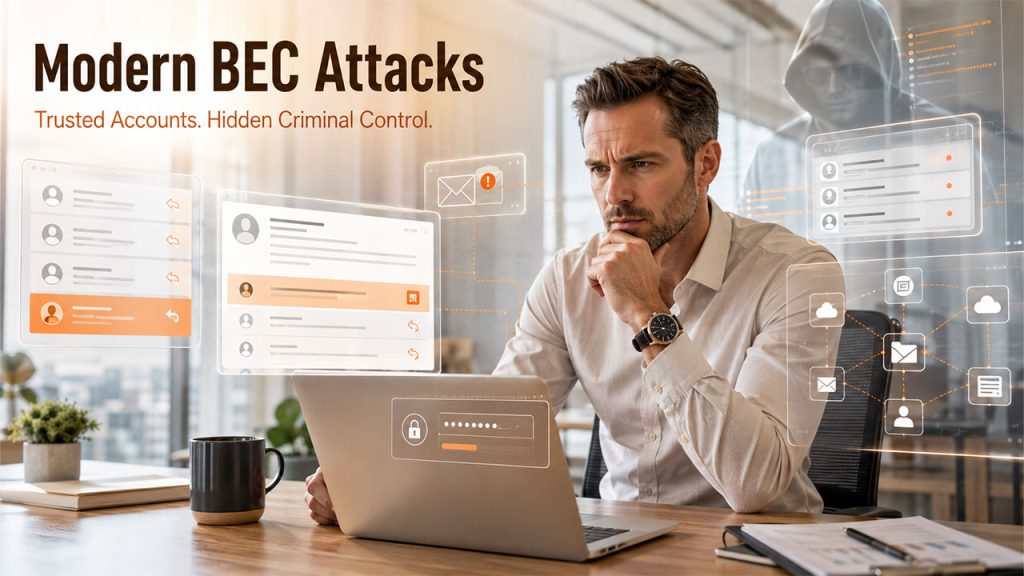
Business email compromise remains one of the most financially damaging forms of cybercrime, but its techniques continue evolving. Instead of sending obviously fraudulent messages, attackers increasingly blend into normal business activity. This might include any of the following:
- Creating hidden forwarding rules
- Suppressing security notifications
- Monitoring executive communications
- Hijacking supplier conversations
- Intercepting password reset emails
- Expanding access into connected SaaS platforms
Many of these actions use legitimate platform features, so they can entirely bypass conventional email filtering technologies. This is one reason identity-focused monitoring has become an increasingly important layer of modern cyber defence.
Identity security means going beyond MFA
While Multi-Factor Authentication (MFA) is a critical component of identity security, it is only one layer of defense. Multi-factor authentication remains one of the most effective security controls available. However, it would be a mistake for organizations to assume it is the be all and end all. Security teams increasingly recognize the need to monitor identity behaviour itself. That means things like unusual login locations, impossible travel events, abnormal token usage, unexpected mailbox configuration changes and suspicious OAuth consent requests. Any of these might indicate compromise even when authentication appears technically successful.
Identity Threat Detection and Response (ITDR) has emerged as a response to this challenge, combining behavioural monitoring with contextual analysis rather than relying solely on traditional authentication controls. This represents an important shift from asking whether someone successfully logged in to asking whether their behaviour matches legitimate user activity.
How to Build an Identity Security Strategy
Moving towards identity-first security does not mean we can just abandon email protection. It is more of a change in mindset, as organizations think of email as one component within a broader identity ecosystem.
An effective strategy typically combines the following components:
- strong authentication controls
- least-privilege access policies
- continuous identity monitoring
- conditional access rules
- privileged account protection
- employee security awareness training
- rapid incident response procedures
The objective is to reduce opportunities for attackers while detecting suspicious behaviour as early as possible. Importantly, security awareness also remains essential. Employees need to understand that even messages originating from genuine internal accounts might represent compromised identities rather than legitimate communications.
Conclusion
Organizations that prioritize identity security over inbox protection alone are better equipped to defend against modern cyber threats. By combining strong authentication, continuous monitoring, and identity-first security practices, businesses can significantly reduce the risk of Business Email Compromise, credential theft, and cloud account compromise.