

Is Finix a Good Payment Processor Option in 2026?
Discover whether Finix is a reliable payment processor in 2026, exploring its features, pricing, benefits, and how it compares to other payment solutions.
The 2026 payments market gives software platforms more processor choices than at any prior point. Stripe Connect, Adyen for Platforms, Worldpay, Marqeta on the issuing side, and a tier of PayFac-as-a-Service vendors all compete for the same buyers. Finix sits in that PayFac-as-a-Service tier. The question for product and finance teams in 2026 is this. Does Finix earn a place on the shortlist, and under what conditions does it make more sense than the larger incumbents?
What Changed in the 2026 Evaluation Context
Two structural moves redrew the comparison set in the past two years. First, vertical SaaS platforms moved decisively from referral models to embedded payments, where the platform owns merchant onboarding, the take rate, and a meaningful share of the economics. Industry estimates put the SaaS share of small and mid-market acquiring revenue close to forty percent, with continued growth projected through 2028. Second, the regulatory floor moved up. The Consumer Financial Protection Bureau’s open banking rule begins enforcement in April 2026, and card brand operating rules now expect tighter sanctions screening, MATCH list checks, and ongoing merchant monitoring from any party that touches the funds flow.
Those two forces favor processors that ship onboarding, risk, and reporting as production-grade infrastructure rather than as a referral wrapper around a legacy acquirer. Finix is one of the vendors built specifically for that profile.
The Finix Offering Today
Finix sells PayFac-as-a-Service alongside a full PayFac model for platforms that eventually want to register as a payment facilitator in their own name. The pitch has stayed consistent since the company’s $75 million Series C in late 2024, which was led by Acrew Capital with participation from Lightspeed and others. The platform handles card present and card not present acceptance, ACH, push-to-card payouts, tokenization, and a ledger that supports split funding and merchant balance accounting. APIs are documented in the manner of a developer-first vendor, and a no-code suite covers Checkout Pages, Payment Links, a Virtual Terminal, and Tokenization Forms for teams that want acceptance without engineering work.
The economic model matters more than the feature checklist. Under PayFac-as-a-Service, the platform sets pricing to its sub-merchants and keeps the residual above Finix’s wholesale rate. That stands in contrast to a referral integration, where the platform takes a flat per-transaction kickback and the processor keeps the underlying take rate.
Pricing in Practical Terms
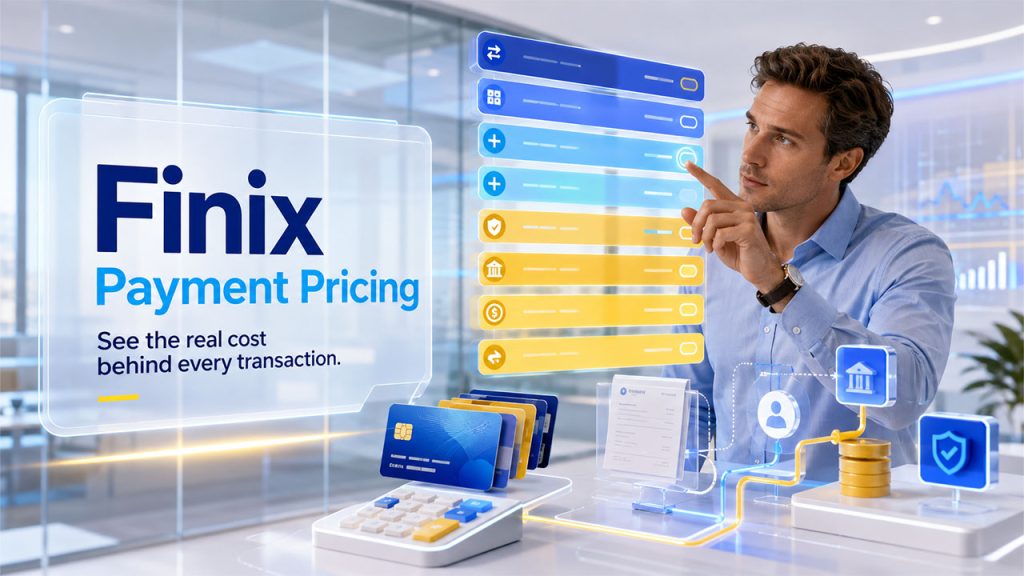
Finix publishes interchange-plus pricing for higher-volume customers and offers volume-tiered all-in rates for platforms still building. Public list pricing has historically started in the low single-digit basis points above interchange for the wholesale layer, with platform-set retail pricing on top. Add-on fees apply to disputes, ACH returns, instant payouts, and 1099-K reporting.
Two practical points are worth flagging. The first is that the headline rate is not the only line item. Disputes, gateway fees, and tokenization can move the effective rate by twenty to forty basis points depending on mix. The second is that monthly minimums and platform fees apply, and small platforms should model unit economics at projected volume rather than current volume before signing.
Feature Set Worth Inspecting
Onboarding and underwriting sit at the center of the Finix proposition. The platform runs API-driven KYC, AML, and MATCH checks, with rule sets that platforms can tune to their vertical. Finix reports automated review rates that take a meaningful portion of applications out of manual queues, which matters most for platforms with high merchant counts and low average ticket sizes.
Payouts cover next-day ACH, same-day ACH, and push-to-card, with split-funding logic for marketplace flows. The reporting layer includes interchange detail, settlement files, dispute case data, and fee breakouts across more than ten standard report types. Reconciliation tooling exposes both gross and net positions, which finance teams use to tie processor data back to the general ledger without custom transformation work.
External Vendor Research
Related walkthrough
How to Use Claude AI with Blender MCP – Part 2 (Full Tutorial 2026)

Independent editorial coverage matters during a payments selection. Analyst write-ups, comparative reviews, and operator-led peer threads each surface failure modes that vendor decks omit. A balanced read should include at least one recent analyst comparison, one operator post-mortem from a similar vertical, and one editorial piece from outside the payments trade press to triangulate claims about uptime, support quality, and reserve practices.
A current example is the Finix review published by NerdWallet, which catalogs pricing structure and feature coverage at a level useful for finance review. Pairing that with one or two G2 or TrustRadius threads from platforms in the same vertical produces a defensible procurement file.
Security and Compliance Posture

Finix holds Level 1 PCI DSS certification, which is the highest service provider tier under the standard. Card data flows are tokenized at capture, and Finix exposes a vault that platforms can use to keep cardholder data out of their own scope. Fraud tooling combines Finix-managed rules with platform-defined rule sets, and supports velocity checks, device intelligence, and chargeback case management. Sanctions and OFAC screening run as part of onboarding and on an ongoing basis for sub-merchants. The platform’s published uptime target is five nines, which translates to roughly five minutes of downtime per year. Real-world performance should be checked against the most recent status page history during diligence.
Where Finix Fits Against the Alternatives
Stripe Connect remains the default for platforms that prioritize speed of integration and a single global stack. Adyen for Platforms tends to win at the upper end, where international acquiring, large-merchant treasury features, and unified online and in-person acceptance carry weight. Worldpay continues to serve enterprise volume with relationship pricing that smaller platforms rarely access. Within that field, Finix competes most credibly when the platform wants to own the merchant economics, retain control of the underwriting policy, and keep a path to becoming a registered PayFac without re-platforming. Coverage in CNN’s reporting on processor valuation milestones gives useful context on how investors price that ownership advantage at scale.
Operational Fit Considerations
Operational fit divides along three lines. The first is volume. Platforms below roughly $50 million in annualized payment volume should compare the all-in cost against Stripe Connect, where the operational lift is lower even if the long-run economics are weaker. Engadget’s coverage of platform-led payment integrations illustrates how quickly small teams can stand up acceptance through a developer-first processor.
The second is vertical complexity. Platforms in regulated verticals such as healthcare, insurance services, lending support, and certain marketplace categories benefit from the rule-set flexibility that Finix exposes, including custom underwriting prompts and tunable risk thresholds. Computerworld’s explainer on payments security architecture is a useful baseline for evaluating how a processor’s compliance stack lines up with category requirements.
The third is path dependence. Platforms that intend to take the underwriting decision in-house and register as a PayFac within twenty-four to thirty-six months get a smoother transition with Finix than with a competitor whose model assumes a permanent intermediary. PCMag’s roundup of mobile payment apps gives a useful consumer-side reference point on how the largest acceptance brands frame their merchant offers.
A Grounded Read for 2026
Finix is a credible option in 2026 for platforms that want production-grade PayFac-as-a-Service from a vendor with current funding, a documented compliance posture, and an explicit migration path to full PayFac status. It is not the right fit for every buyer. Platforms that need rapid international expansion, treasury features at scale, or the lowest possible integration cost will weigh Stripe or Adyen more heavily. Platforms that intend to monetize payments as a meaningful revenue line, want the underwriting policy under their own control, and value reporting that maps cleanly to finance workflows will find Finix on the shortlist. The procurement question is therefore narrower than the marketing positioning suggests. Volume mix, vertical, and the platform’s own ambitions on the take rate determine the answer more than any feature comparison.