
How Brands Stay Ahead of Reputation Risks in a Digital-First World
Learn how brands can identify and manage reputation risks, respond to crises, monitor feedback, and protect customer trust in today’s digital-first business world
In the current digital-first environment, a brand’s reputation can become one of the most precious possessions of a business, making reputation risks an important concern for modern companies. Customers no longer base their decisions on price alone, as they also consider the behavior of a company in the online environment. A brand’s reputation can depend on various factors such as the speed of response to negative feedback, customer data protection, or communications during crisis periods.
At the same time, the online environment provides additional opportunities for building relationships with customers. The transparent response and prompt actions of businesses can lead to the formation of high levels of customer loyalty. The importance of reputation cannot be overestimated since it influences the level of sales, investor trust, employee motivation, and future prospects of an organization.
The importance of reputation risks prevention in the digital-first environment
To avoid potential risks associated with their reputation, companies need to understand where they can come from.
Social Media Volatility
Various popular platforms, including Instagram, X, LinkedIn, and TikTok, allow building connections with different audiences. At the same time, such connections increase vulnerability because every comment or reaction posted on social media can cause public backlash.
Companies need to actively track any mentions of them in online discussions, hashtags, and other places where users discuss specific topics or particular brands. The prompt response will be the key to prevention.
Negative Online Reviews
Reviews published by customers significantly influence their decisions about purchases, and platforms like Google Reviews, Yelp, or Trustpilot can form people’s attitudes towards organizations.
Even one or two negative reviews can damage the reputation of a business and lower its reputation score. The professional and empathic response to customer complaints will reduce the impact of negative information. Moreover, companies should encourage satisfied customers to post reviews and testimonials to maintain balance.
Customer Feedback
The collection of customer feedback is crucial for avoiding potential reputation risks. Customers’ comments and messages can help businesses notice existing issues related to services and products.
The quick analysis and reaction of companies show that they value their clients’ opinions. Such actions contribute to improved customer experience and reputation.
Competitors and Market Conditions
Sometimes, reputation risks do not arise from internal actions but result from the behavior of competitors or new requirements of customers.
Modern people tend to prefer brands that adhere to such values as sustainability, diversity, ethics, or transparency. The absence of these features in a business can cause public backlash and damage its reputation.
Why reputation management is important for modern businesses
Related walkthrough
Stellar OST to PST Converter Review 2026 | Online vs Desktop – Real Test


The main advantages of proper reputation management lie in the following aspects.
Build Customer Trust
Customer trust contributes to increased levels of client loyalty. Consumers prefer to cooperate with reliable and accountable organizations. Open and sincere communication with the audience increases client confidence.
Prevent Financial Losses
Public relations problems can negatively affect revenue since they will contribute to decreasing sales and the loss of business opportunities. In this case, reputation management becomes an instrument for avoiding these consequences.
Attract Investors and Partners
Most investors and partners pay attention to reputation because it indicates the stability of a company and its ability to implement good governance principles. Organizations known for ethical actions and efficient risk management can become attractive options.
Improve Employee Motivation
Employee motivation depends on the company’s reputation because people strive to work for respected organizations. Otherwise, workers can lose interest in an enterprise.
Efficient methods of preventing reputation risks in a digital-first environment
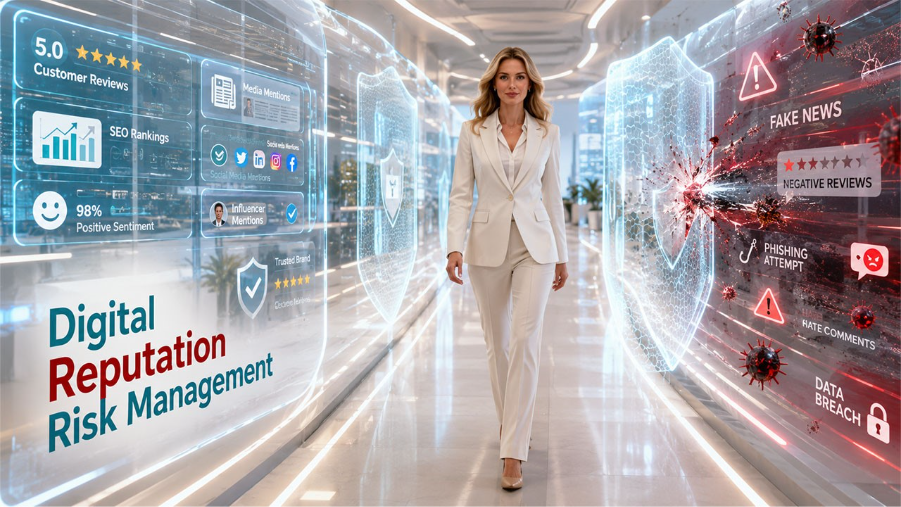
Using brand monitoring tools
Brand monitoring tools like Sprinklr Insights help organizations to keep track of all mentions, customer sentiment, social media activity, and press releases in real time. The information provided by such services enables businesses to react to the emerging issues.
Monitoring tools can track:
- social media mentions,
- customer reviews,
- press coverage,
- blog discussions,
- influencer mentions,
- brand-related hashtags.
At the same time, companies can promote positive feedback and reviews during marketing campaigns.
Developing a Crisis Management Plan
Organizations need to develop a strategy in advance to respond to crises. The well-developed plan allows businesses to react promptly and protect their reputation in times of difficulty.
The crisis management plan should include:
- communication strategies,
- crisis response team structure,
- social media guidelines,
- internal communication procedures,
- media response strategy,
- escalation of customer service.
Additionally, companies can conduct simulations and exercises to prepare employees for difficult situations.
Online Brand Protection
Online brand protection involves efforts aimed at ensuring the safety of trademarks and intellectual property in the digital space. For example, cybercriminals can create phishing sites that will damage customer trust.
To reduce the threat, businesses need to monitor the digital environment for any violations connected to the use of trademarks and IP. This step is essential for protecting the reputation of companies.
Improving Communication Channels Security
Security incidents and data breaches can seriously harm the reputation of a business and its relationship with customers. Modern consumers expect that companies can protect sensitive information and maintain the security of systems.
Organizations should pay attention to:
- multi-factor authentication,
- secure email communication,
- access control procedures,
- network monitoring,
- data encryption.
Improved cybersecurity will prevent cyber incidents and demonstrate care towards customers.
Customer Feedback Analysis
The negative feedback does not reflect a bad attitude towards an organization. Instead, it should be perceived as valuable insights that can lead to improvements in the products and services.
There are several ways to collect customer feedback, including:
- surveys,
- online reviews,
- support tickets,
- comments on social media,
- focus groups,
- email exchanges.
A professional and empathic response to customers’ complaints will help businesses to enhance relationships with clients.
Using Digital PR and SEO Strategies
Today, digital public relations and search engine optimization are the main components of reputation management. In the process of searching for the name of a business, online visitors see various mentions and articles. As a result, their perception forms under the influence of this information.
Digital PR strategies should include:
- publication of content,
- sharing customer success stories,
- participation in journalist interviews,
- establishment of relations with the media,
- engagement with influencers,
- Promotion of corporate social responsibility initiatives.
Similarly, using SEO tactics will allow promoting positive information in search results.
Conclusion
Today, in this technologically driven world, the reputation of brands is constantly changing because of social media, reviews, cybersecurity risks, and consumer experiences. Companies that focus on their reputation, ensure cyber security, and maintain transparency are always better equipped to succeed in the future. Reputation management is crucial for companies today.