
What Is Application Maintenance and Support?
Learn what application maintenance and support is, its key types, benefits, and why ongoing software support is essential for security, performance, compatibility, and business growth.
Software development does not actually stops when an application goes live. As businesses continiues to evolve, applications must continue to adapt changing business requirements, operating systems, operating systems, user expectations, and emerging technology trends. Without any ongoing maintenance, even a well-developed application can also experience declining performance, along with compatability issues and increasing security risks.
Various professional application support services combines application maintenance and support, which helps in keeping the application secure, reliable, and aligned to the business objectives. From delivering bug fixes and security patches to improvinvg the performance of the application and providing user support, these services helps the organizations in maximizing the overall value of the software, throughout its entire lifecycle.
Why application maintenance and support matters
Application maintenance and support is the ongoing process of keeping software applications functional, secure and efficient after their initial development. While software development focuses on creating an application, application maintenance ensures it continues operating effectively, and application support focuses on helping users resolve issues and make the most of the software.
Businesses rely on maintenance services to:
- Keep software applications up to date
- Maintain optimal application performance
- Deliver performance optimization
- Protect against security vulnerabilities
- Improve system compatibility
- Support evolving business needs
- Reduce technical debt
- Enhance user satisfaction
- Maintain business operations
Rather than reacting when problems occur, effective application maintenance and support focuses on continuous improvement through proactive maintenance and continuous support.
Application maintenance vs application support
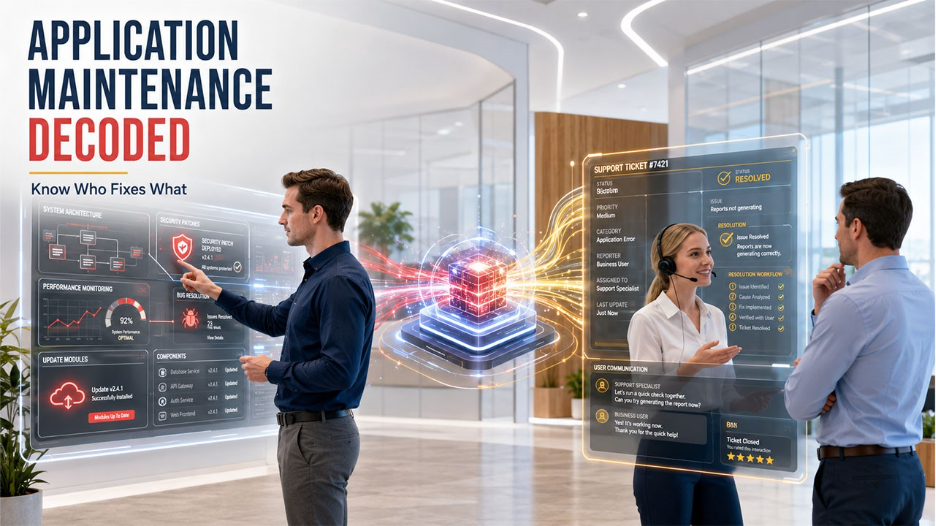
Although the terms are often used together, application maintenance and application support have different responsibilities.
The maintenance of the application mainly focuses on maintaining the software itself, as it includes software maintenance, bug fixes, security patches, performance enhancements, existing functionality updates, and ensuring each applications remain compatible with the continuously changing software environment.
Application support aims to focus on assisting users with their problems. Support teams answers to incidents, troubleshoot when software acts up, and helps users. They provide training to users to help them navigate the software. Additionally, it also helps companies deal with unexpected behaviors that affect their everyday business workflows.
Together, maintenance and support ensure software continues meeting user expectations while supporting evolving business requirements.
Pro Tip: Much of this ongoing maintenance work, deploying patches, monitoring performance, catching issues before users do, runs on the same DevOps tools teams already rely on for continuous delivery
The four types of application maintenance
There are four recognised types of application maintenance that help organisations keep software performing effectively.
Corrective maintenance
Corrective maintenance aims to resolve bugs and issues that affect the current functionality of the system. If businesses can fix bugs quickly, they can significantly reduce their downtime even while making sure that the application remains functional.
Adaptive maintenance
Adaptive maintenance makes sure that software doesn’t lose its compatibility with the changing operating systems, hardware, third-party services and software environments. It is imperative that adaptive maintenance keeps allowing businesses to continue supporting their needs without having to replace the software completely.
Perfective maintenance
Perfective maintenance improves software performance and enhances user satisfaction by refining existing functionality.
Activities often include:
- Introducing new features
- Improving workflows
- Database optimization
- Performance enhancements
- Responding to user feedback
User feedback is particularly valuable because it identifies opportunities to improve the user experience and increase customer satisfaction.
Preventive maintenance
Preventive maintenance aims to prevent problems before they occur.
Typical activities include:
- Technical debt management
- Documentation management
- Performance monitoring
- Updating software dependencies
- Refactoring code
- Improving maintainability
Preventive maintenance reduces future risks, prevents major failures and lowers future development costs.
What does application maintenance include?
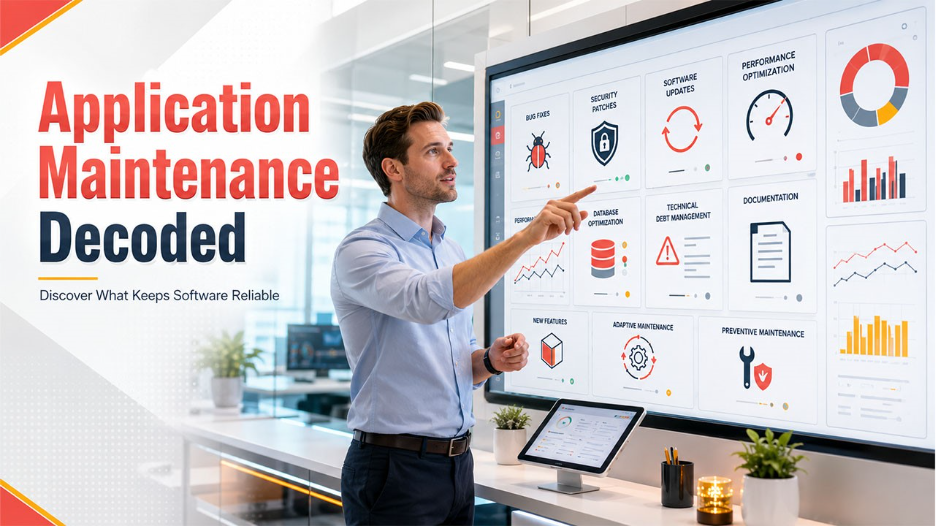
Modern application maintenance services cover far more than simply installing updates.
Regular maintenance focuses on ensuring applications remain secure, reliable and efficient while adapting to changing business requirements.
Common activities include:
- Bug fixes
- Security patches
- Software updates
- Performance optimization
- Performance monitoring
- Database optimization
- Technical debt management
- Documentation management
- New features
- Adaptive maintenance
- Preventive maintenance
Performance optimization plays an important role in ensuring optimal application performance. As user numbers increase and software becomes more complex, optimising code, databases and infrastructure helps maintain software performance while preventing unnecessary slowdowns.
Performance monitoring also enables support engineers to identify bottlenecks before they impact users, allowing businesses to effectively allocate resources and maintain essential functions.
How application support helps businesses
Related walkthrough
Build a $1B Business with Simple Tools: Google Sheets + Apps Script + AI

Application support ensures users receive the assistance they need when software issues occur.
Support services typically include:
- User support
- Troubleshooting
- Incident management
- Support agreements
- Conducting training sessions
- User training
- Technical expertise
- Continuous support
Support engineers investigate incidents, answer user queries and resolve unexpected software behaviour as quickly as possible.
Providing ongoing support not only improves user satisfaction but also helps businesses minimise disruption to daily business operations.
Effective support processes also improve customer satisfaction by ensuring users receive timely assistance whenever issues arise.
Security management and regulatory compliance
Security management is one of the most important aspects of application maintenance and support.
Regular security updates eliminate vulnerabilities before exploitation, reducing the risk of cyber attacks and data breaches while protecting sensitive data.
Effective security management includes:
- Installing security patches
- Conducting regular security audits with code review tools
- Firewall management
- Periodic backups
- Backup and recovery planning
- Monitoring for security vulnerabilities
Ongoing maintenance is also essential for regulatory compliance. As legislation and data protection laws evolve, organisations must ensure software continues meeting legal and industry standards.
Keeping applications remain secure protects both businesses and their customers while reducing operational risk.
Managing technical debt and supporting continuous improvement
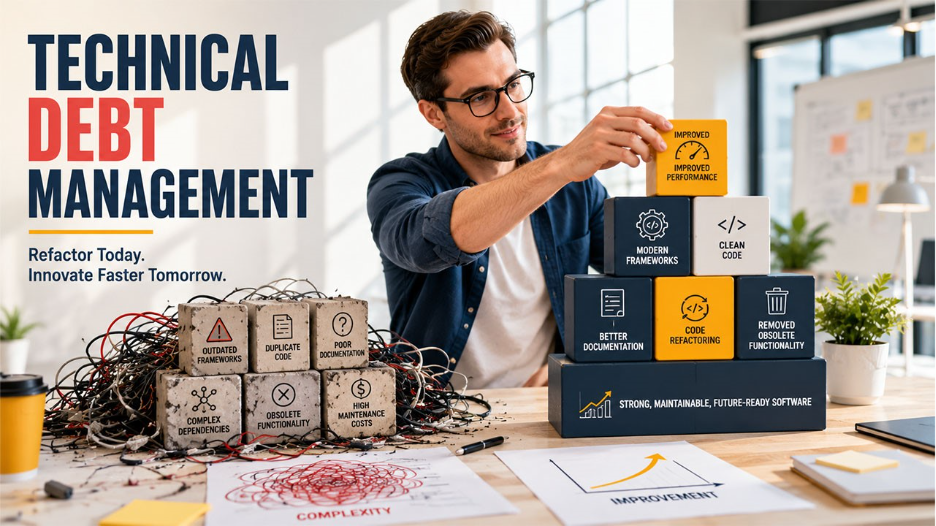
Technical debt naturally develops as software evolves.
Short-term development decisions can increase maintenance complexity, making future changes slower and more expensive.
Technical debt management focuses on reducing this burden through:
- Code refactoring
- Removing obsolete functionality
- Improving documentation
- Modernising software components
- Updating legacy frameworks
Continuous improvement ensures software continues supporting evolving business needs while remaining aligned with business objectives.
By introducing incremental improvements rather than waiting for major redevelopment projects, organisations reduce long-term costs while delivering better experiences for users.
Best practices for application maintenance and support
Successful support application maintenance should always be treated as an ongoing process rather than an occasional task.
Best practices include:
- Performing proactive maintenance
- Using automation tools where appropriate
- Monitoring application performance
- Responding to user feedback
- Delivering regular software updates
- Maintaining documentation
- Reviewing security management regularly
- Supporting evolving technologies
Following these practices helps ensure optimal application performance while reducing operational risk.
Conclusion
Application maintenance and support plays a critical role in keeping software secure, reliable and aligned with changing business requirements.
By combining software maintenance, proactive maintenance, application support and continuous improvement, organisations can improve application performance, reduce downtime, protect sensitive data and enhance user satisfaction throughout the software lifecycle.
Investing in professional maintenance and support allows businesses to respond more effectively to evolving technologies while maintaining system compatibility and supporting future growth.
FAQs About Application maintenance and support
What is application maintenance and support?
Application maintenance and support is the ongoing process of updating, monitoring, securing and improving software after deployment. It includes bug fixes, security patches, performance optimization, user support and continuous improvement.
What are the four types of application maintenance?
The four types are corrective maintenance, adaptive maintenance, perfective maintenance and preventive maintenance. Each focuses on maintaining software reliability, compatibility, performance and long-term stability.
Why is application maintenance important?
Application maintenance helps software remain secure, up to date and compatible with changing operating systems and technologies. It also improves software performance, reduces technical debt and supports regulatory compliance.
What is the difference between application maintenance and application support?
Application maintenance focuses on the software itself through updates, optimisation and software maintenance. Application support focuses on users by providing troubleshooting, incident management, user training and technical assistance.
How does application maintenance improve user satisfaction?
Regular updates, bug fixes, performance optimization and responding to user feedback improve software reliability and usability, leading to improved user satisfaction and greater customer satisfaction over time.