

Top 5 Amazon Web Services to Look For in 2026
Discover the top 5 Amazon Web Services in 2026, including Bedrock, Lambda, SageMaker, Aurora, and Security Lake, plus their features, benefits, and business uses
In this blog, we will explore the top 5 Amazon Web Services, which can help businesses achieve scalability, cost optimization, and enhanced reliability, along with their benefits, challenges, and how to choose the right service.
The global digital landscape has witnessed major growth with the introduction of cloud computing. The technology enables businesses to reduce operational costs, along with building scalable applications. Among all the cloud computing providers, Amazon Web Services (AWS) remains the most preferred choice for most organizations, like startups, enterprises, educational institutions, and government agencies, globally. AWS continues to expand its portfolio with more advanced services, which are mostly powered by artificial intelligence, automation, serverless computing, and enhanced security.
What is Amazon Web Services?
Amazon Web Services, or AWS, is among the leading cloud computing platforms globally, which offers a comprehensive suite of on-demand services, helping businesses build, deploy, and manage applications without any physical infrastructure. Launched by Amazon, AWS offers scalable, reliable, and cost-effective solutions.
AWS operates on a pay-as-you-go model, which also allows users to pay only for the resources they actually consume. This model enables businesses to reduce upfront infrastructure costs while also scaling computing power, storage, databases, networking, analytics, artificial intelligence, and security services according to their needs.
Amazon Web Services offers various powerful services in its portfolio, which offer businesses higher availability, stronger security features, global infrastructure, and an extensive ecosystem of cloud tools.
Benefits of Amazon Web Services
The growing trend of cloud adoption among modern businesses is driven by benefits such as lower infrastructure costs, faster deployment, and improved business continuity, all of which AWS effectively supports. Some of the benefits of AWS are as follows:
- Scalability and Flexibility: AWS offers enhanced scalability to businesses. It offers businesses the ability to easily scale up and down, based on their needs.
- Cost-Effective Pricing: AWS follows a pay-as-you-go pricing model, which enables businesses to only pay for the services and resources they use.
- High Reliability and Availability: AWS is designed on a global infrastructure of multiple Regions and Availability Zones, ensuring higher availability and fault tolerance.
- Strong Security and Compliance: The platform offers advanced security features, which include data encryption, identity and access management (IAM), network firewalls, threat detection, and continuous monitoring.
Top 5 Amazon Web Services in 2026
Related walkthrough
Why AWS Crashed — The Hidden Warning About Amazon’s AI Future

Amazon Web Services offers more than 200 cloud services, which offer enhanced capabilities, especially with the increasing demand of artificial intelligence, serverless computing, managed databases, and advanced cybersecurity.
The top 5 Amazon Web Services that offer key benefits to businesses in 2026 are as follows:
1. Amazon Bedrock
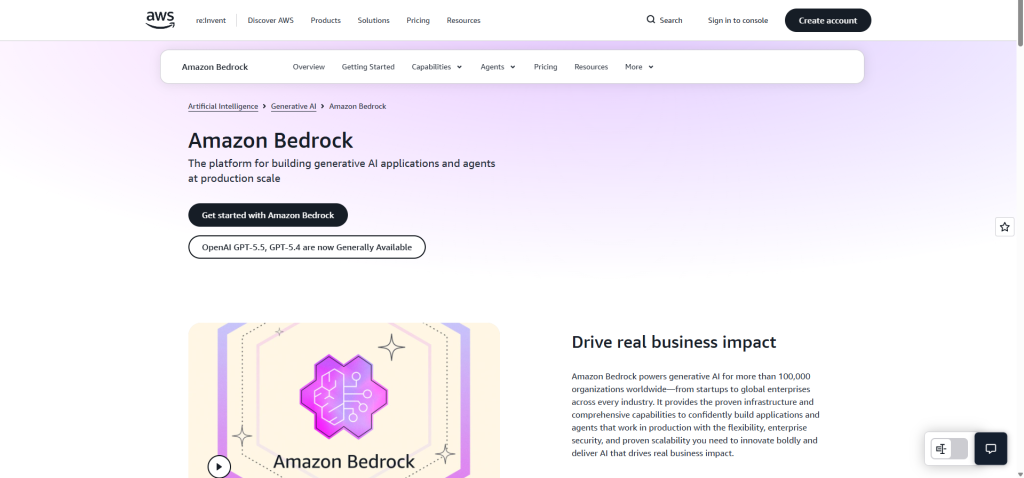
Amazon Bedrock is a fully managed service that helps developers build and scale generative AI applications. The platform eliminates the need to manage complex machine learning infrastructure and allows organizations to integrate AI capabilities into their applications quickly and efficiently.
Key Features
- Access to multiple foundation models through a unified API
- Fully managed and serverless infrastructure
- Supports model customization and fine-tuning
Ideal For
- AI-powered chatbots and virtual assistants
- Content generation and document summarization
- Customer support automation
2. AWS Lambda
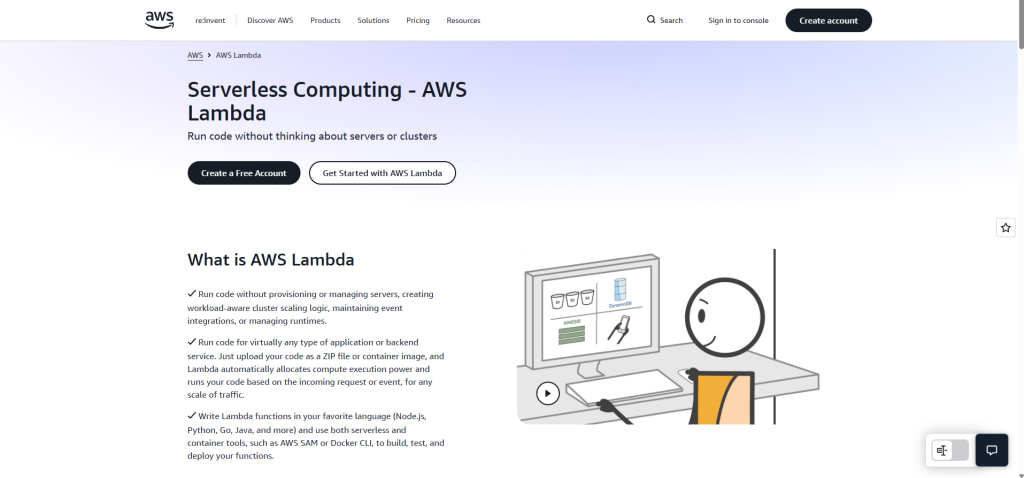
AWS Lambda is a serverless computing service that allows developers to run code without managing servers or provisioning. The platform automatically executes code in response to events and scales applications based on demand.
Key Features
- No server management required
- Automatic scaling based on workload
- Pay only for compute time used
- Supports multiple programming languages
Ideal For
- Event-driven applications
- RESTful APIs
- Backend services for web and mobile applications
3. Amazon SageMaker
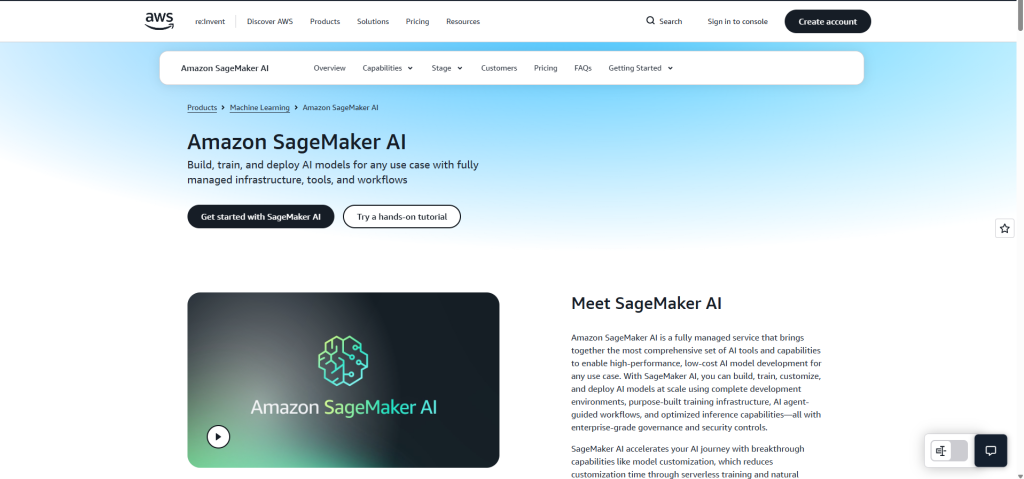
Amazon SageMaker is a fully managed learning platform that helps developers and data scientists to build, train, deploy, and monitor machine learning models at large scale. The platform also simplifies the entire machine learning lifecycle by providing integrated tools for data preparation, model development, deployment, and monitoring.
Key Features
- End-to-end machine learning development environment
- Built-in algorithms and pre-trained models
- Automated machine learning (AutoML)
- Real-time and batch inference
Ideal For
- Predictive analytics
- Fraud detection systems
- Recommendation engines
- Customer behavior analysis
4. Amazon Aurora
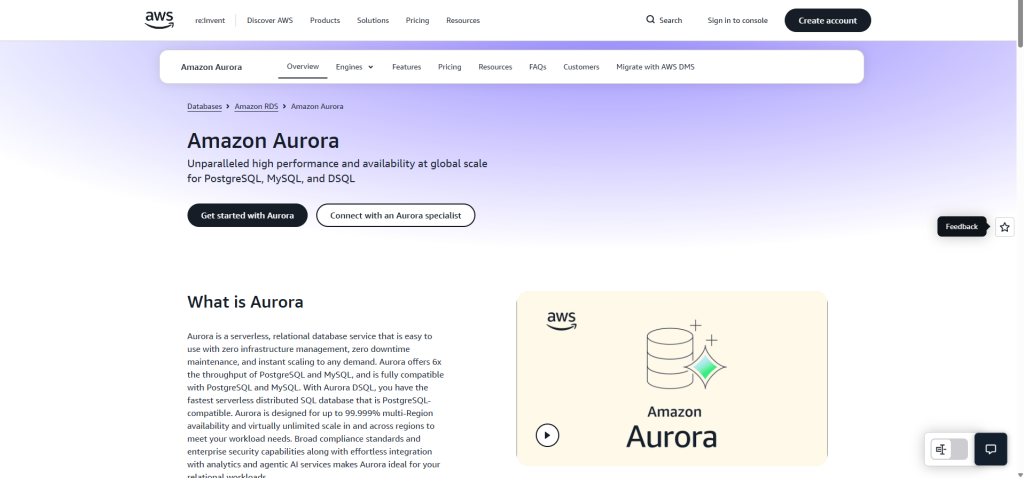
Amazon Aurora is a high-performance and fully managed relational database service that is compatible with MySQL and PostgreSQL. The platform combines performance with enterprise database availability, making it a popular choice for modern cloud applications.
Key Features
- MySQL and PostgreSQL compatibility
- High availability with automatic failover
- Automated backups and point-in-time recovery
Ideal For
- E-commerce websites
- Enterprise business applications
- SaaS platforms
5. Amazon Security Lake
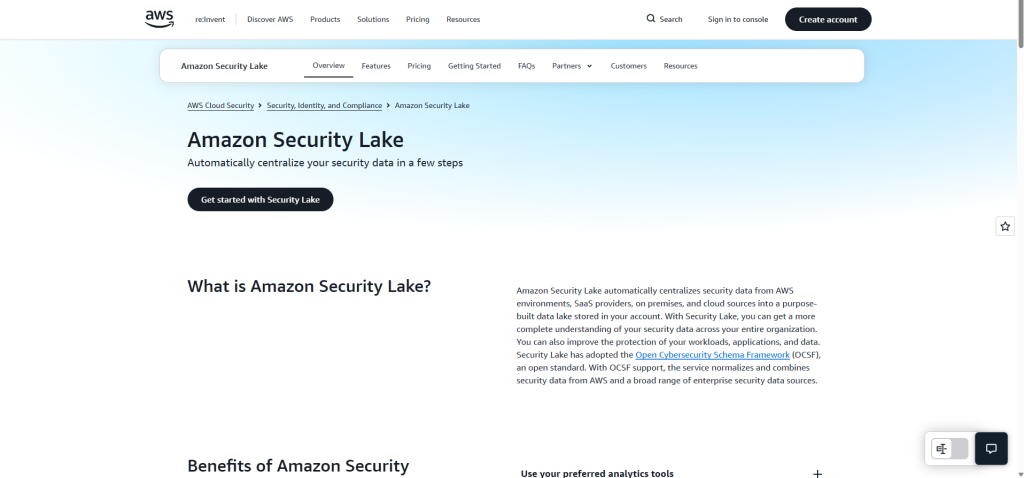
Amazon Security Lake is a cloud-native security service that collects, centralizes, and manages security data from AWS environments automatically. The platform offers a unified data lake for security analytics, helping businesses detect threats, investigate incidents, and meet compliance requirements more efficiently.
Key Features
- Centralized security data collection
- Supports Open Cybersecurity Schema Framework
- Automated log aggregation
Ideal For
- Security Operations Centers (SOCs)
- Threat detection and investigation
- Compliance monitoring
How to Choose the Right AWS Service
Amazon offers over 200 cloud services, with solutions for virtually every business need. However, for businesses, selecting the right Amazon Web Services mainly depends on the goals, workload requirements, budgets, and technical expertise of the organization. Businesses should select the service that can help build a scalable, secure, and cost-effective cloud environment.
Some of the most important factors to consider when choosing the best AWS services are as follows:
Identify the Business Requirements
The first step in selecting the right Amazon Web Service is to clearly define the main objective of the business. From building a website to hosting an application or developing AI-powered solutions, defining the business goals will determine which AWS services fit best for the business objective.
Understanding Workload
Choosing services based on the workload of the businesses ensures optimal performance and resource utilization. Different workloads generally require different cloud services.
Evaluate Cost and Pricing
Although Amazon Web Services follows a pay-as-you-go pricing model, different services have different pricing structures. To optimize pricing, businesses should opt for managed services while also using serverless services for applications.
Prioritize Security and Compliance
Businesses should always keep security as a major consideration when choosing any Amazon Web Services. Businesses operating in regulated industries should also verify that the selected services meet their compliance standards and certifications.
Common Challenges
Amazon Web Services offers businesses a powerful and flexible cloud computing platform, but it also comes with its own challenges.
Some of the key challenges of Amazon Web Services include cost management, security, migration, and the complexity of managing cloud resources.
- Learning Curve: The platform offers more than 200 cloud services, each offering its own features, configurations, and best practices. Learning how each service works together can be challenging for beginners.
- Security and Access Management: Although AWS offers robust security features, improper configuration can also lead to data security risks. Misconfigured cloud permissions, publicly accessible storage buckets, or weak access controls are among the most common causes that can lead to security incidents.
- Cloud Migration Challenges: Migrating any application or data from on-premises infrastructure to AWS can be a complex process. During migration, businesses may face compatibility issues, downtime, data transfer challenges, and application to redesign requirements.
Conclusion
The global cloud landscape is evolving rapidly, with Amazon Web Services leading with cutting-edge services that help businesses build smarter, faster, and more secure applications. Among all the services offered by AWS, the most popular platforms, which are Amazon Bedrock, AWS Lambda, Amazon SageMaker, Amazon Aurora, and Amazon Security Lake, stand out as the top services that enable businesses with enhanced capabilities, like artificial intelligence, serverless computing, and machine learning. As organizations continue to adopt cloud-first strategies, understanding these AWS services helps in enhancing their technical capabilities, along with opening new growth opportunities.
Frequently Asked Questions
Amazon Web Services is popular among businesses as it offers enhanced scalability, flexibility, and cost-effective pricing, along with a wide range of managed cloud services.
Amazon Bedrock is a fully managed service that helps developers build generative AI applications. It is commonly used for AI chatbots, content generation, document summarization, and intelligent virtual assistants.
Yes, AWS is mostly suited for startups and small businesses, as it allows them to access enterprise-grade cloud infrastructure without any large upfront investments.
Yes, AWS offers multiple security features, which include Identity and Access Management, encryption, network security, and threat detection.