

How to Prepare a SaaS Business for Technical Due Diligence
Technical Due Diligence helps SaaS sellers prepare technology, security, IP, infrastructure, and documentation for a smoother acquisition process.
Selling a SaaS business involves more than proving that the product works and revenue is growing. Once a buyer becomes serious, the focus shifts to evidence. The buyer wants to understand how the platform is built, who owns the technology, how customer data is protected, and whether the business can continue operating reliably after the acquisition.
Software Equity Group recorded 2,784 SaaS M&A transactions on a trailing-12-month basis through Q2 2026, up 16% year over year. Buyers, however, are placing greater emphasis on durable growth, proprietary data, security, and strategic fit.
For sellers, technical due diligence is also a document-driven process, and a well-prepared virtual data room can make it easier to manage.
Why the data room matters in technical due diligence
A virtual data room is often associated with legal and financial diligence, but it can play an equally important role in a technology review.
Technical diligence may involve architecture diagrams, cybersecurity policies, penetration testing reports, software licenses, intellectual property records, infrastructure documentation, and contracts with critical technology vendors.
Putting this information into one controlled environment helps the seller manage disclosure and helps the buyer understand how technical information connects with the rest of the business. A customer agreement may promise a particular level of availability or data protection, while technical documents show how those commitments are supported.
Build the data room around the buyer’s review
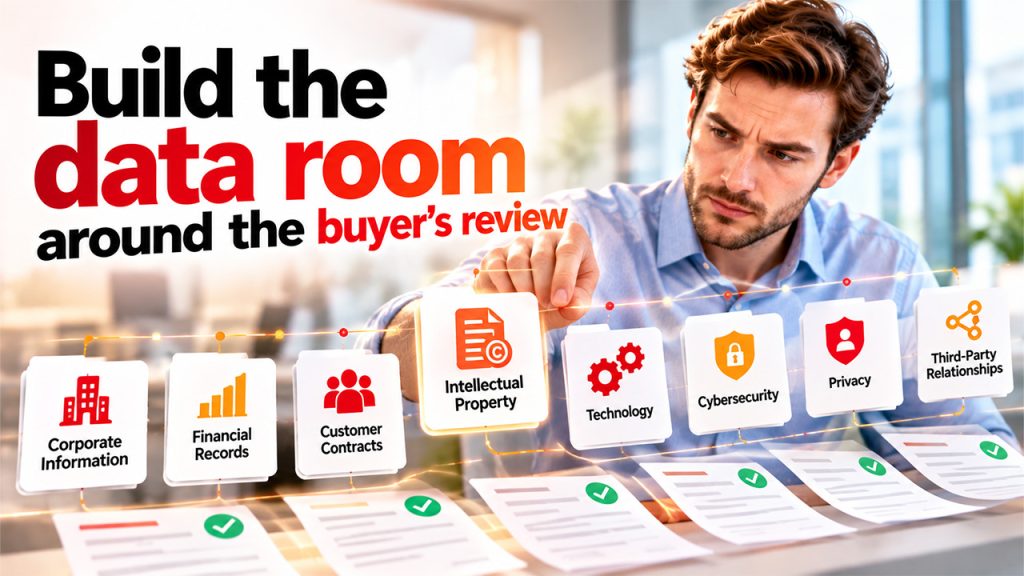
The most useful data rooms are not simply copies of a company’s internal file system.
For a SaaS transaction, reviewers typically move between corporate information, financial records, customer contracts, intellectual property, technology, cybersecurity, privacy, and important third-party relationships.
The technology section should help a reviewer understand the product without requiring management to explain everything from scratch. Architecture documentation, cloud infrastructure information, major integrations, technical dependencies, and security materials should sit within a logical structure.
Agreements should be easy to connect with amendments, current documents should be distinguishable from superseded versions, and information in one section should not contradict information elsewhere. It needs to make the business easier to verify.
Control access instead of disclosing everything at once
Technical due diligence can involve some of the most sensitive information a SaaS company owns. Detailed architecture, security assessments, customer information, source code materials, and proprietary technology should not automatically be available to every participant.
This is where the choice of platform becomes important. When selecting a data room provider, sellers should consider granular permissions, user management, activity tracking, watermarking, and the ability to restrict sensitive documents to specific reviewers.
Access can then expand as the transaction progresses. A buyer may initially receive high-level architecture and security documentation, while more detailed materials are released later to designated specialists.
Make cybersecurity evidence easy to review
Related walkthrough
Flint K12 Review | How AI Is Transforming Personalized Learning for Schools

Cybersecurity has become a central part of technical due diligence because a buyer may inherit existing security risks.
IBM’s 2026 Cost of a Data Breach Report put the global average cost of a breach at $4.99 million, up 12% from the previous year. That helps explain why buyers pay close attention to access controls, incident response, backups, vulnerability management, and data protection.
The data room should contain evidence of actual security practices, such as testing reports, security policies, incident response documentation, audit materials, and backup or recovery procedures. If customer contracts make specific security claims, the technical documentation should support them.
Keep IP and third-party dependencies visible

A strong product can still create acquisition risk if the buyer cannot establish who owns it. Founders should review intellectual property assignments before formal diligence, especially if development involved freelancers, agencies, contractors, or former employees.
The data room should also make material third-party dependencies visible. A SaaS product may rely on cloud infrastructure, authentication services, APIs, or external AI services. Understanding the underlying SaaS development approach can also help buyers evaluate the technology, architecture, and dependencies involved in the acquisition.
Keeping technology documentation and related commercial agreements in the same diligence environment makes that analysis easier.
Use the data room to manage questions
A good data room also helps create a controlled process for responding to buyer questions.
The seller should know what has already been provided, which requests remain open, and who is responsible for each response. This reduces duplicate work and lowers the risk of management giving inconsistent answers.
Treat data room preparation as a readiness test
One of the biggest benefits of preparing the data room is that it exposes gaps before the buyer does.
A missing IP assignment, outdated security document, unclear software license, inconsistent customer commitment, or unresolved access issue is easier to address when discovered internally.
The goal is not to present a company with no weaknesses. It is to show that management understands its technical and operational risks and can provide reliable information about them.
Final thoughts
Technical due diligence is ultimately an exercise in reducing uncertainty.
The buyer needs to understand what technology it is acquiring, who owns it, how secure it is, what it depends on, and what may require additional investment after closing.
A structured virtual data room brings that evidence together. It gives the seller control over sensitive disclosure while giving the buyer a clear route through the company’s technical, legal, and commercial information.
For a SaaS business preparing for a sale, that makes the data room more than a document repository. It becomes part of how the company demonstrates that it is ready to be examined and acquired.