
Best 10+ AI Software Development Company [2026 Guide]
Explore the best 10+ AI software development company options for 2026. Compare expertise, services, industry focus, and key strengths to choose the right partner.
In the current competitive landscape, businesses that are looking to build an AI-powered software generally face a much harder decision than they did three years ago. The total number of companies that calls themself an “AI development firms” has grown dramatically. The quality of each company also varies just as much. Some have genuine engineering depth. Others have rebranded existing services with new labels.
The guide explores the top 10 companies that have demonstrated experience in building AI into their products and workflows, and not just a consultancy that advice on it. Whether the business needs to automate a back-office process, ship AI features into an existing product, or build something new from scratch, the firms below represent some serious options that are worth evaluating in 2026.
What separates a real AI software development company from the rest
The term “AI software development company” now covers a wide range of capabilities. In one side, the companies that build and deploy production-grade AI systems and integrate them with existing infrastructure and take accountability for outcomes. And at the other end, there are companeis or vendors that put AI wrappers around third-party APIs and call it a solution.
A few things worth checking before engaging any vendor:
- Do they prototype on your data and stack? Generic demos are easy. A working proof-of-concept on your actual environment is a much stronger signal.
- Can they explain the ROI upfront? Serious firms model costs and expected returns before writing a line of code.
- Do they handle production, not just pilots? Many organizations have gotten stuck with AI demos that never made it to deployment. Ask for references where systems are running at scale.
- How do they treat governance and security? Especially for regulated industries, access controls, auditability, and data privacy need to be designed in, not bolted on.
Top AI software development companies in 2026
The table below offers a quick reference. Detailed profiles follow.
| Company | Main expertise | Key strengths | Best for |
| Artkai | AI app development, business process automation, UI/UX design | Economics-first approach, production delivery, enterprise governance | Mid-market and enterprise teams building AI into products or operations |
| 10Pearls | Digital product engineering, AI integration | Rapid delivery, cross-industry experience | Growing companies needing fast AI feature buildout |
| BairesDev | Software engineering, staff augmentation | Large talent pool, flexible engagement models | Teams scaling engineering capacity |
| Ciklum | Enterprise software, AI/ML, data engineering | Strong European delivery, regulated-industry fit | Enterprises in finance, retail, and healthcare |
| DataArt | Custom software, data platforms, AI | Deep domain expertise, financial services focus | Complex data and AI projects in finance and pharma |
| LeewayHertz | AI product development, generative AI | GenAI specialization, LLM integration | Companies exploring generative AI products |
| N-iX | Software engineering, data science, AI/ML | Eastern European talent base, strong delivery record | Mid-to-large enterprises building AI capabilities |
| Simform | Cloud-native development, AI, mobile | Full-stack services, agile delivery | Startups and mid-market companies building digital products |
| SoftServe | Enterprise AI, data analytics, cloud | Scale, domain expertise, research capabilities | Large enterprises with complex transformation programs |
| Thoughtworks | Technology consulting, AI, digital transformation | Strategic thinking, deep engineering talent | Organizations running large digital transformation programs |
Company profiles
Related walkthrough
Chapter 9 | SuiteCRM Custom Code Architecture | Logic Hooks, Workflows u0026 Upgrade-Safe Development

1. Artkai
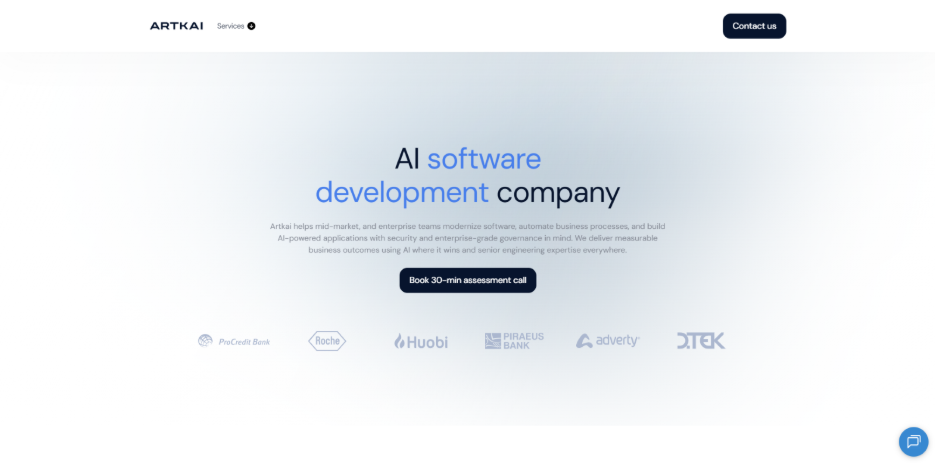
artkai.io is an AI-native software development company which works with larger and mid-market organizations, especially across the US, UK, and Europe. The company mainly focuses on the two core areas, which include building an AI system into existing software products, while also automating business processes that drive measurable cost reductions. The third practice of the company covers UI/UX design, along with delivering them with AI-assisted tooling.
The positioning is deliberately economics-first. Before any development begins, the team maps where technology and operations cost the client the most, models expected ROI, and sequences work around the fastest payback. Clients working with Artkai report an average of $3.70 returned per dollar invested in AI, with automated processes typically paying back within three to six months.
AI Application Development
Artkai builds AI features directly into clients’ existing products rather than shipping separate add-ons. Some of the key AI features that the company builds include AI assistants and copilots, smart search, recommendations for engines, predictive and ML capabilities, and RAG systems. The company also offers a working prototyping in the stack of the client and the data that typically takes around a few weeks, making it easier to validate assumptions before committing to the complete build.
The team also aims to go for three times faster time to market compared to a traditional development approach. The figure is driven by combining senior enginnering jugdement with AI assisted delivery workflows.
Business Process Automation
The company automates complex workflows across finance and accounting, HR, supply chain, customer service, and compliance functions, at its operational side. This goes beyond deploying bots for isolated tasks. This approach mainly involves redesigning the entire workflow, along with connecting a fragmented system, and applying AI, RPA, and integration tools, in which each platform can perform their best. The clients have also reduced their manual work by up to 60%, while also keeping their operational costs as flat, with the transaction volume increasing.
Why Artkai stands out for businesses evaluating AI partners
A few things differentiate the company in practice. First, the economics-first framing means every engagement is scoped around measurable outcomes, not technology for its own sake. The team uses AI where it produces better results on cost or speed, and relies on senior engineering expertise where conventional approaches hold up better.
Second, the company has genuine enterprise governance built into delivery. The company offers various features such as access, auditability, model governance, and data privacy are part of the default approach for regulated industries like financial services and healthcare.
Third, the company also emphasis on the production of over pilots that matters more than it sounds. Many organizations have experienced AI initiatives that stalled after a demo. Company has a completed over 150+ projects, along with achieving a rating of 4.9 across 53 reviews in Clutch. Some of the major clients of the company includes ProCredit, Roche, and Piraeus Bank, that also suggest a consistent ability to deliver a system that run in real world.
Artkai is part of the Euvic Group, a network of over 6,000 engineers with roughly $500M in annual revenue, which provides delivery depth and specialist access beyond what a standalone agency can offer.
Best for: Mid-market and enterprise companies that want to automate costly operations or build AI into an existing product, with a clear business case and a partner accountable for outcomes.
2. 10Pearls
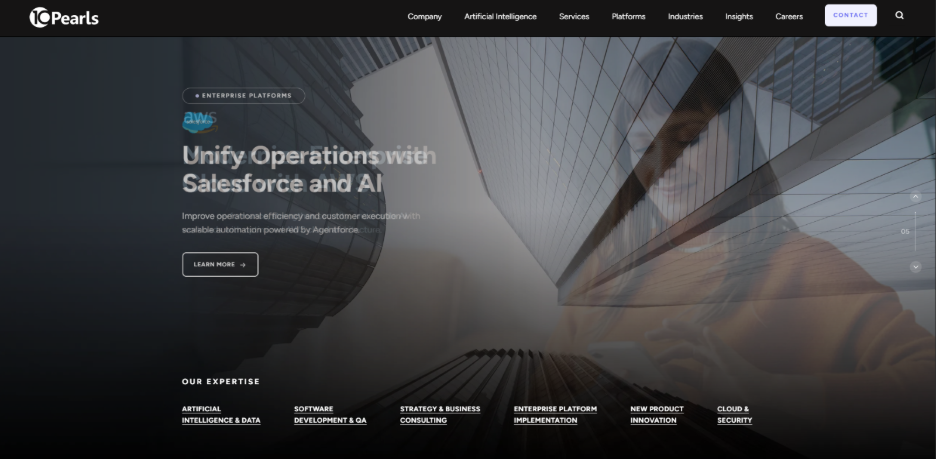
10Pearls is a global digital product engineering company, which mainly focuses on AI and software development. The company has also worked across various sectors, such as healthcare, financial services, and enterprise software. The company also tends to perform well with the clients that need to move quickly from idea to a working project.
The team of the company is also organized around product delivery, meaning the company can own the full stack, right from discovery to deployment. The company’s work in healthcare AI and data platforms was visible in the last few years.
Best for: Growing companies that need AI features built and shipped without a long runway for planning.
3. Techcronus
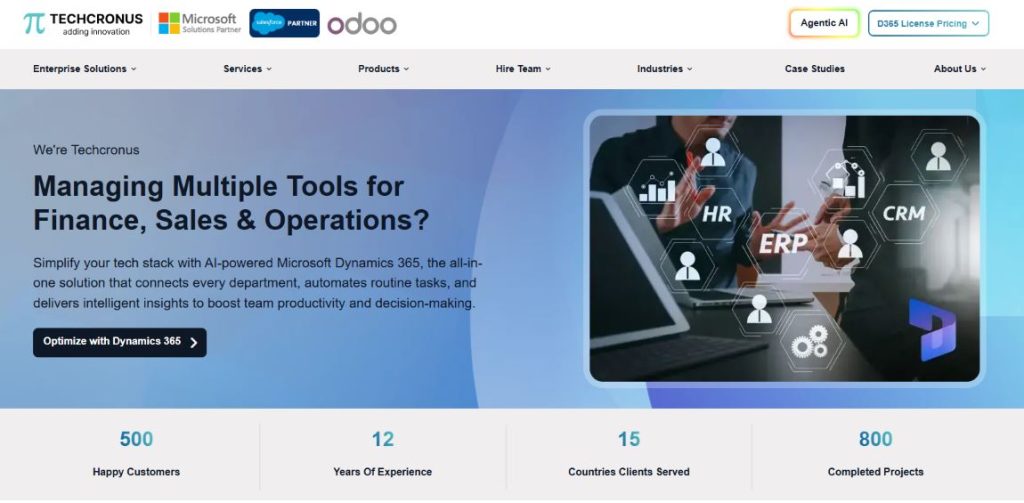
Techcronus is a technology consulting and software development company offering AI development, machine learning, custom software development, and dedicated development team services. The company works with businesses across industries to build, modernize, and scale digital solutions based on their specific requirements.
The value proposition centers on flexible engagement models, experienced developers, and end-to-end technical expertise across AI, cloud, Microsoft technologies, .NET, mobile, CRM, and ERP solutions. Its combination of consulting and development capabilities can be particularly useful for companies looking for a long-term technology partner rather than simply additional engineering resources.
Best for: Businesses looking to build AI-powered solutions, scale development teams, or partner with an experienced technology provider for end-to-end software development.
4. BairesDev
BairesDev is a software engineering company that has scaled significantly on the strength of its talent network across Latin America. The company offers both dedicated team models and project-based engagements, and covers a wide range of technologies including AI and machine learning.
The value proposition centers on access to senior engineers at competitive rates, with time zone alignment to North American clients being a practical advantage. Delivery quality can vary by team and project, so reference checks matter.
Best for: Companies scaling their engineering capacity and needing reliable senior talent on a flexible model.
5. Ciklum
Ciklum is among the established software engineering companies that offer a strong global presence, especially in Central and Eastern Europe. The company serves enterprise clients in various sectors, such as financial services, healthcare, and retail. The company has also grown its AI and data engineering capabilities considerably over recent few years.
Where Ciklum tends to perform well is in large, multi-year programs where delivery predictability and regulatory fit matter as much as technical capability. Their size gives them access to specialist talent across a broad range of domains.
Best for: Enterprises running complex, long-term AI or software programs in regulated industries.
6. DataArt
DataArt is a technology consultancy with deep roots in financial services, pharma, and media. The company builds custom software, data platforms, and AI systems, and has developed genuine domain knowledge in the verticals it serves.
Clients typically engage DataArt when the problem requires both technical sophistication and strong industry understanding, particularly in areas like trading systems, clinical data platforms, or complex data architecture. The company is not the cheapest option, but the domain expertise often justifies the cost for the right type of project.
Best for: Businesses in finance, pharma, or media with complex data or AI requirements that need deep industry knowledge alongside engineering skill.
7. LeewayHertz
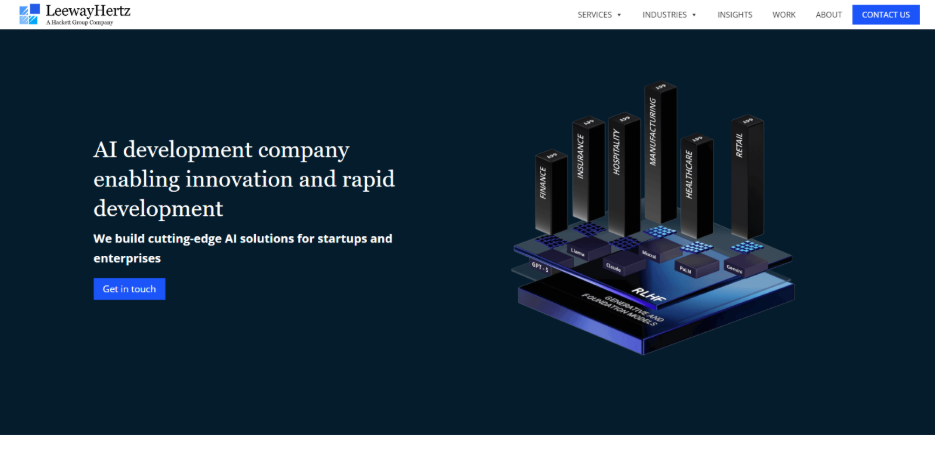
LeewayHertz has positioned itself around generative AI and LLM-based applications. The company builds AI agents, enterprise copilots, and custom GPT-type applications, and has accumulated experience across a broad range of use cases.
For companies specifically exploring what generative AI could do in their product or operations, LeewayHertz offers relevant experience. They tend to work faster on defined AI product builds than on broader digital transformation engagements.
Best for: Companies with a specific generative AI or LLM application they want to build and deploy.
8. N-iX
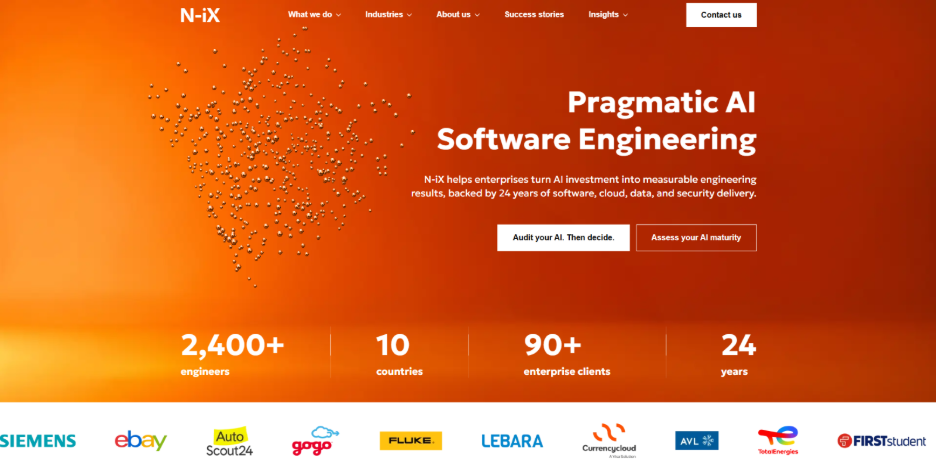
N-iX is a software engineering company based primarily in Ukraine and Poland, with a strong track record in AI, machine learning, and data engineering. The company has delivered for clients across financial services, manufacturing, and retail, and tends to attract mid-to-large enterprises looking for reliable European delivery.
Engineering quality is a consistent strength. N-iX has built its reputation on technical depth rather than flashy positioning, which makes it a solid choice for clients who want a delivery-focused partner rather than a consulting firm with delivery capabilities bolted on.
Best for: Mid-to-large enterprises that need strong AI/ML engineering delivered by an experienced Eastern European team.
9. Simform
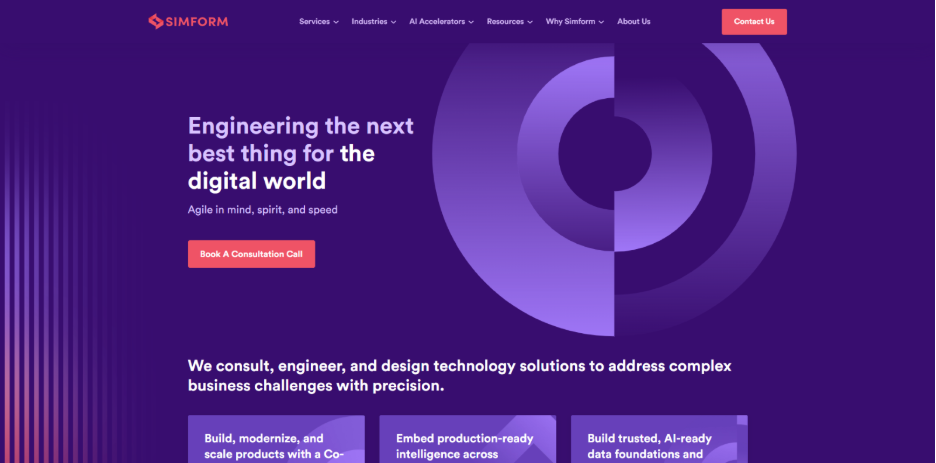
Simform is a full-service software development company covering cloud, mobile, AI, and data. The company serves a mix of startups and mid-market clients, and operates on agile delivery models that work reasonably well for teams that need to move fast.
Their AI practice covers machine learning integration, data pipelines, and AI product development. Simform tends to be more accessible from a cost perspective than some of the larger enterprise vendors on this list, which makes it an option worth considering for companies with tighter budgets but serious technical requirements.
Best for: Startups and mid-market companies building digital products with AI components.
10. SoftServe
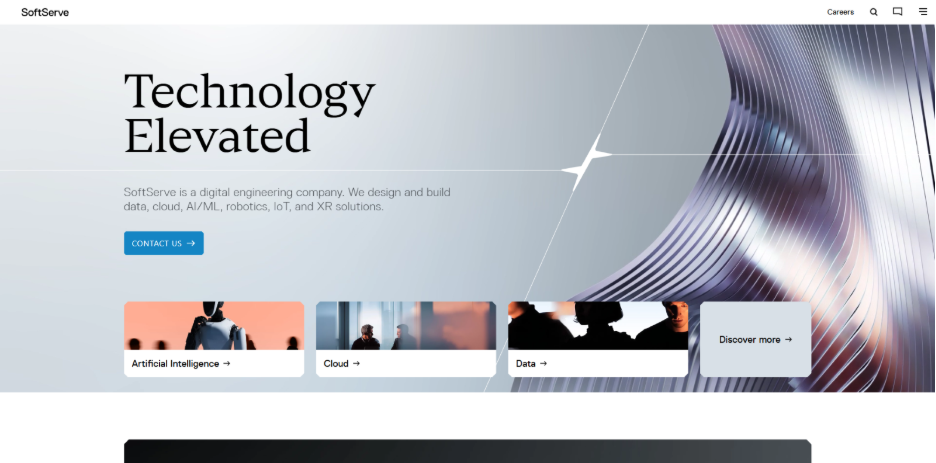
SoftServe is a large technology services company with a broad AI and data analytics practice. The company works with enterprise clients across healthcare, manufacturing, financial services, and the public sector, and has invested significantly in research and internal AI capabilities.
The scale of SoftServe’s delivery organization is both a strength and a consideration. Clients running major transformation programs benefit from the depth and breadth of talent available. Smaller or more focused AI builds may not get the same level of attention from senior practitioners.
Best for: Large enterprises with substantial AI transformation programs across multiple functions.
11. Thoughtworks
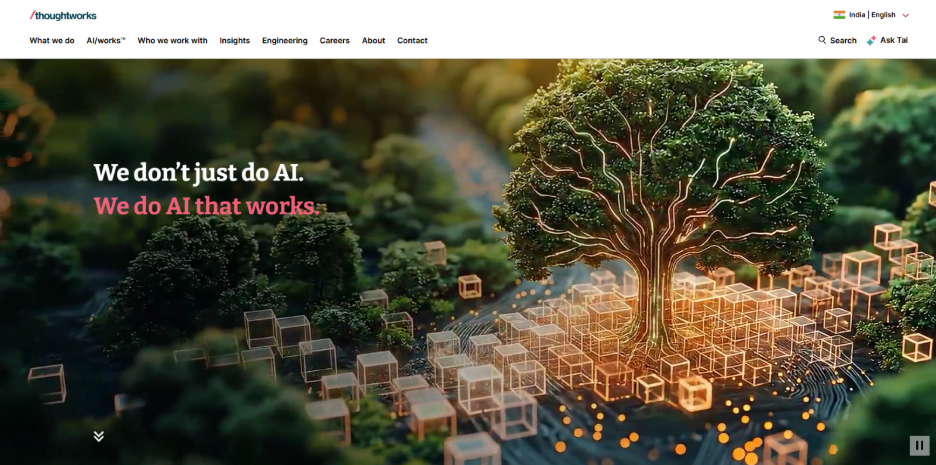
Thoughtworks is a global technology consultancy known for combining strategic thinking with strong engineering execution. The company has worked on large digital transformation programs for decades and has developed genuine AI and machine learning capabilities alongside its consulting practice.
The Thoughtworks approach tends to be more advisory at the start, which suits organizations that need help thinking through architecture and strategy before committing to a build. The cost base is higher than most other companies on this list, which reflects the seniority of the people involved.
Best for: Organizations running complex, multi-year digital transformation programs where strategic guidance and delivery capability both matter.
How to evaluate an AI software development company
The choice between these companies depends on several factors that go beyond technical credentials.
Start with the type of problem
AI application development and business process automation require different skills and different mindsets. A company that excels at building AI features into consumer products may struggle with the process redesign and integration work that automation requires. Be specific about what you need before evaluating vendors.
Assess the discovery process
How a company handles the first engagement tells you a lot about how they will behave throughout the project. Firms that start with a structured assessment, model the ROI before proposing a build, and can explain what success looks like in business terms tend to deliver better outcomes than those who move straight to scoping a technical solution.
Check the production track record
Ask specifically about AI systems that are running in production today, not projects that concluded with a successful demo. Request references from clients in similar industries or with similar technical complexity.
Consider governance requirements
For regulated industries, data privacy, model auditability, and access controls are not optional. Make sure any vendor you evaluate has handled this in comparable environments and can show you how they approach it, rather than describing it as a future capability.
Think about the partnership model
AI development rarely ends at launch. Models drift, requirements evolve, and new capabilities become available. A vendor who approaches the engagement as a long-term partnership, rather than a project to close, will be more valuable over time.
Frequently asked questions
What does an AI software development company actually do?
These companies design, build, and deploy software systems that incorporate artificial intelligence, including machine learning models, large language models, intelligent automation, and data pipelines. The scope can range from adding a specific AI feature to an existing product to building an entirely new AI-powered platform.
How much does AI software development cost in 2026?
Costs vary significantly based on scope, team size, and location. Discovery and assessment work for well-defined projects typically runs from a few thousand to tens of thousands of dollars. Full AI product builds or automation programs for mid-market companies generally start in the six-figure range and scale up based on complexity and timeline. Some firms also offer monthly subscription or managed service models for ongoing AI operations.
How long does it take to build an AI product?
A working proof-of-concept on real data can come together in two to four weeks if the problem is well-defined. A production-ready AI feature typically takes two to four months. More complex platforms or multi-system automation programs may take six months to over a year, depending on integration requirements and organizational readiness.
What industries use AI software development companies most?
Financial services, healthcare, retail, manufacturing, and logistics have the highest concentration of AI investment currently. These industries share a common profile: complex data environments, expensive manual processes, and strong incentives to reduce operational costs while maintaining compliance.
Putting it together
The AI software development market in 2026 has more credible options than it did a few years ago, but the gap between the best and the rest has also widened. Companies that have invested in engineering depth, genuine AI delivery capability, and repeatable processes tend to produce better outcomes than those who assembled AI practices quickly to chase demand.
For businesses evaluating options, the clearest signal is whether a prospective partner can model the business case before proposing a build, demonstrate production AI systems in comparable environments, and show how they handle governance and security for regulated data.
Artkai fits this profile for mid-market and enterprise companies that need a partner accountable for business outcomes, not just technical delivery. The economics-first approach, combined with experience across AI application development, business process automation, and complex software projects, makes it a practical starting point for organizations serious about getting AI into production.
The other companies on this list serve different needs well. The right choice depends on the type of problem, the industry context, and the kind of engagement model that suits your team.