
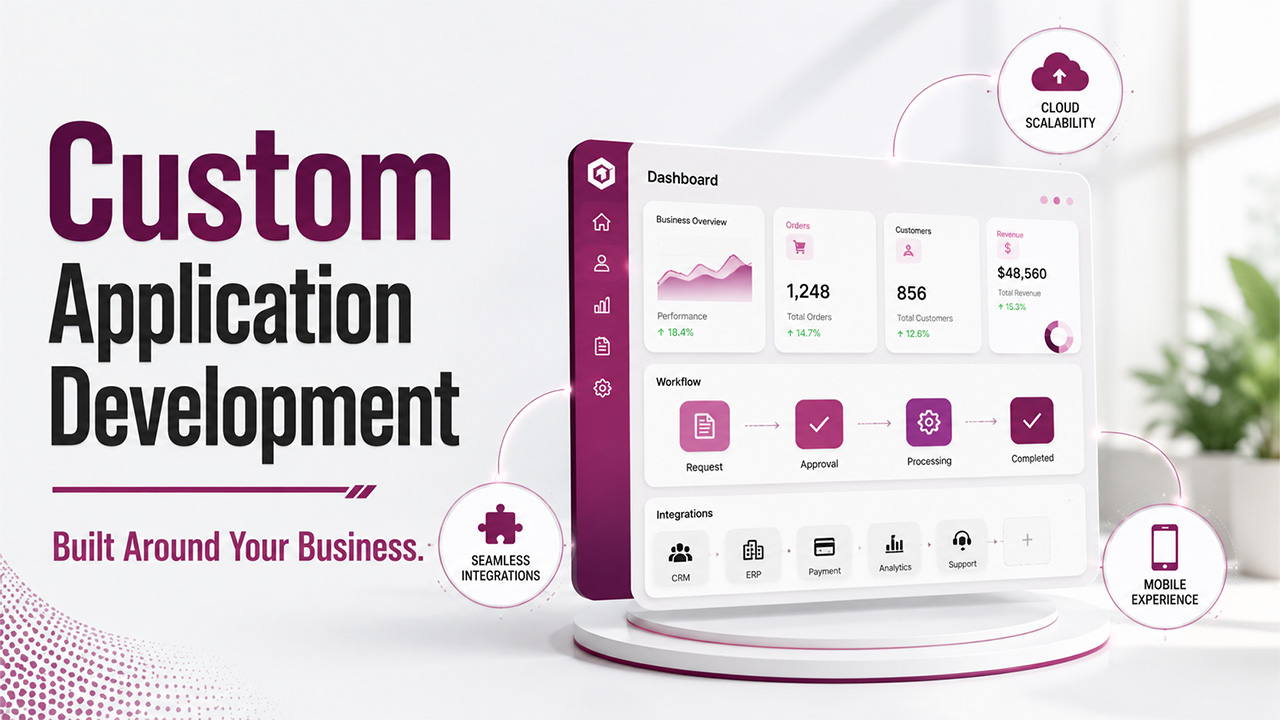
Custom Application Development: A Complete Guide for Modern Businesses
Custom application development generates personalized software for unique business workflows, covering cloud, mobile, and enterprise platforms.
Off-the-shelf software seldom suits each business in the same way. A healthcare provider, retail company, and logistics firm all work on distinct workflows, and pushing them into a generic tool typically creates more friction than it can solve. This is why more businesses are adopting custom application development, developing software specifically designed around the goals, their processes, and users of businesses. Instead of adjusting internal processes to align a pre-developed product, organizations can transform application to align the application to fit precisely into how they operate. This shift becomes visible across different industries, ranging from small teams automating routine tasks to enterprises improving legacy platforms with purpose-built and scalable solutions.
What Is Custom Application Development?
Custom application development is an overall process of designing, developing, testing, and maintaining software specifically built for the requirements of a specific user group or business, instead of a wider market audience. Contrary to one-size-fits-all or a commercial product, a custom application is shaped around the precise workflows, security needs, data structures, and growth plans of the company.
This process often encompasses:
- Gathering requirements and planning as per actual business issues.
- UI/UX design personalized to how a particular customer base or team works.
- Integration, coding, and testing of the application.
- Tracking, deployment, and long-term maintenance.
Since each step is developed around a defined use case, custom applications tend to incorporate more seamlessly with present platforms and adjust more simply as business requirements evolve. A lot of teams start this journey by reviewing a detailed guide to custom software application development before choosing an application. This is because comprehending the entire lifecycle upfront aids in preventing costly revisions later.
Why Businesses Select Application Development Over Ready-Made Software?
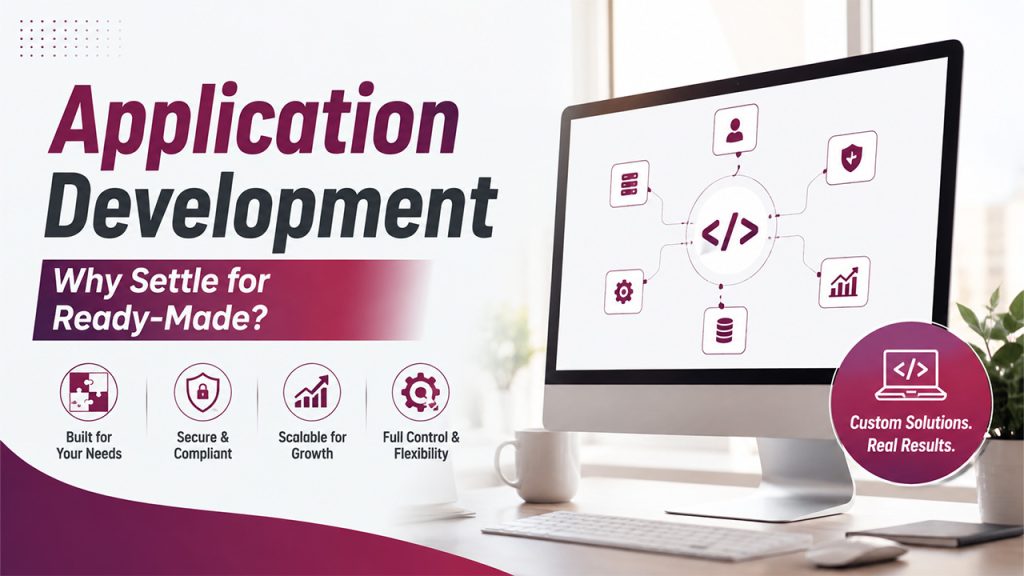
Application development created around particular needs provides benefits that generic software typically cannot match. Businesses often consider a custom approach when:
Available tools do not support complex or unique tools.
- Compliance needs and data security are strict, like in regulated industries such finance and healthcare.
- The business has to incorporate new software with legacy systems.
- Lasting scalability is important more than a generic and quick solution.
- User experience must be personalized to a particular audience, not a general one.
A custom-developed application also provides businesses with greater control over feature changes and updates, instead of being stuck with the release schedule of the vendor. Businesses evaluating the differences between customized and pre-built solutions can also explore custom vs ready-made CRM solutions to better understand how tailored software provides greater flexibility and control. Over time, this control tends to minimize licensing costs and technical debt, even though the upfront investment is often greater than buying a ready-made product. For businesses planning their tech roadmap, assessing such trade-offs early on can be a helpful step before investing time and budget into development.
Custom Mobile Application Development Services
Related walkthrough
Chapter 9 | SuiteCRM Custom Code Architecture | Logic Hooks, Workflows & Upgrade-Safe Development

Mobile utilization transforms how customers interact with businesses. That is why custom mobile application development services have emerged as a vital part of distinct strategies. A mobile application specially-built for a business can benefit from device-level characteristics like push notifications, location services, and camera access in ways that generic applications cannot replicate.
Effective custom mobile application development services often address:
- Native development for Android and iOS when hardware access and performance is most important.
- Cross-platform frameworks when single-codebase and quick delivery remain the priority.
- Users get offline functionality if they use an application in an area with inconsistent connectivity.
- Data management and secure authentication for confidential data.
- Regular updates to fit new device capabilities and OS versions.
Selecting between cross-platform and native development relies on timeline, budget, and how deeply the application needs to integrate with the hardware. Teams exploring this decision can go through our practical mobile app development tips that explain strategies for planning, design, and testing considerations before development begins.
Cloud Application Development: Development for Scale
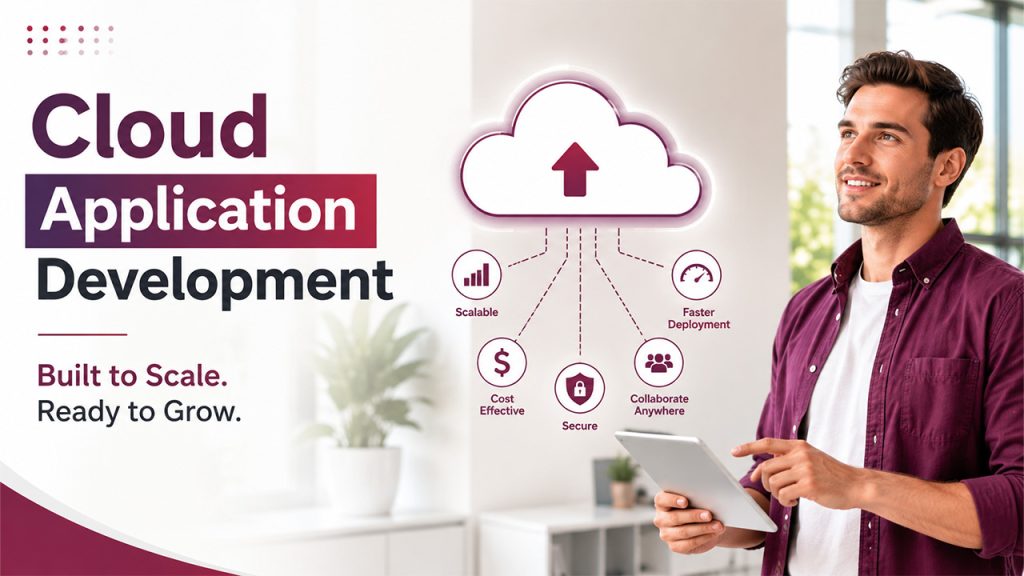
Cloud application development has become more associated with custom software, since most modern apps are now developed to operate on cloud infrastructure instead of local servers. This approach enables businesses to scale up or down their resources according to the demand, without substantial investment in physical hardware.
Main benefits of cloud application development are as follows:
- On-demand scalability as the number of users or volume of data increases.
- Minimized infrastructure costs as compared to maintaining servers on the premise.
- Simpler collaboration across remote or distributed teams.
- In-built disaster recovery or redundancy options.
- Quicker deployment cycles through cloud-native services or tools.
Businesses adjusting this model also require a platform handling change over time, since cloud applications iterate through new integrations, new updates, and evolving user requirements. An organized look at cloud application lifecycle management can allow teams to understand how planning, testing, and release stages fit together without impacting the daily processes.
What Are the Main Considerations Before Beginning Your Custom Build?
Before you choose to go for custom application development, it aids to assess a few critical factors:
Clarity in Scope
Vague requirements always lead to scope creep and delays always.
Development approach
Outsourced partners, in-house teams, or low-code platforms each suit distinct timelines and budgets.
Security and compliance
Regulated industries such as finance and healthcare need in-built security from the first day itself, not included later on.
Support After Launch
The job is not done when the product reaches the market. The app still needs consistent bug fixes, tracking, and updates well after it goes live.
Once you skip this stage, it generally leads to applications that initially work for some time but then becomes very hard to maintain. Businesses that strategize for the entire lifecycle, including ongoing application maintenance and support, position themselves to get more consistent and lasting value from their investment.
Conclusion
Custom application development provides organizations with the flexibility to create software around their precise workflows instead of adjusting processes to align with a generic product. Irrespective of whether the priority is a mobile-first experience through custom mobile application development services, wider application development strategy associated with long-term growth, or cloud application development for higher scalability, the best approach begins with clear needs and realistic view of what the app needs to do today and in years to follow.
Businesses that consider this a consistent process, instead of a one-time project, are often more effectively positioned to make sure that their apps remain relevant, secure, and aligned with how their business really works.
Frequently Asked Questions
Off-the-shelf software provides generic features for a wider market, while custom application development creates software for a specific workflow of the business, security requirements, and data structured. This implies there will be lesser workarounds and more effective long-term fit as your business evolves.
Custom mobile development makes a lot of sense when the business requires in-depth integration with device features such as camera access, push notifications, or location services, or when the user experience must be personalized to a particular audience. Generic templates generally fall short when offline functionality or hardware-level performance is vital.
Cloud application development often minimizes upfront infrastructure expenses since businesses scale resources on demand instead of making investments in physical servers. Over time, this generally makes it more cost-efficient, specifically for teams requiring remote collaboration and flexibility.
Important considerations involve a project scope, the best development approach (outsourced, in-house, or low-code) and in-built security and compliance measures, specifically in regulated industries. Skipping this planning stage generally leads to scope creep and costly revisions later.
No, consistent app maintenance and support are vital post-launch to manage updates, bug fixes, and evolving user requirements. Businesses that have a detailed plan to manage this ongoing process tend to be more consistent, ensuring long-term value from their software investment.