
Cloud application lifecycle management: keeping cloud apps stable and ready for change
Cloud application lifecycle management covers planning, development, and maintenance. Review its uses and limits to compare solutions for teams with confidence.
Cloud applications change quickly. New features, security updates, and configuration changes roll out many times a year. Cloud application lifecycle management is about controlling these changes from planning to production so that systems stay stable, secure, and aligned with business needs.
Without a structured approach to managing this constant flow of change, your systems become increasingly fragile. Updates pile up; configurations drift, and nobody’s quite sure what’s running in production anymore. For organizations running enterprise cloud apps like ERPs, HCMs, and financial platforms, this becomes a serious problem fast. These aren’t nice-to-have tools. They’re the backbone a serious problem fast. These aren’t nice-to-have tools. They’re the backbone of how your business actually runs. When something breaks, it doesn’t just inconvenience one team. It cascades across the entire organization.
That’s what this blog is about: how to turn constant change from a threat into something you can actually manage.
What is cloud application lifecycle management?
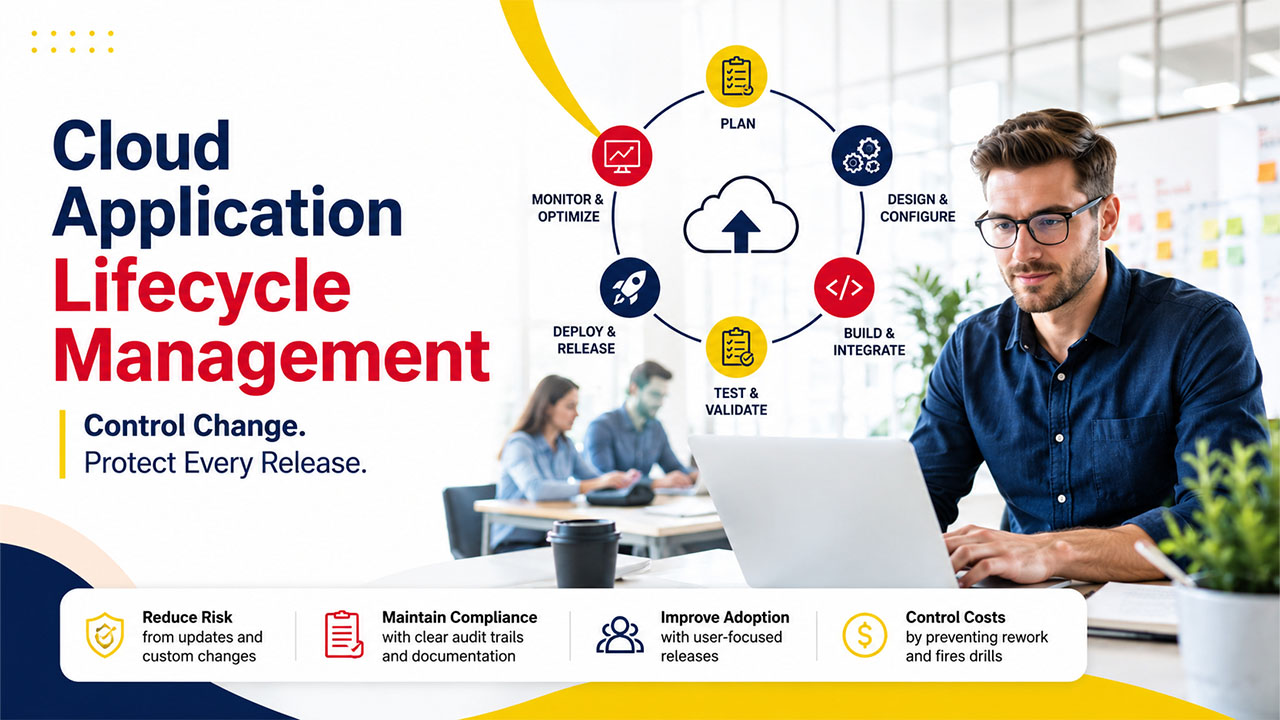
Cloud application lifecycle management includes all phases of development of cloud application. It stages planning and designing phases and goes further to building, testing, releasing, and operation. The key purpose of this process is to manage all changes in a systematic way so that each change could support the business processes and not disturb them.
Key Phases of the lifecycle
Cloud application Lifecycle management typically involves the following phases:
- Planning: Business requirements, business metrics, business risks identification and definition for the implementation of new features, new integration or any other changes.
- Designing and configuring: Application modules for configuration and role configuration according to best practices and regulations.
- Building and integrating: Development of extensions and customizations if necessary and keeping the standard of the base product as high as possible.
- Testing and validation: Functional integration, performance and security testing of all changes to ensure that all of them work correctly without disturbing the critical processes.
- Deployment and release: Controlled deployment and rolling out changes to production with clear rollback procedures and proper informing of users.
- Monitoring and optimization: Monitoring of application performance, incidents and feedback from users and optimization of configurations.
Benefits of cloud application lifecycle management
Cloud-based software continues to evolve through vendor updates, feature enhancements, and security patches. Without a structured lifecycle management approach, these frequent changes can introduce risks, disrupt operations, and increase maintenance costs. Without a structured lifecycle management approach, these frequent changes can also lead to the introduction of risks, disrupt operations, and increase maintenance costs.
Some of the key benefits of implementing cloud application lifecycle management are as follows:
- Reduced Risk During Application Updates: The enterprise cloud applications, such as ERP, HCM, and CRM, receive regular updates from the vendors. It helps organizations in identifying potential issues early and minimizing the risk of a production outage.
- Improves Application Stability: The consistent lifecycle management also helps in maintaining a stable application environment, simply by controlling configuration changes, managing customizations, and validating integration before releases.
- Reliable Releases: Cloud application software features standardized processes, automated testing, and a clearly defined deployment procedure, which enable teams to release updates more efficiently.
- Lower Operational Costs: Cloud application software reduces rework, minimizes downtime, and prevents emergency fixes, lowering the overall cost of software maintenance.
Why it matters for enterprise cloud apps
Related walkthrough
Claude Code + Google Antigravity Is About to Change How Apps Are Built

For ERPs and other enterprise cloud systems, lifecycle management is not optional. These systems support core processes like finance, HR, supply chain, and procurement, so even minor changes can have big downstream impacts.
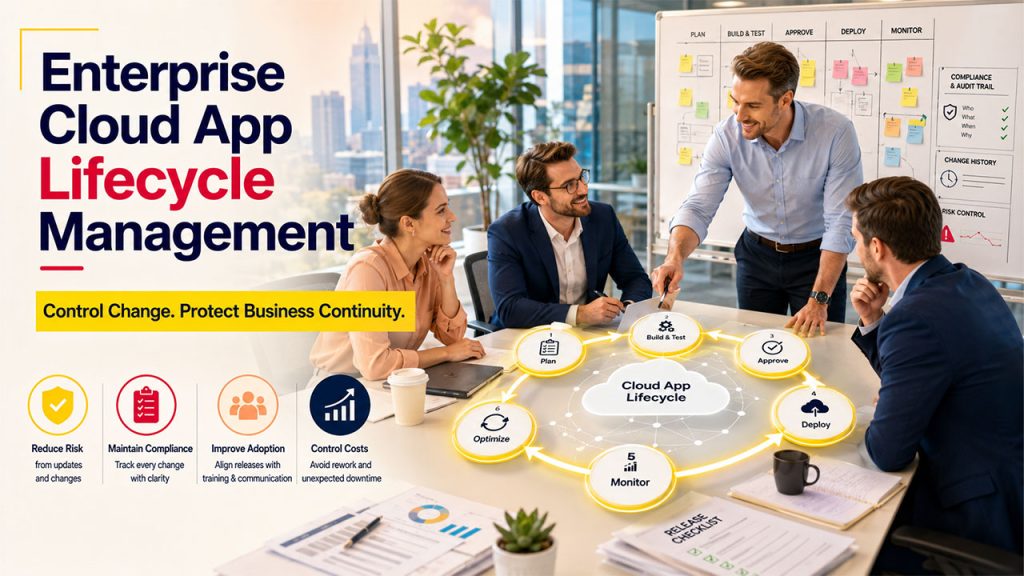
A strong lifecycle approach helps organizations:
- Reduce risk from vendor updates and custom changes.
- Maintain compliance by tracking what changed, when, and why.
- Improve user adoption by aligning releases with training and change management.
- Control costs by avoiding rework and frequent fire drills after poorly tested updates.
Best practices to manage the lifecycle
There are several practices that can help improve cloud app lifecycle management:
- Environment Standardization: Maintain standardized environments across development, testing and production, to ensure that issues do not appear only after go-live.
- Testing Automation: Automated testing is required to validate each release with regard to regressions, integration, and key business flows.
- Release Calendars: Plan the internal changes on release calendars and freezes planned by vendors.
- Engage Business Users: Involvement of process owners in design and testing to ensure that changes reflect the actual process needs.
- Configuration Change Tracking: Maintain good documentation and audit logs of all the changes done to ensure that the implications of every change are known.
How Opkey helps in CALM
Testing is za central part of cloud application lifecycle management, especially for ERPs and other business-critical cloud apps. key fits into this lifecycle by helping organizations automate testing for key processes, validate vendor updates faster, and keep continuous testing consistent across releases. This supports smoother change cycles, fewer production issues, and more confidence in every cloud update.
Conclusion
The cloud application lifecycle management is more than just managing software updates. It is more about creating a structured and repeatable process of delivering changes, without disrupting business operations. Cloud application lifecycle combines careful planning, standardized configuration, thorough testing, controlled deployment, and continuous monitoring, ensuring that organizations can keep their cloud applications stable, secure, and ready to evolve.
Read also: Application Migration: A Complete Guide for Modern Businesses