

ERR_TOO_MANY_REDIRECTS: What It Is & How to Fix It (Redirect Loop Guide)
Learn what ERR_TOO_MANY_REDIRECTS means, why redirect loops happen, and how to fix them quickly to protect SEO and user experience.
The ERR_TOO_MANY_REDIRECTS is a frequent and frustrating browser issue that all users and web owners experience, often referred to as a “redirect loop.” The browser keeps bouncing from URL to URL, unable to find the final destination or “landing page”. This not only hinders an individual’s experience while visiting websites but also has a negative impact on search engine optimization (SEO) and ultimately website performance if left unresolved.
The guide will provide you with a complete understanding of the ERR_TOO_MANY_REDIRECTS error, including its definition, why it occurs, the effect on your website, and steps to successfully resolve the error.
Quick Fix Checklist for ERR_TOO_MANY_REDIRECTS
Before diving into detailed troubleshooting, try these quick steps:
- Clear browser cache and cookies
- Verify HTTP vs HTTPS consistency
- Disable redirect-related plugins temporarily
- Check CDN (Cloudflare) SSL settings
- Test redirects using an online redirect checker
What Is ERR_TOO_MANY_REDIRECTS?
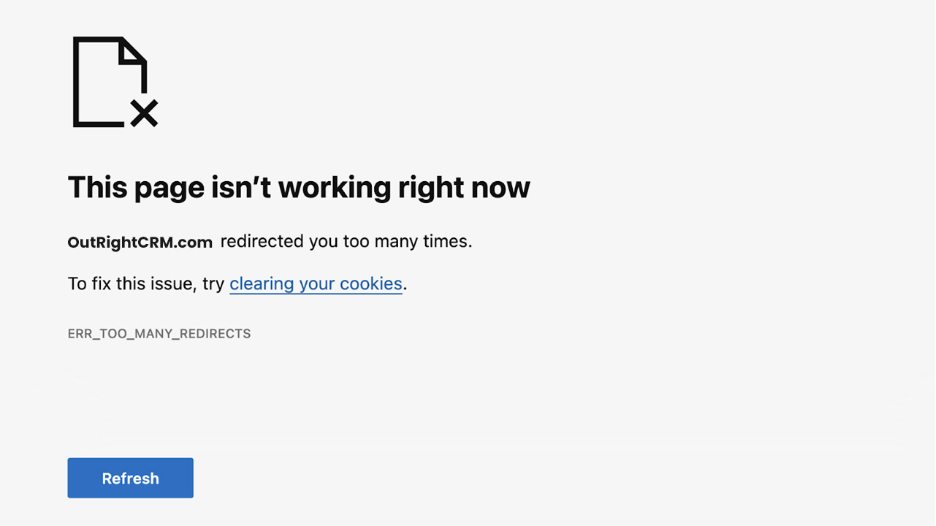
ERR_TOO_MANY_REDIRECTS occurs when a browser detects an infinite redirection loop while trying to load a webpage. Instead of reaching the page that you requested, the browser is redirected between URLs repeatedly until it halts the process.
Some of the most common browsers to show this error are Google Chrome, Mozilla Firefox, and Microsoft Edge. All the browsers have the same or similar error message that displays “This page is not working” or “This page isn’t redirecting you correctly”.
Key characteristics of this error:
Infinite redirect loop
The browser keeps moving between two or more URLs without reaching a final page, exhausting the redirect limit.
Client-side detection
The error is triggered by the browser when it exceeds the allowed number of redirects, not by the server alone.
Affects both users and admins
Visitors cannot access the site, and site owners may be locked out of the admin panel in severe cases.
Common Causes of ERR_TOO_MANY_REDIRECTS

Understanding the root causes of err_too_many_redirects is important to figure out a way to fix it effectively and entirely. In many cases, these issues occur due to misconfigurations rather than server failures.
HTTP to HTTPS Redirect Issues
When HTTPS is enabled incorrectly, the server may keep redirecting between HTTP and HTTPS versions of the same URL. Similar to SSL-related errors, misconfigurations can prevent proper page loading.
- A forced HTTPS redirect may conflict with SSL settings or CDN rules.
- Both the servers and CMS may try to enforce HTTPS simultaneously
- This creates a loop where the browser never reaches a stable version.
Misconfigured Redirect Rules
Following a website redesign SEO checklist can help prevent redirect errors during site updates.
- Conflicting rules in .htaccess, nginx.conf, or server panels can override each other.
- Redirects pointing to already redirected URLs cause endless loops.
- Regex-based redirects may unintentionally match multiple paths.
CMS or Plugin Redirect Conflicts
Content management systems like WordPress rely heavily on plugins and themes that can affect redirect behavior.
- Security or SEO plugins may force redirects independently.
- Multiple plugins attempting URL normalization can clash.
- Incorrect site URL settings inside the CMS dashboard can trigger loops.
Browser Cache and Cookie Issues
Sometimes the problem exists only on the user side due to corrupted browser data.
- Old cookies may contain outdated redirect instructions.
- Cached redirect responses may persist even after fixes.
- Different browsers may show different behaviors for the same site.
How ERR_TOO_MANY_REDIRECTS Affects Your Website
This error does more than just block page access. If unresolved, it can cause long-term damage to performance, trust, and search visibility.
Impact on User Experience
Users are immediately stopped from accessing content, which increases bounce rates and reduces engagement.
- Visitors may assume the site is broken or unsafe.
- Repeated errors reduce credibility and trust.
- Returning users are less likely to revisit the site.
SEO and Ranking Impact
Search engines struggle to crawl sites that are stuck in redirect loops. Persistent redirect loops may also trigger soft 404 signals, reducing long-term search visibility.
- Googlebot may fail to index affected pages.
- Redirect loops waste crawl budget.
- Prolonged errors can cause ranking drops or deindexing.
Admin and Backend Access Problems
In some cases, even administrators cannot log in.
- Redirect loops may affect login or admin URLs.
- Fixing the issue becomes harder without backend access.
- Emergency server-level intervention may be required.
How to Fix ERR_TOO_MANY_REDIRECTS (Step-by-Step Guide)
Related walkthrough
How to YouTube Unblock on Google Chrome | Quick & Easy Fix 😱


Fixing err_too_many_redirects requires a methodical and structured approach. First, you can start with simple checks and later move toward deeper configuration reviews.
Clear Browser Cache and Cookies
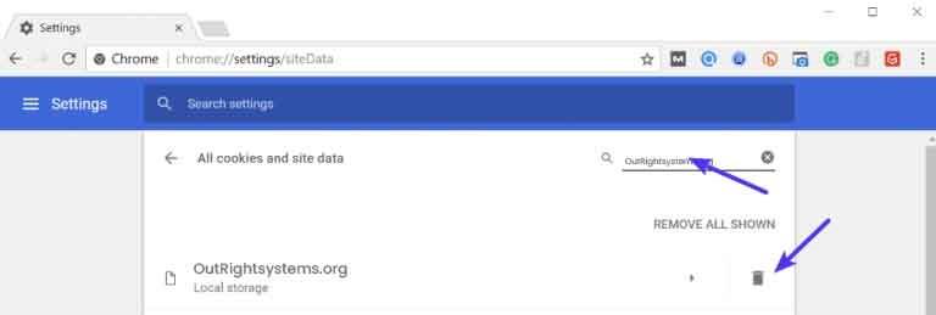
This step is the quickest and often resolves those issues that are user-specific.
- Clear cookies that are related to the domain that is being affected.
- Remove cached redirects stored by the browser.
- Try testing the site in an incognito mode or private window.
Check HTTP and HTTPS Configuration
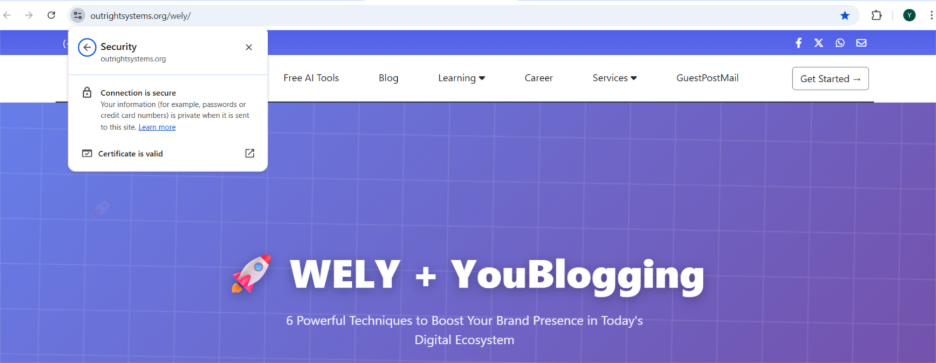
Ensure your site has a single protocol that is consistent.
- Confirm that SSL certificates are active and valid.
- Avoid forcing HTTPS from multiple sources simultaneously.
- Set a single canonical URL version.
Audit Redirect Rules

Ensure that redirect logic is always clean, intentional, and minimal.
- Audit .htaccess or server configuration files.
- Remove redirect rules that are duplicates or conflicting.
- Remember to avoid redirecting URLs back to themselves.
Verify CMS Site URL Settings
CMS-level URL settings must match the behavior of the server.
- Make sure that “Site URL” and “Home URL” are identical.
- Match protocol (HTTP or HTTPS) across all settings.
- Disable plugins temporarily so that you can isolate conflicts.
Check CDN and Proxy Settings
CDNs such as Cloudflare and others can introduce hidden redirect layers.
- Ensure the SSL mode that matches the server configuration.
- Avoid the enforcement of double HTTPS.
- Purge CDN cache after making necessary changes.
Platform-Specific Fixes for ERR_TOO_MANY_REDIRECTS
If the issue persists after general troubleshooting, platform-specific configurations should be reviewed. Some issues, like HTTP/HTTPS conflicts, are covered above; here we show platform-specific solutions.
Fixing ERR_TOO_MANY_REDIRECTS in WordPress
WordPress sites are particularly prone to redirect loops due to plugins and URL settings.
- Check Settings → General and ensure Site URL and Home URL match
- Disable caching, security, and SEO plugins temporarily
- Review .htaccess for duplicate HTTPS or www/non-www redirects
- Clear WordPress, hosting, and browser cache
Many redirect loops in WordPress are caused by overlapping plugin-level and server-level redirects.
Fixing ERR_TOO_MANY_REDIRECTS on Apache Servers
On Apache servers, redirect issues are usually tied to .htaccess rules.
- Avoid multiple RewriteRule or RewriteCond directives enforcing HTTPS
- Ensure redirects do not send traffic back to the same URL
- Remove outdated or duplicated 301 redirect rules
- Restart Apache after making changes
Fixing ERR_TOO_MANY_REDIRECTS on NGINX Servers
NGINX handles redirects differently and requires careful rule management.
- Review return 301 and rewrite directives
- Avoid overlapping HTTP-to-HTTPS redirects
- Ensure server blocks do not conflict with each other
- Reload or restart NGINX after updating the configuration
NGINX redirect loops often occur when both server blocks and SSL configs enforce redirects independently.
How to Prevent ERR_TOO_MANY_REDIRECTS
Prevention is easier than recovery. Take precautionary measures to avoid redirect loops entirely, so you don’t have to look for ways of recovery later. Following these steps can prevent the SEO and ranking issues discussed above.
| Prevention | What To Do | Why It Matters |
|---|---|---|
| Use one canonical URL version | Choose a single protocol (HTTP or HTTPS), www or non-www consistently | Prevents conflicting redirects and duplicate URL versions |
| Avoid redirect chains | Keep redirects direct & limit them to one step | Reduces crawl budget waste and improves page load speed |
| Test redirects after CMS updates | Check redirect behavior after plugin, theme, or core updates | Updates often introduce hidden redirect conflicts |
| Audit redirects quarterly | Review server and CMS redirect rules regularly | Helps identify outdated or broken redirects early |
| Monitor crawl errors in Google Search Console | Track redirect-related crawl errors | SEO checklist ensures search engines can properly crawl and index your pages |
When to Seek Professional Help
Some redirect issues are more complex and require the intervention of experts to resolve them.
- Server-level misconfigurations may need hosting support.
- Enterprise sites with multiple domains require careful planning.
- SEO recovery after prolonged redirect errors may need audits.
This guide follows industry best practices recommended by hosting providers, browser vendors, and SEO professionals to ensure accurate and secure troubleshooting.
Final Thoughts
The ERR_TOO_MANY_REDIRECTS error can disrupt user experience, SEO, and website performance, but it is usually fixable with proper troubleshooting. By understanding its causes, following systematic fixes, and maintaining clean redirect practices, you can restore access and protect your site’s rankings. Regular monitoring and preventive measures help ensure these redirect loops do not recur.
FAQs for ERR_TOO_MANY_REDIRECTS
Q. What does ERR_TOO_MANY_REDIRECTS mean?
A. It means your browser is stuck in an infinite redirection loop and cannot reach the final webpage.
Q. Can err_too_many_REDIRECTS affect SEO?
A. Yes, redirect loops prevent search engines from crawling pages properly, which can hurt rankings.
Q. Is ERR_TOO_MANY_redirects a server or browser issue?
A. It’s usually caused by server or website configuration errors, though browser cookies can trigger it.
Q. How do I fix err_too_many_redirects in WordPress?
A. Check site URLs, disable redirect-related plugins, review .htaccess, and clear cache.
Q. Can SSL misconfiguration cause ERR_TOO_MANY_REDIRECTS?
A. Yes, conflicting HTTP and HTTPS settings are one of the most common causes of this error.