
How SEO Agencies Help Businesses Adapt to Search Engine Changes
Explore how SEO agencies help businesses adapt to search engine changes, along with understanding why these changes feel so disruptive.
Search never sits still. One year, rankings hinge on links and on-page optimization. Also, Google is also rewarding firsthand expertise, pushing AI-generated summaries into results and reshaping how local businesses appear on mobile. For companies and businesses that rely on organic traffic, Search Engine Changes creates a real challenge.
This is where good SEO agencies earn their keep. Not by chasing hacks or promising overnight recoveries, but by helping businesses interpret change, prioritize what matters, and make steady improvements, that can hold up over a longer period.
Why Search Engine Changes Feel So Disruptive
Businesses generally don’t experience updates by Google as abstract industry news. They generally feel them in much more practical terms, a drop in enquiries, fewer product page visits, or a sudden dip in search engine visibility for keywords that can be used to perform reliably.
The difficulty is that search changes rarely happen in isolation. A ranking shift could be tied to:
- a core algorithm update
- changes in search intent
- a technical issue on the site
- stronger competitor content
- new SERP features reducing clicks even when rankings hold steady
The main complexity is making the search harder to manage internally, especially for lean marketing teams, that are already balancing paid media, social email, and reporting. An SEO agency can help by separating noises from the signals. Instead of assuming every drop is a penalty, or even spike is a success, these agencies look at patterns across traffic, keyword groups, user behavior, and conversion data.
Agencies Turn Algorithm Updates Into Action Plans
One of the major advantages of working with specialists in context. Agencies can track search changes across multiple industries and websites, so they can also spot trends earlier than a single in-house team can.
From Panic to Diagnosis
When a major update rolls out, the first instinct is often to start changing everything. That usually makes things worse. A strong agency begins with diagnosis. What pages lost visibility? Did informational content drop while commercial pages stayed stable? Has click-through rate declined because of new SERP features rather than lower rankings?
Those questions matter because the response should match the cause. If an update appears to reward depth and expertise, the answer may be stronger author signals, better sourcing, and more useful content. If the issue is technical, content tweaks alone won’t help.
For firms operating in competitive local markets, this kind of interpretation is especially important. Working with SEO consultants serving businesses across London can be useful when broad algorithm changes need to be translated into concrete priorities for a specific region, audience, and search landscape.
They Strengthen the Foundations That Updates Tend to Reward
Related walkthrough
How to change default search Engine
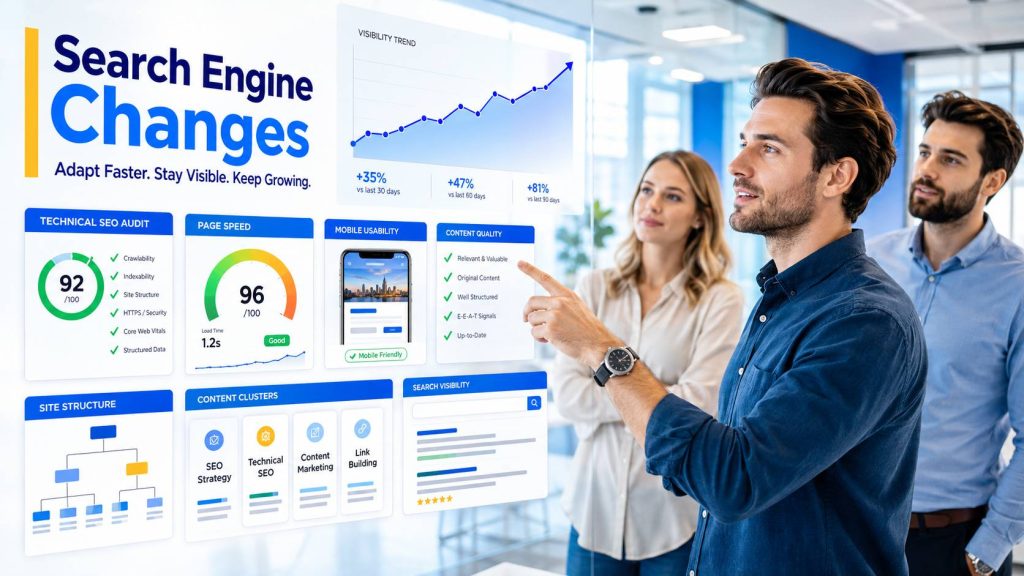
Despite each update, the long-term pattern is fairly consistent. Search engines are also getting better at identifying pages that are useful, trustworthy, fast, and easy to navigate. Agencies can also help businesses improve those fundamentals rather than just chasing temporary loopholes.
Technical SEO Still Matters
The technical issues often sit quietly in the background until visibility starts to slip. A slow page can crawl inefficiencies; broken internal links, duplicate content, and poor mobile usability can all weaken performance over time.
An agency will usually audit the site with a wider lens than a basic checklist. They’re not just asking whether pages are indexed. They’re asking whether search engines can efficiently understand site structure, prioritize key pages, and connect content to relevant queries.
That matters even more now that search results are crowded with rich snippets, local packs, video carousels, and AI-generated features. If your site sends mixed technical signals, you’re already at a disadvantage.
Content Needs More Than Keywords
The days of producing a high volume of lightly rewritten keyword articles are fading fast. Search engines increasingly reward content that demonstrates experience, solves real problems, and aligns with what users actually want at each stage of the journey.
Agencies help businesses move beyond “what keywords should we target?” to deeper questions. What is the intent behind that query? What would make this page genuinely more helpful than the alternatives? Does the content reflect current information, subject knowledge, and clear commercial relevance?
In practice, that may mean consolidating overlapping pages, rewriting thin service content, adding expert commentary, or building topic clusters that make the site easier to understand.
They Help Businesses Respond to New Search Behaviours
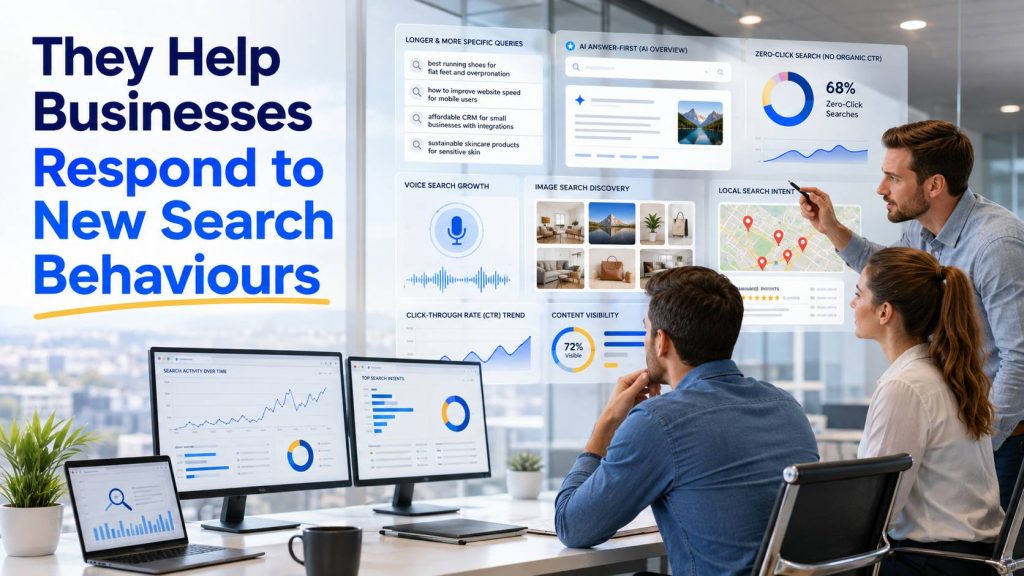
Search engine changes aren’t only algorithmic. User behaviour is shifting too. People are searching with longer, more specific queries. They’re getting answers directly in results. They’re using voice search, image search, and location-based search in ways that affect how traffic flows.
Adapting to AI and Zero-Click Search
AI Overviews and other answer-first features are changing the value of a ranking position. Being at the AI overview is still useful, but it cannot guarantee the same level of traffic. The agencies are helping businesses adjust by focusing on visibility in a broader sense, not just the ranks alone.
That can include improving content structure so it’s easier to extract and cite, refining metadata to protect click-through rate, and creating assets that support branded search demand. In other words, the goal becomes not just “rank higher,” but “stay discoverable and compelling as search interfaces evolve.”Measurement Becomes More Strategic
A smart agency also changes how success is measured. If KPIs are a raw traffic, it is considered easy to miss what really is happening. A site can also lose some top-of-funnel clicks while also gaining more qualified visitors who can convert at a higher rate.
The Metrics That Actually Matter
The best SEO reporting connects search performance to business outcomes. That means looking at:
- visibility by page type or intent
- conversions from organic sessions
- assisted revenue or lead quality
- local pack performance and branded search growth
- engagement signals on updated content
This kind of reporting gives businesses confidence to make better decisions. Instead of reacting emotionally to every fluctuation, they can see whether their search presence is becoming more resilient.
The Real Value Is Adaptability
What businesses need from SEO today is not a static playbook. It’s a process for adapting intelligently. Search engines will continue to change, and some Search Engine Changes will be abrupt. Companies that understand their audience, maintain a technical sound site, publish useful content, and measure performance properly are generally in a much stronger position than those chasing shortcuts.
That’s ultimately how SEO agencies help. These agencies help bring perspective, process, and specialist knowledge to an environment that can reward patience as much as agility. In a channel where the rules keep moving, a specific kind of steady guidance can make the difference between temporary disruption and long-term growth.