
9 Best SOC 2 Compliance Software Tools: A 2026 Buyer’s Guide by Company Type
Compare 9 SOC 2 compliance software tools by company type, with key features, pricing, watch-outs, and guidance for startups, lean teams, and enterprises.
Every SOC 2 vendor sells the same four promises: automated evidence, continuous monitoring, a faster audit, a cleaner dashboard. Sit through a handful of demos and the pitches blur, which is the trap most buyers walk into when they start comparing the best SOC 2 compliance software. The tools read as near-identical on the surface, and the differences that decide whether a first audit runs into trouble show up only after the contract is signed.
This guide skips the ranked leaderboard. SOC 2 is an attestation under AICPA rules, and the report itself comes from an independent CPA firm, so the software’s job is to get your controls, evidence, and policies audit-ready without burning a quarter of your engineers’ time. What “audit-ready” takes looks different for a five-person startup than for an enterprise carrying SOX and an internal audit team. So the nine platforms below sit in buyer groups rather than in rank order, with a short decision framework first and plain answers to the questions buyers ask at the end.
What SOC 2 compliance software does
The software connects to your cloud, identity, HR, and code systems and pulls evidence that your security controls run the way your policies say they do. It maps that evidence to the AICPA Trust Services Criteria, watches controls between audits, and packages what an examiner needs in one place. The alternative is a spreadsheet, a shared drive, and a scramble at every renewal.
Two distinctions matter before you shortlist. A SOC 2 Type I report checks that controls are well designed at a single point in time; a Type II report checks that they operated as intended across a window that runs three to twelve months. Most enterprise buyers want the Type II. No platform issues the report, though. A licensed CPA firm runs the examination and issues the signed attestation, so what you buy from a software vendor is a faster, cleaner path to that firm’s desk.
How to choose SOC 2 compliance software for your company
The useful question isn’t which tool ranks first. It’s which tool fits the company you run now and the one you’ll run two years out. Four buyer situations cover most of the market.
If you’re a startup facing a first audit
You need speed and guardrails more than depth. Sprinto and Secureframe both walk a cloud-native team through a first SOC 2 on heavy automation and templated controls, so a founder without a security hire can still reach audit-ready.
If you’re managing several frameworks at once
Managing SOC 2 alongside ISO 27001, GDPR, or HIPAA can quickly create duplicate work. Platforms with cross-framework mapping, like Scytale, let one control satisfy requirements across multiple standards instead of rebuilding the same evidence for each.
If you’re an enterprise with an internal audit function
SOC 2 becomes one line in a wider risk and controls program. Optro suits teams that already run internal audit and want SOC 2 folded into enterprise risk rather than handled as a standalone project.
If you’re a lean team that wants a practitioner in the loop
Automation gets you most of the way, but working through exceptions and preparing for the audit is often where small teams need extra support. Scytale can help by pairing automation with dedicated GRC experts who guide your team through the process, so you can move toward SOC 2 attestation without needing in-house compliance expertise.
How these nine picks were chosen
The shortlist favors platforms with credible SOC 2 functionality and a clear buyer fit, drawn from current vendor documentation and verified G2 review data captured in 2026. Ratings and review counts reflect each vendor’s G2 profile. Where a platform’s pricing isn’t public, the entry carries a reported figure and labels it that way. Vanta and Drata sit lower here than their market presence alone would place them, because this guide weighs a guided, audit-done outcome as much as raw evidence collection.
The 9 best SOC 2 compliance software tools by company type
Related walkthrough
Is Your Team Communication Secure? Why Businesses Are Moving to Compliant Chat Apps (Zenzap Review)
Scytale: Best for Guided SOC 2 Compliance With Expert Support
Overview :
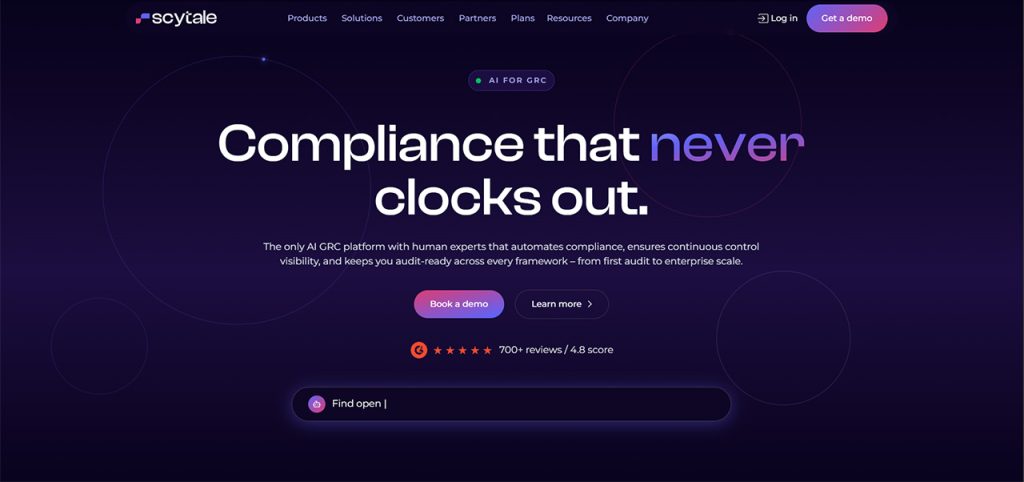
Scytale is an AI GRC platform that combines SOC 2 compliance automation with hands-on support from dedicated GRC experts. The platform automates evidence collection, continuously monitors controls, and centralizes policies, risks, tasks, and audit readiness in one place. Built-in audit management and penetration testing help teams manage more of the SOC 2 process without relying on separate tools. Scytale has a 4.8 rating on G2 across 700+ reviews.
Standout capability:
Continuous SOC 2 monitoring helps teams spot control gaps as they happen rather than waiting until audit preparation begins. Scytale also cross-maps controls and evidence across frameworks, so the work completed for SOC 2 can support ISO 27001, HIPAA, GDPR, SOX ITGC, and other compliance requirements.
Watch-outs:
Scytale doesn’t publish standard pricing, so companies need to request a quote based on their scope and compliance needs.
Sprinto: Best SOC 2 Compliance Software for Lean Cloud-Native Startups
Overview:
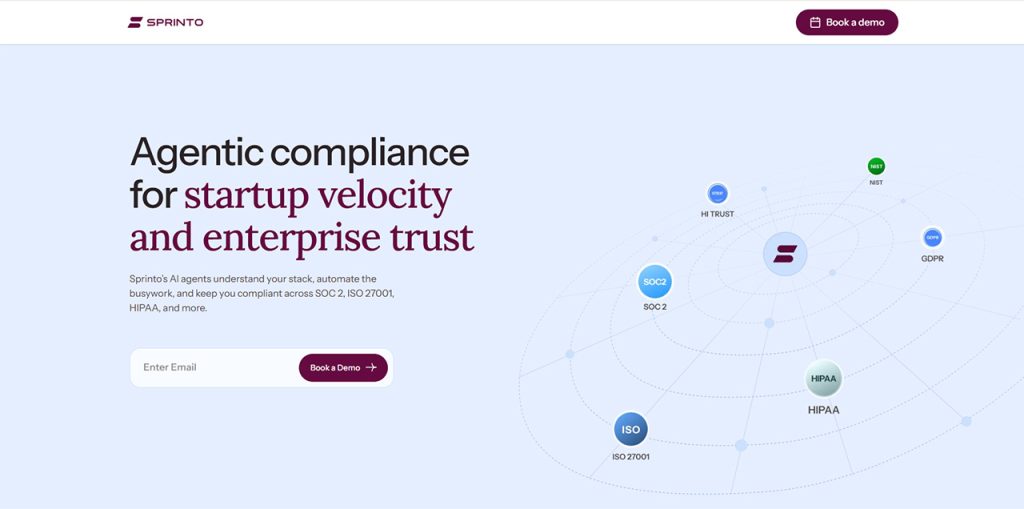
Sprinto is a SOC 2-focused automation platform built for fast-growing cloud teams, advertising 90 to 95 percent automation through its 200-plus native integrations, with guided onboarding and built-in device monitoring. It carries a 4.8 G2 rating across about 1,656 reviews and a Leader badge for small business.
Standout capability:
Speed to a first SOC 2 for a cloud-native stack, backed by responsive onboarding that suits a team without a dedicated compliance owner.
Watch-outs:
Layers like ISO 27001 and PCI arrive as paid add-ons, its native integration count trails Vanta’s, and reviewers note it fits complex enterprise environments less well.
Secureframe: Best SOC 2 Compliance Software for a Guided First Audit
Overview:
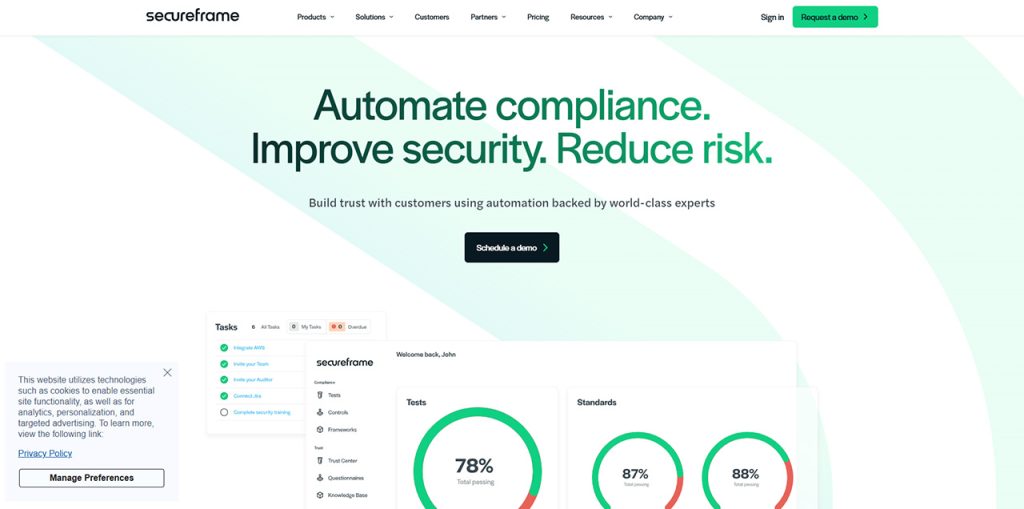
Secureframe automates SOC 2 and 40-plus frameworks on a condensed control set with in-house expert help, layering AI for remediation and questionnaire work. G2 reviewers give it 4.7 across 802 reviews, praising ease of use (650 mentions) and a low-maintenance, well-supported program (552 mentions).
Standout capability:
A guided, templated path that keeps upkeep light for SMBs where security or engineering owns compliance on the side.
Watch-outs:
Reviews flag integration gaps with niche tools and platforms like Azure DevOps and Stripe (141 mentions), and 109 reviewers ask for stronger audit functionality.
Scrut Automation: Best SOC 2 Compliance Software for Growth-Stage Teams
Overview:
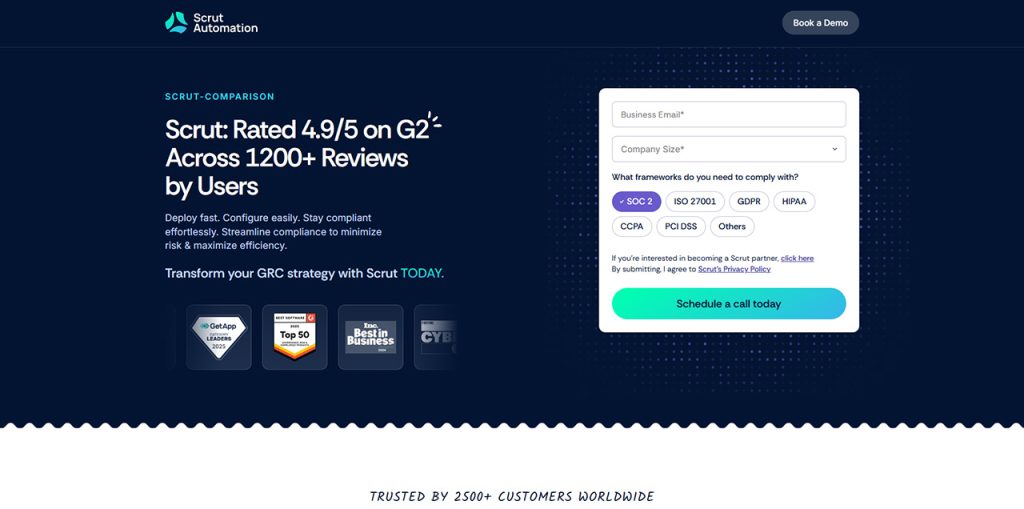
Scrut is an all-in-one GRC and SOC 2 automation platform covering 60-plus frameworks with in-house compliance experts. It holds the pool’s highest raw score, 4.9 on G2 across 1,312 reviews, with a 95 percent five-star share.
Standout capability:
Expert guidance that review after review singles out (216 mentions), on top of a wide framework library.
Watch-outs:
Reviewers report the UI and some functionality need work (69 mentions), occasional bugs that break workflows (52 mentions), and slow interface performance (44 mentions); it’s a newer platform with fewer integrations than the incumbents.
Thoropass: Best SOC 2 Compliance Software for Unified Audit Path
Overview:
Thoropass pairs its compliance platform with its own in-house SOC 2 audit execution, giving buyers one vendor from readiness through the audit itself. It rates 4.7 on G2 across 579 reviews, with strong marks for support on complex audits (221 mentions).
Standout capability:
A consolidated path that removes the hand-off between a software vendor and a separate audit firm, which appeals to teams that want fewer relationships to manage.
Watch-outs:
UX polish is the recurring complaint, with “disjointed UX” (39 mentions) and limited visibility into audit status (32 mentions); buyers are also tied to Thoropass’s own audit firm, so there’s no auditor flexibility, and bundling the audit raises the upfront cost.
Hyperproof: Best SOC 2 Compliance Software for Multi-Framework Operations
Overview:
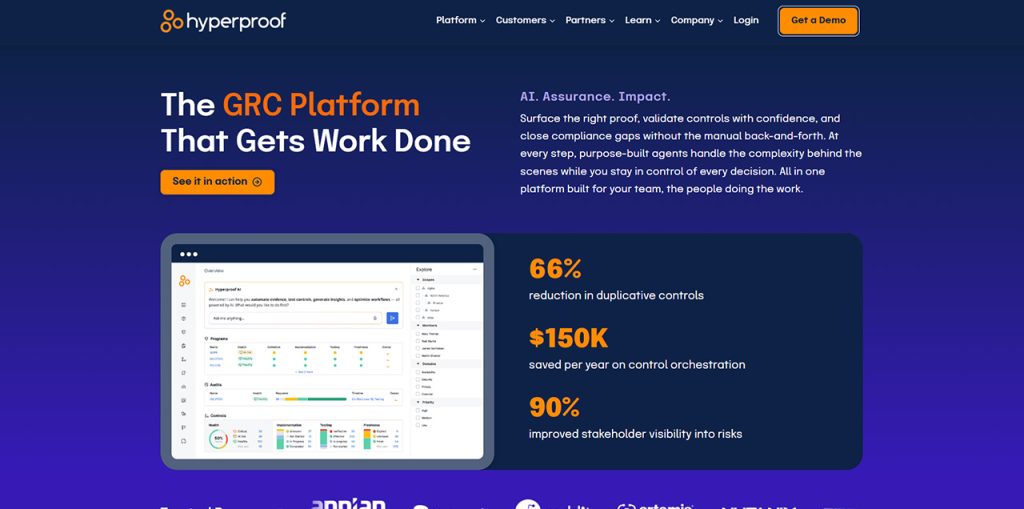
Hyperproof is a compliance-operations and GRC platform built for cross-framework control mapping across 118-plus frameworks, with SOC 2 as one program among many. It rates 4.5 on G2 across 217 reviews and is reported to start near $12,000 a year.
Standout capability:
Centralized program management that connects controls to risks across many frameworks, a fit for a maturing compliance function with several standards in flight.
Watch-outs:
A steep learning curve is the dominant review theme, reporting and dashboard customization draw complaints (13 mentions), and its 70-odd integrations leave more SOC 2 evidence to collect by hand.
Optro: Best SOC 2 Compliance Software for Enterprise Teams
Overview:
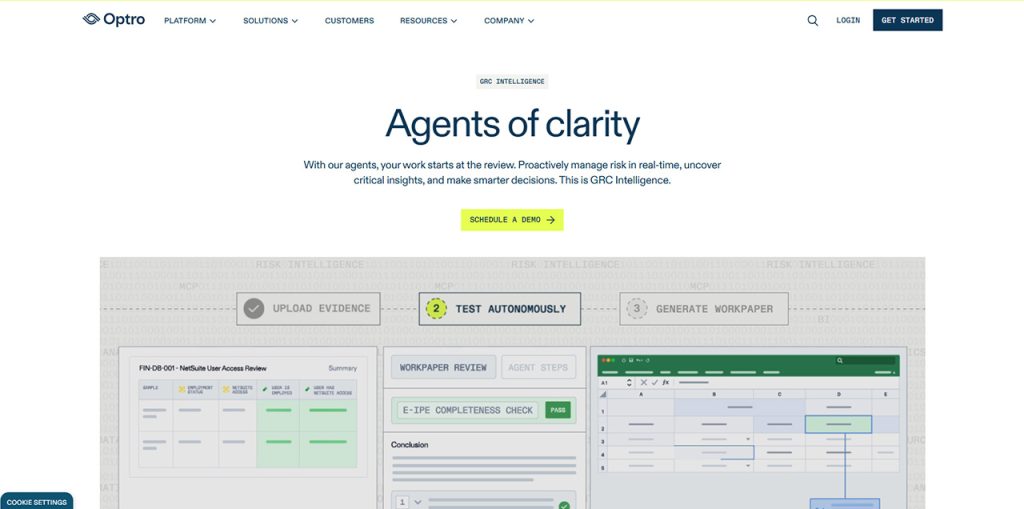
Optro, the enterprise GRC platform once branded AuditBoard, handles SOC 2 inside a broader connected-risk suite with configurable workflows and risk quantification, serving a large share of the Fortune 500. On G2 it holds 4.6 across 1,596 reviews.
Standout capability:
Enterprise-grade audit and controls management that lets SOC 2 sit beside internal audit, IT risk, and SOX in one environment.
Watch-outs:
It’s enterprise-only, with complex implementation and reported pricing from $30,000 into six figures; reviewers flag thin control over roles and dashboards (54 mentions) and restricted analytics access (71 mentions). For a straightforward first SOC 2, it’s more than most teams need.
Vanta: Best SOC 2 Compliance Software for Automation-First SaaS
Overview:
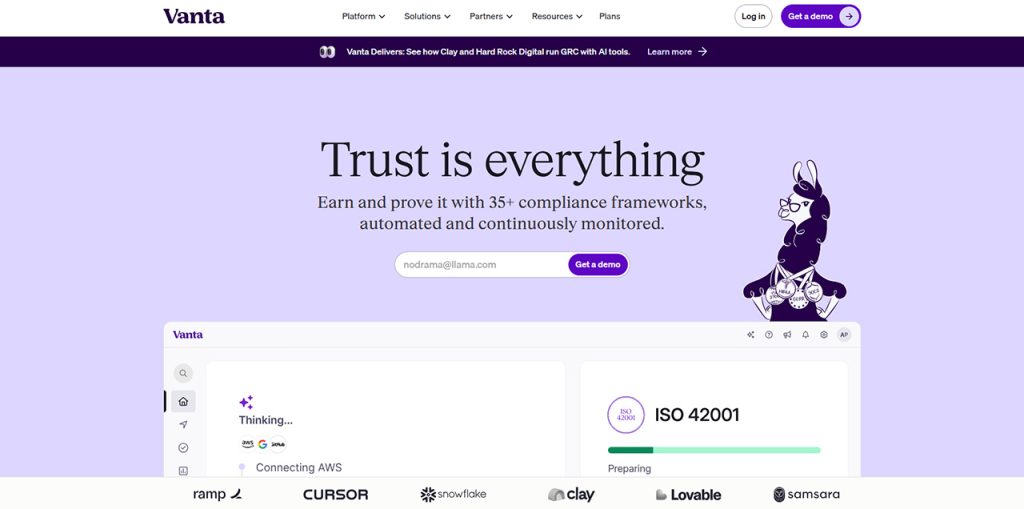
Vanta is the category’s default first-audit incumbent, automating SOC 2 with high-frequency monitoring and the broadest integration library in this pool, connecting to more than 400 tools across 16,000-plus customers. On G2 it carries a 4.6 rating from 2,456 reviewers.
Standout capability:
Fast time to evidence for a recognizable SaaS stack, with integration breadth no rival on this list matches.
Watch-outs:
Pricing is the loudest complaint, with 146 reviewers calling it high for small companies and 145 calling it very expensive; reviewers also report integration issues that still need manual work (179 mentions), and the self-serve model leaves first-timers to drive their own program and source their own auditor.
Drata: Best SOC 2 Compliance Software for Continuous Monitoring
Overview
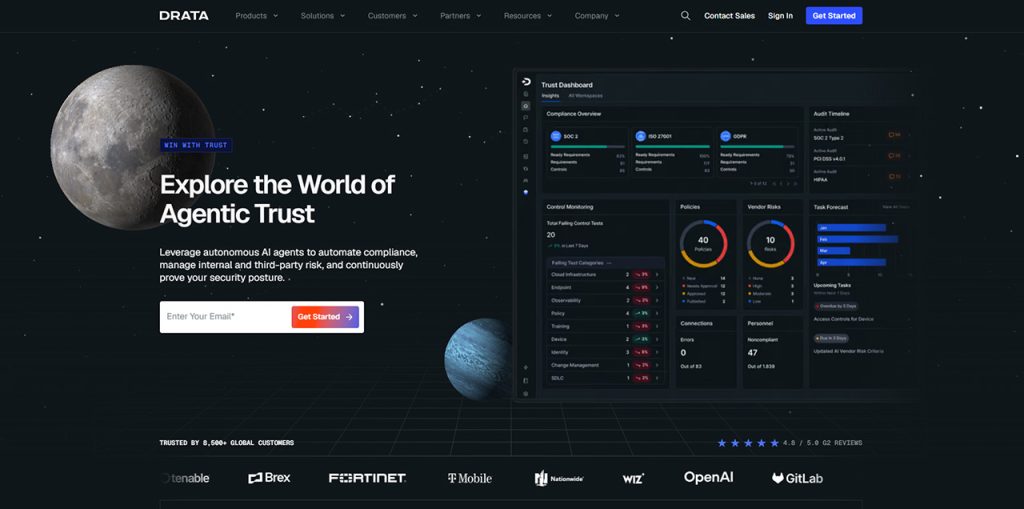
Drata runs autonomous agents for monitoring across 8,000-plus customers, an AI-native trust and compliance-automation platform that spans SOC 2 through enterprise GRC. It rates 4.7 on G2 across 1,331 reviews, with support the top-praised theme (135 mentions).
Standout capability:
Deep, continuous control monitoring and a polished platform experience that scales with a growing SaaS company.
Watch-outs:
Reviewers flag limited third-party integrations (43 mentions) and UI clarity, with “lack of clarity” (28 mentions) and “confusing UI” (22 mentions); extra frameworks are reported to run about $5,000 each, which pushes up what a multi-framework rollout costs.
Matching the tool to your situation
The most useful exercise is to map the next two years, not the next two months. If SOC 2 stays your only requirement and speed to a first report is the goal, a focused automation platform like Sprinto or Secureframe moves fast. If ISO 27001 or a customer’s security questionnaire is already on the horizon, weigh cross-framework mapping and the reuse it buys. When an internal audit team and SOX.
enter the picture, an enterprise suite earns its heavier setup. When the blocker is people rather than tooling, a platform that assigns GRC expert support keeps a lean team from stalling between automation and a signed report.
How to land on the right SOC 2 compliance software
There’s no single best SOC 2 compliance software. The right platform matches your company’s stage and how much of the audit work your team can carry without help. A startup rewards speed and guardrails. Strong cybersecurity controls and continuous monitoring form the foundation of any SOC 2 program, so your platform choice should prioritize automation without adding team burden. A multi-framework team rewards evidence reuse. An enterprise rewards depth, while a lean team rewards a practitioner who owns the timeline with it. Shortlist against your own situation, sit through two or three demos with that lens, and the near-identical pitches start to separate.
Choosing SOC 2 compliance software: common questions
What is the best software for SOC 2 compliance?
There’s no universal best; the strongest choice tracks your company’s size and framework plans. A cloud-native startup chasing a first report wants speed and templated controls, while an enterprise wants SOC 2 inside a wider risk program. Teams without a dedicated compliance hire often favor platforms like Scytale that combine automation with GRC expert support, so they have hands-on guidance through the audit instead of navigating it alone.
How much does SOC 2 compliance software cost?
Budget two separate line items. The platform subscription for startup-to-mid-market tools runs about $7,000 to $30,000 a year depending on scope and framework count, and several vendors quote per company rather than publish a sticker. The independent CPA audit is a separate fee on top, often $15,000 to $80,000 for a first Type II. Comparing platforms on the two-year all-in total, software plus audit, is more honest than comparing subscription prices alone.
How long does it take to get SOC 2 with software?
Preparation runs one to three months to reach a Type I, then the Type II observation window runs three to twelve months, and no software shortens that window. AI GRC platforms like Scytale help teams move through that work faster by automating evidence collection and continuous monitoring, with GRC experts on hand to guide the process and keep audit preparation moving.
Does SOC 2 compliance software replace the auditor?
No, SOC 2 software helps you prepare for the audit by automating evidence collection, mapping controls, and monitoring compliance. An independent CPA firm still performs the examination and issues the SOC 2 report. Top SOC 2 platforms like Scytale can also streamline the audit process by bringing audit management and auditor collaboration into the same platform.
What’s the difference between SOC 2 Type I and Type II?
A Type I report evaluates whether your controls are well designed at a single point in time. A Type II report evaluates whether those controls held up across a defined window, most often three to twelve months. Enterprise buyers tend to ask for the Type II because it shows controls working over time, though many companies land a Type I first to satisfy an early contract, then convert to Type II inside the same year.
Is SOC 2 still relevant in 2026?
Yes. SOC 2 remains the report US enterprise buyers ask for before signing, which keeps it a revenue requirement rather than a nice-to-have. Third-party assurance draws more scrutiny each year as buyers tighten vendor security reviews, so a current SOC 2 report still clears procurement faster than a promise to earn one.
Is ISO 27001 better than SOC 2?
Neither ranks above the other; they fit different buyers. SOC 2 is an AICPA attestation report favored by US enterprises, while ISO 27001 is a certifiable management-system standard that carries more weight with international customers. Companies selling into both markets often pursue the two together, and a platform with cross-framework mapping reuses the same evidence for each, which keeps the second framework from doubling the workload.
Who are the top SOC 2 auditors?
The report comes from CPA firms, which sit apart from the software vendors. Names that recur in SOC 2 work include A-LIGN, Schellman, BARR Advisory, and Prescient Assurance. Some compliance platforms match you to a firm from a vetted network, which shortens the search, though the firm that signs your attestation is always independent of the tool that prepared your evidence.
Can a startup pass SOC 2 without a dedicated security team?
Yes, startups can achieve SOC 2 without a dedicated security or compliance team. But SOC 2 software like Scytale can make this easier by combining compliance automation with dedicated GRC expert support, helping startups manage the process and prepare for the audit without hiring in-house compliance expertise.