
When Is It Time to Move Beyond Off-the-Shelf Business Software?
Learn when custom software makes sense, how to identify limitations in off-the-shelf tools, and when a custom layer or purpose-built system can better fit your business.
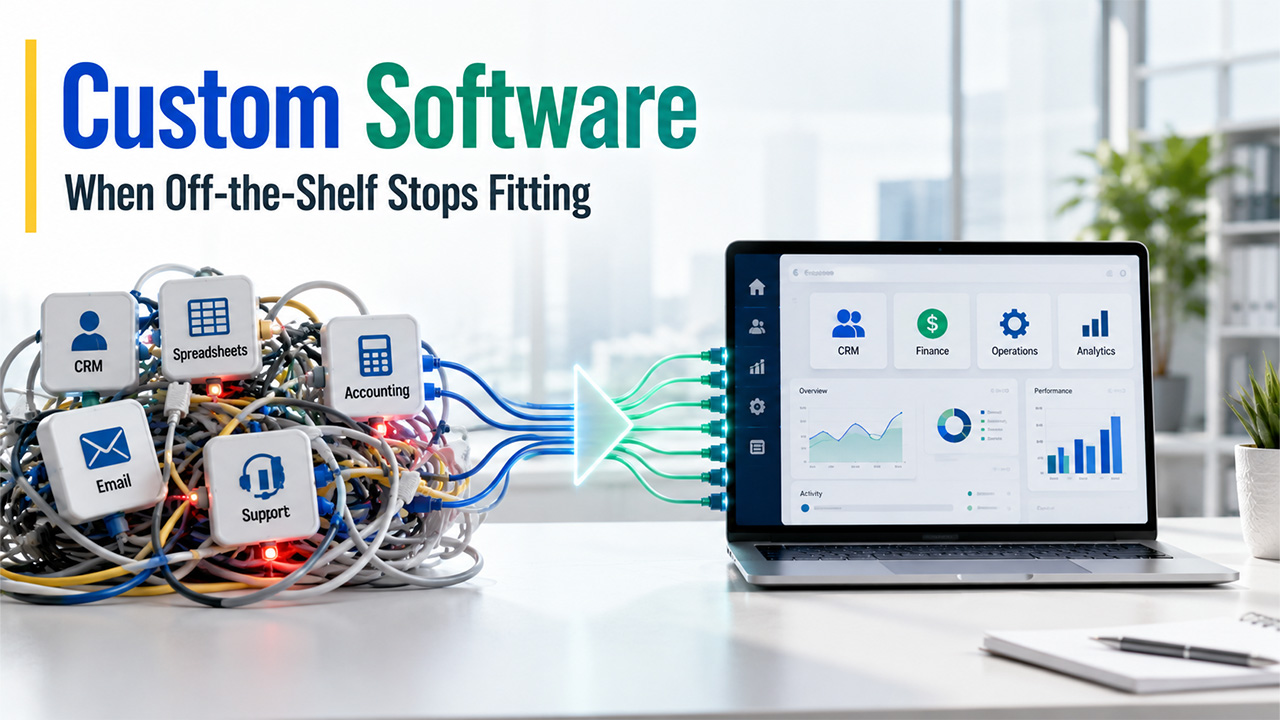
The hardest part of outgrowing business software is that nothing is technically broken. Your CRM still loads. The API still responds. The reports still generate. Your sales team can create opportunities, your service team can open tickets, and your managers can pull a dashboard before the Monday meeting. The problem is that your business has started paying for the gaps between what the software does and what your operation actually requires. For teams working with CRM, automation, integrations, and business systems, that distinction matters, because the question is not whether a packaged product has enough features. Most established platforms have more features than any team will use. The question is whether the platform’s underlying model still matches the way your business creates revenue, moves data, assigns work, and makes decisions. That gives you a much more useful test for deciding when Custom Software deserves serious consideration.
Look at the Exceptions, Not the Feature List
The useful question is not whether your CRM has enough features. Established platforms have plenty. CRM Software development becomes relevant when your team repeatedly needs workarounds to support core business processes. Ask how often your team has to create an exception to use those features. Take a sales process where qualification depends on account type, contract structure, implementation requirements, and approval thresholds. If representing that process requires custom objects, multiple automations, validation rules, external calculations, and manual intervention, the issue is no longer a missing feature. It is a data-model problem. The warning sign is repetition. When developers keep translating the same business rule into platform-specific workarounds, you are paying to preserve an architecture that was not designed around the way your operation actually works. Custom Software can provide a purpose-built approach when these limitations become persistent.
Your Integrations Can Tell You When the Custom Software Architecture Has Gone Too Far
An integration that synchronizes a customer record between CRM and accounting is straightforward. An integration that receives a record, transforms it because the CRM cannot represent the required relationship, sends it to another system for calculation, waits for a response, and then updates three different objects is doing something more fundamental. It is compensating for the application’s architecture. This is often where Custom Software can provide a better way to align the system architecture with complex business requirements. This is also where data ownership becomes important. You should be able to answer which system owns each critical piece of information and what happens when two systems disagree. If your answer depends on a particular administrator remembering which automation runs first, you have an operational risk rather than an integration problem.
Understanding CRM analytics and how data flows across your systems is critical before attempting any architectural changes, since poor integrations often mask deeper data-model problems.
Reporting Friction Is Usually a Data Problem
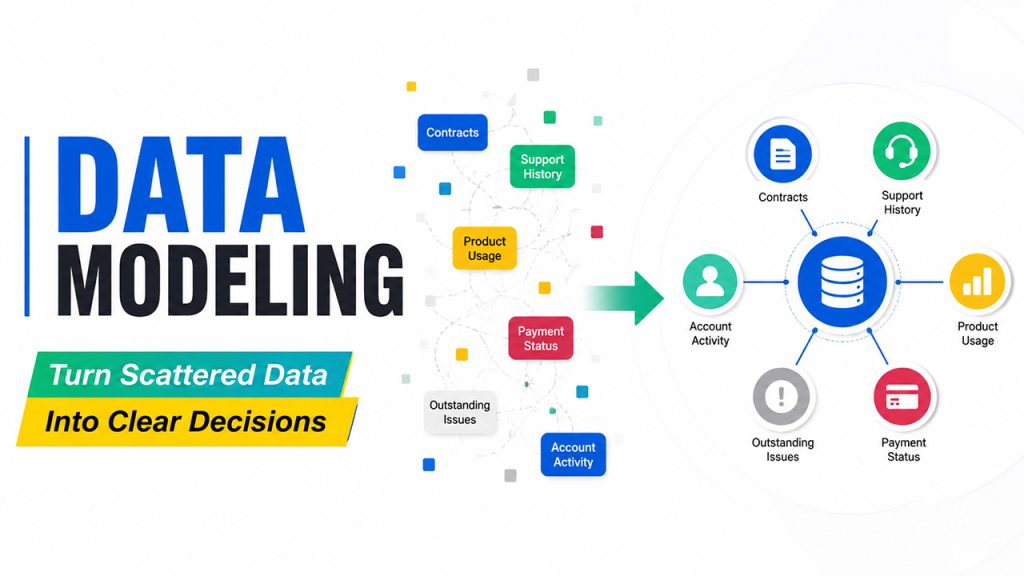
If management wants to know which customers are approaching renewal risk, for example, the answer could depend on contract dates, support history, product usage, outstanding issues, payment status, and account activity. If those relationships are scattered across objects and systems, the reporting layer has to reconstruct them after the fact. Building another dashboard will not fix that. The better question is whether your underlying model represents the relationships the business actually cares about. If it does not, repeatedly adding reporting logic only pushes the complexity downstream.
Do Not Confuse Frustration With a Business Case for Custom Software
Related walkthrough
Chapter 9 | SuiteCRM Custom Code Architecture | Logic Hooks, Workflows & Upgrade-Safe Development

If your process is conventional, keep using conventional software. Standard lead management, opportunity tracking, email activity, forecasting, and basic customer records do not become custom-development problems because your team dislikes the interface. Custom development earns its place when the process itself matters. That includes proprietary qualification logic, complex quoting, unusual account structures, specialized fulfillment, industry-specific compliance, or workflows where the sequence of decisions is central to how you make money. The test is straightforward: if you changed the software, would you gain control over a process that gives the business an operational advantage? If the answer is no, customization is probably solving the wrong problem.
Sometimes You Need a Custom Software Layer, Not a New Platform
You also do not have to choose between keeping the entire packaged stack and replacing everything. A specialized application can sit alongside an existing CRM and take responsibility for the process the CRM handles poorly. The CRM can continue managing contacts and opportunities while a custom layer handles complex qualification, calculations, fulfillment, or another domain-specific workflow. For CRM developers, this is often the more interesting architecture. You retain mature commodity functionality while owning the data model and business logic that actually differentiate the operation. Another benefit is that this approach also reduces migration risk, which means you do not have to move every historical record, permission, report, integration, and automation simply because one part of the existing system no longer fits.
A specialized application can sit alongside an existing CRM, and many businesses work with custom software development teams to build these domain-specific layers without replacing the entire system.
Know What Not to Build in Custom Software Systems
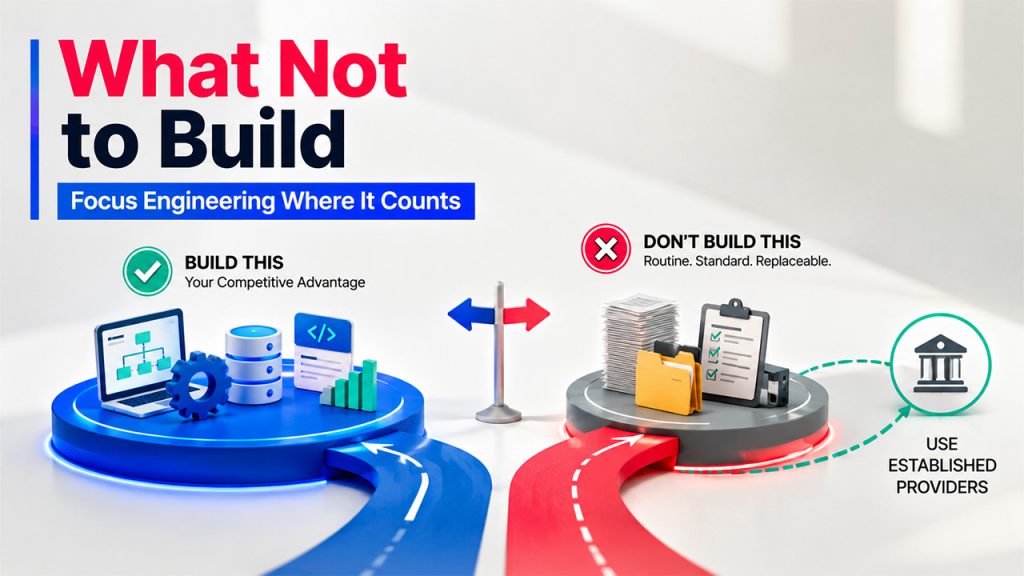
There is another discipline that becomes important as your systems grow: knowing what not to build. Your team should own the parts of the operation where the underlying process, data, or logic gives the business an advantage. Everything else deserves scrutiny before it becomes another internal system to maintain. That applies to technical infrastructure, but also to ordinary business administration. If you are forming an LLC as part of launching a new operation, for example, there is little reason to build an internal process around registered-agent administration when an established provider already handles it. LLC University deal for Northwest can be of benefit here because it gives you a straightforward way to handle registered-agent administration without creating another process for your team to manage. The principle is the same one you apply to your technology stack: keep your time and engineering capacity focused on the systems that actually affect how your business operates.
The Decision to Move to Custom Software Starts With One Process
Document every system touched, every handoff, every manual data entry, every transformation, and every point where an employee has to make a decision outside the system. Then identify which problems come from a genuine business requirement and which exist because the current platform cannot represent the requirement cleanly. What this does is it gives you an architectural case. If configuration solves the problem, configure it. If an integration solves it, integrate. If a custom module solves it, build the module. If the underlying data model is fundamentally wrong for the business, then a custom application starts to make sense.
What you are really looking for is a change in the balance. Early on, packaged software usually gives a business far more than it asks in return. Over time, the balance can shift. The organization adds workarounds, exceptions, integrations, and layers of administration until the software starts demanding more attention than it saves. Recognizing that shift gives you a rational point at which to reconsider the architecture.
Conclusion
The decision to move beyond packaged software rarely comes from a single problem. It comes from a pattern: workarounds stacking on top of workarounds, integrations compensating for architectural mismatches, and your team spending more time managing exceptions than running the business. That accumulation is your signal. When the gap between what the software was designed to do and what your business needs becomes large enough that you’re regularly building around it, staying put stops being the safe choice.
What matters most is recognizing that this isn’t a failure of the software or a failure of your business. It’s a natural evolution. Packaged software does its job extremely well for a certain phase. The question is whether you’re still in that phase or whether you’ve moved into a phase that requires a different architecture. The businesses that thrive are the ones that answer that question honestly and act on it before the technical debt becomes so large that any change becomes impossibly expensive to implement.