
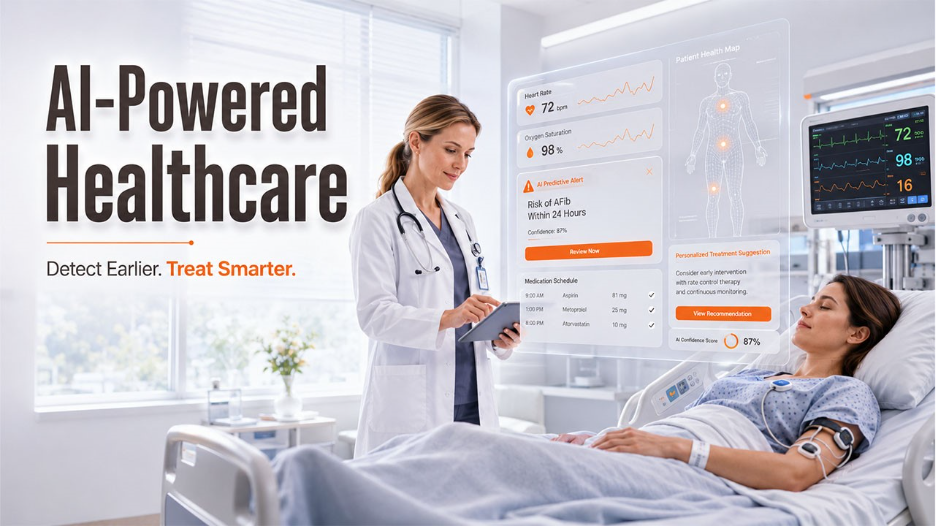
What Is AI in Medicine? Benefits, Uses & Healthcare Applications
Discover how AI in medicine is transforming healthcare through faster diagnoses, personalized treatments, medical imaging, drug discovery, and predictive patient care.
Think about the time you visited a doctor. You might have to wait for days to book an appointment; the doctor looked at your reports, asked a few questions, and made a diagnosis based on years of training and a gut feeling built from examining thousands of patients in the past. That’s how medicine has worked for a long time. It’s slow and relies heavily on one person’s memory and experience.
Now picture something different. Your scan gets uploaded, and within seconds, a system flags a shadow on the image that’s easy for a tired doctor to miss. A nurse gets an alert two hours before a patient’s condition is expected to worsen, not after. A researcher finds a promising drug compound in weeks instead of years. This isn’t science fiction. It’s what is happening right now, in hospitals and labs around the world. This is AI in medicine, and it’s quietly reshaping how doctors diagnose, treat, and even prevent illness.
What Is AI in Medicine?
Artificial intelligence in medicine refers to using computer systems and AI models to perform healthcare tasks that typically need human intelligence. This is just software that goes through a huge amount of medical information to recognize patterns and make suggestions faster than a person ever could.
The technology behind this is called machine learning, a branch of artificial intelligence in healthcare that gets smarter as it processes more data. Feed it enough X-rays with confirmed diagnoses, and it starts recognizing the same warning signs on its own. It doesn’t replace the doctor. It gives the doctor a second, incredibly fast pair of eyes.
This technology is known as machine learning. It is a branch of artificial intelligence that keeps learning from analyzing data to become smarter. When you provide it with enough X-rays with confirmed diagnoses, over time it starts recognizing the same warning signs on its own. However, this does not mean that it replaces doctors. Rather, it gives them an incredibly fast pair of eyes.
How AI in Medicine Works: Key Technologies
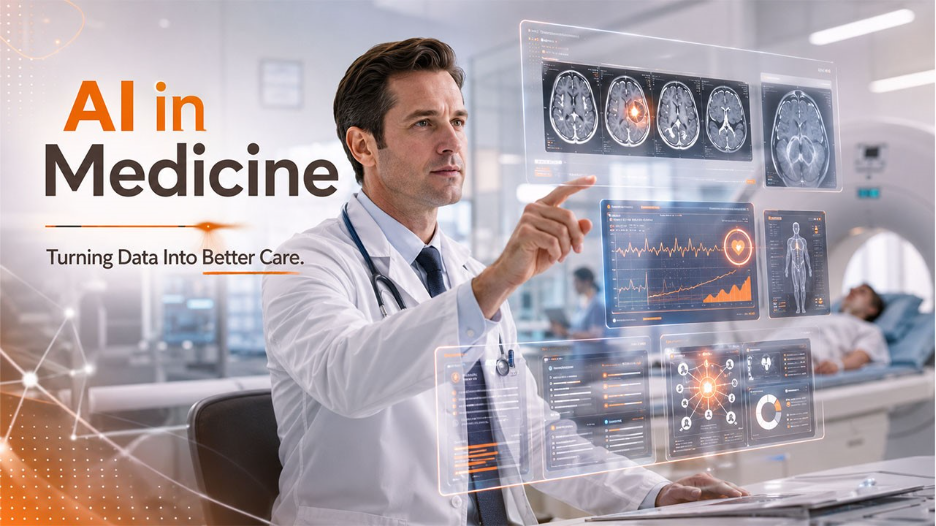
So, now you must be wondering how does this actually works in a hospital or a clinic? We are about to see that.
First, it crunches data. Hospitals generate huge volumes of data every day including scans, notes, prescriptions, and lab results. It is nearly impossible for a human to read all of them attentively. However, AI systems can do that in seconds while also spotting patterns that matter.
Then, comes pattern recognition. This is especially useful in medical imaging AI. Radiologists look at X-rays, MRIs, and CT scans all day to find out what is wrong with the patient. This could be exhausting and they might miss things that cannot be seen with a naked eye. Therefore, AI tools are trained on thousands of past images, so that they can identify tumors, fractures, or any other abnormalities that might be overlooked, especially when a doctor is in a hurry or exhausted.
Then, comes prediction. AI models use predictive diagnostics to examine patients’ history and current vitals and estimate the likelihood of complications before they strike. This marks a significant shift in the healthcare industry. With this, medicine moves from reacting to problems towards actively catching abnormalities before they get worse.
Last, but not least, clinical decision support. Here, AI acts almost like a smart assistant and suggests possible diagnoses or course of action based on similar cases. However, note that it does not give an absolute judgment, only probable outcome while leaving financial decision entirely to the doctor.
Top Benefits of AI in Medicine for Patients and Healthcare Providers
Now that we’ve seen how AI in healthcare works in healthcare, let’s explore the key benefits it brings to patients, doctors, and healthcare systems.
Faster and More Accurate Diagnoses
AI can scan through thousands of test results and images within seconds that would take weeks or months for a human to do. This means patients don’t have to wait anxiously for days to get answers. They get responses sooner and start their treatment early.
Reduced Human Errors in Medical Decision-Making
Doctors are human, and humans get tired, distracted, or overworked. And when they are exhausted, they are likely to make mistakes or overlook things that matter. However, AI doesn’t get tired and needs no break. So, it can catch details that a stretched medical team might miss.
Personalized Treatment
Through precision medicine, AI can analyze a patient’s genetics, lifestyle, and history to recommend treatments that are tailored specifically to them, or their medical condition instead of a one-size-fits-all approach. This makes patients feel that they are well-taken care of.
24/7 Patient Monitoring
Technology has advanced to a level where wearable IoT devices and hospital sensors, powered by healthcare automation, tracks a patient’s vital levels 24/7. If vitals drop or something looks off, they alert staff immediately, so the patient can get instant care. This kind of AI-powered home health care helps families and caregivers keep a closer eye on patients without needing round-the-clock hospital visits.
Lower Administrative Workload
Most doctors are buried in paperwork every day. AI uses natural language processing to lessen their administrative and cognitive load by transcribing notes and updating records automatically. This frees up more time for them to focus on actual patients that need utmost care and attention.
Long-Term Cost Savings for Healthcare Systems
Early detection and fewer errors mean fewer expensive complications down the line, which benefits both patients and healthcare systems. Patients don’t have to spend much money if there are no complications.
Real-World Applications of AI in Medicine Across Healthcare
Related walkthrough
Flint K12 Review | How AI Is Transforming Personalized Learning for Schools

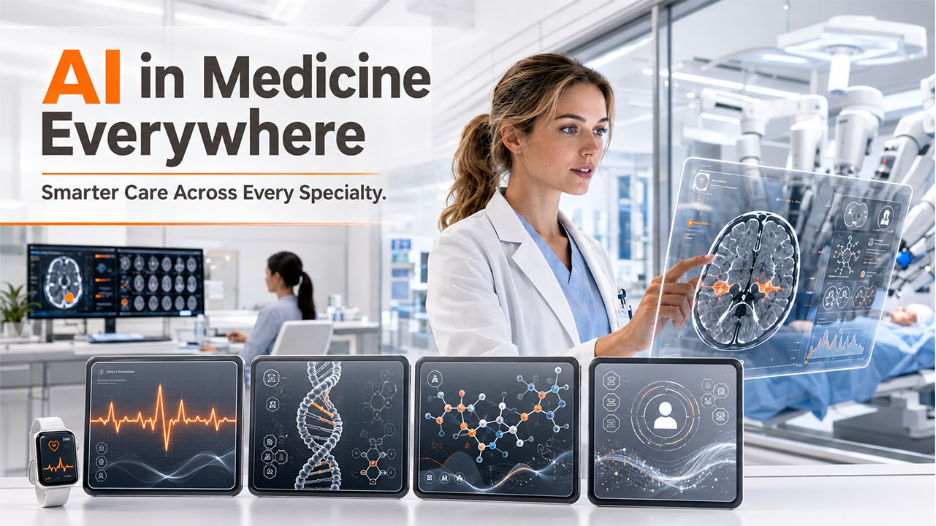
This isn’t limited to one corner of healthcare. AI-powered diagnostics and tools are showing up across nearly every specialty. Let’s see what those areas are:
AI in Radiology and Medical Imaging: AI helps detect cancers, fractures, and other abnormalities in scans with impressive accuracy. It often works alongside radiologists rather than replacing them.
Faster Drug Discovery and Development: Earlier, developing a new drug used to take over a decade. However, now drug discovery AI can simulate how compounds behave, which has dramatically shortened the research timeline. AI is also making decentralized clinical trials more practical, since patients can take part from home while their data is collected and analyzed remotely.
AI-Powered Robotic Surgery: Traditionally, even one unnecessary, small cut could jeopardize the entire surgery. Therefore, now surgeons prefer using AI-guided robotic tools for extremely precise and minimally invasive procedures, so that incisions can be smaller and recovery can be faster.
AI Virtual Health Assistants and Medical Chatbots: Chatbots and apps assist patients when they want to ask basic health questions, forget to take their medicines, book an appointment, and even need help triage symptoms before they decide to see a doctor.
Remote Patient Monitoring: For people who are diabetic or suffering from heart diseases, AI-connected devices work wonders. They continuously track patient care AI data at home and if there is something that needs urgent attention, they alert doctors or nurses. Much of this runs on wearable and connected technology, an area where platforms like iofbodies.com are pushing real-time body tracking even further.
Cancer Detection and Genomic Medicine: Now, AI models are capable enough to analyze genetic data to identify cancer risks early, sometimes even years before symptoms would appear. This helps people prepare themselves for what’s coming to take precautionary measures in time.
Key Challenges of Implementing AI in Medicine
Despite its transformative potential, Artificial Intelligence in medicine still faces several challenges that healthcare organizations must address for safe and widespread adoption.
Data Privacy and Patient Security Challenges: Medical data is highly sensitive and deeply personal. It contains patients’ vulnerabilities, medical history, prescriptions, and more. Using it to train AI systems raises legitimate questions about who can access that data, in what ways and how it is protected.
High Costs of AI Adoption in Healthcare: It needs serious, upfront investments to set up AI systems in hospitals. Advanced technologies, proper training, and robust infrastructure are something that every healthcare can’t afford.
Bias in AI Models: If you are using narrow or small data samples to train AI systems that don’t represent diverse populations, then it is highly possible that recommendations can be less accurate for certain groups of people.
Building Trust in AI Among Patients and Healthcare Professionals: There are many doctors and patients who don’t want to rely on a machine to make important decisions about health and well-being. The concern is valid since a machine can’t replace a human’s years of experience or expertise. Every machine is bound to malfunction and give inaccurate results at some point in time.
Regulatory and Legal Challenges: The laws and rules haven’t fully caught up with advancing technology. So, if an AI tool makes a wrong call and a patient gets hurt, it’s not always clear who’s responsible; the doctor, the hospital or the company that built AI.
Integrating AI with Existing Healthcare Systems: A lot of hospitals are still using old, outdated software for ages. Getting new AI integration tools isn’t as easy as installing an app on your phone. It takes time, money, and effort to make everything connected and running.
The Future of AI in Medicine
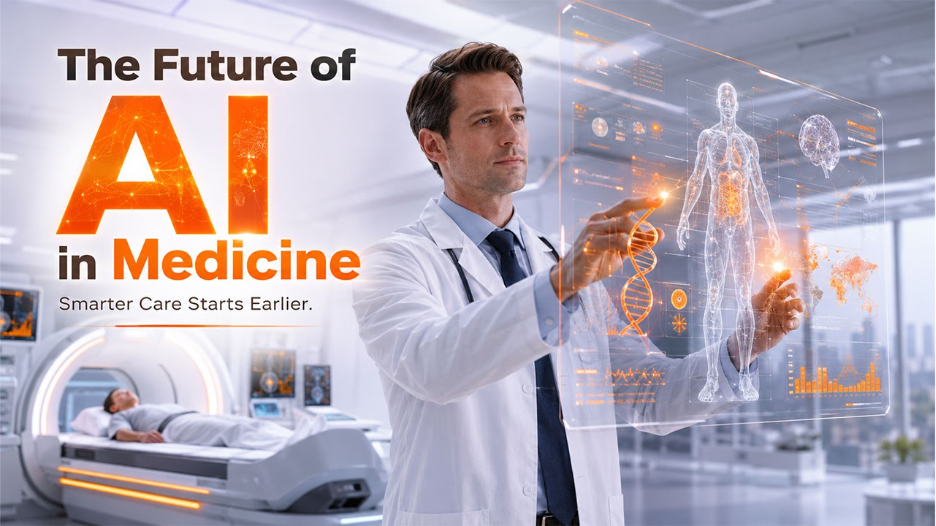
Now the important question that we should all be asking is, “where is all this headed?” In the coming years, it is anticipated that AI will move from being “helpful assistant” to something closer to a true partner in care, identifying diseases years before symptoms become obvious, predicting outbreaks before they spread, and discovering drugs that are built around a single patient’s DNA.
Hospitals will likely run on systems that can automate tasks instead of relying on old, outdated software. However, none of this means that doctors will be replaced or cast aside. Instead, they will have more time to focus on what actually matters, which is listening to their patients, making tough decisions, and offering the kind of care that a machine simply can’t replicate. The future isn’t AI vs Doctors. It’s AI with doctors.
Conclusion
AI in medicine is hardly about machines taking over the healthcare industry. It’s more about giving doctors sharper tools and giving patients a better shot at catching their problems early without waiting for days or weeks. The technology is like an additional support to healthcare software development professionals which handles all the heavy tasks such as sorting through data, scanning X-rays, CTs or MRIs and recognizing patterns to make probable suggestions. It leaves the final call to doctors who use their judgment, experience, and empathy that no algorithm can replace. This collaboration between a machine and a human makes this shift genuinely exciting. There are a few challenging issues along the way, like trust, cost, and regulations, but the direction is clear
Healthcare is moving toward something faster, more personal, and more proactive, and AI is the quiet engine making that possible.
Frequently Asked Questions
No, AI supports doctors by handling data-heavy tasks, but human judgment remains central to patient care.
When properly tested and regulated, AI tools are generally safe, though ongoing oversight is essential.
Radiology and medical imaging are among the most advanced areas of AI adoption today.
Yes, AI can analyze patterns across global data to help identify rare conditions faster than manual research alone.
Initial setup costs can be high, but many providers see long-term savings through fewer errors and earlier diagnoses.