
How to Scale LinkedIn Outreach Without Losing the Personal Touch
Explore LinkedIn outreach best practices to find more qualified prospects, personalize messages, and automate follow-ups.
It takes time to build relationships on LinkedIn, in which, sales professionals need to identify qualified prospects, along with sending connection requests, follow up with them consistently, and maintain conversations which can eventually turn into an opportunity for the business. As network grows, handling every interaction manually can become increasingly difficult. Among which, the major challenge is finding different ways to improve efficiency, without making outreach feel automated or impersonal.
What Is LinkedIn Outreach?
LinkedIn outreach can be explained as the process of connecting with potential customers, business partners, recruiters, or industry professionals on LinkedIn. Similar to outreach link building, it focuses on creating genuine relationships that lead to long-term business opportunities. It is mainly performed to build meaningful relationships and create business opportunities. The outreach generally involves identifying the right prospects, along with sending personalized connection requests, engaging with their content, and following up with relevant messages over a long period of time.
Unlike cold emailing, LinkedIn outreach allows businesses to build trust using professional profiles, shared connections, and ongoing interactions. A successful outreach strategy generally focuses on quality over quantity. Rather than just sending generic messages to hundreds of users, businesses achieve better results mainly by targeting a well-defined audience and personalizing each interaction to the role of the recipient.
Focus on Quality Before Quantity
A successful LinkedIn Outreach begins with selecting the right audience. Just sending hundreds of generic messages barely generate a strong result as its relevance matters far more than the total volume.
Before reaching out, define your ideal customer profile by considering:
- Industry
- Company size
- Decision-maker role
- Business challenges
- Geographic market
- Buying intent
A carefully targeted campaign almost always outperforms mass outreach.
Personalization Builds Trust

Prospects are far more likely to respond when a message demonstrates genuine interest in their business.
Simple personalization techniques include:
- Mentioning a recent company achievement.
- Referring to shared professional interests.
- Commenting on published content.
- Highlighting a relevant business challenge.
- Explaining why the connection is valuable.
These details make conversations feel natural rather than scripted.
Save Time With Smart Automation
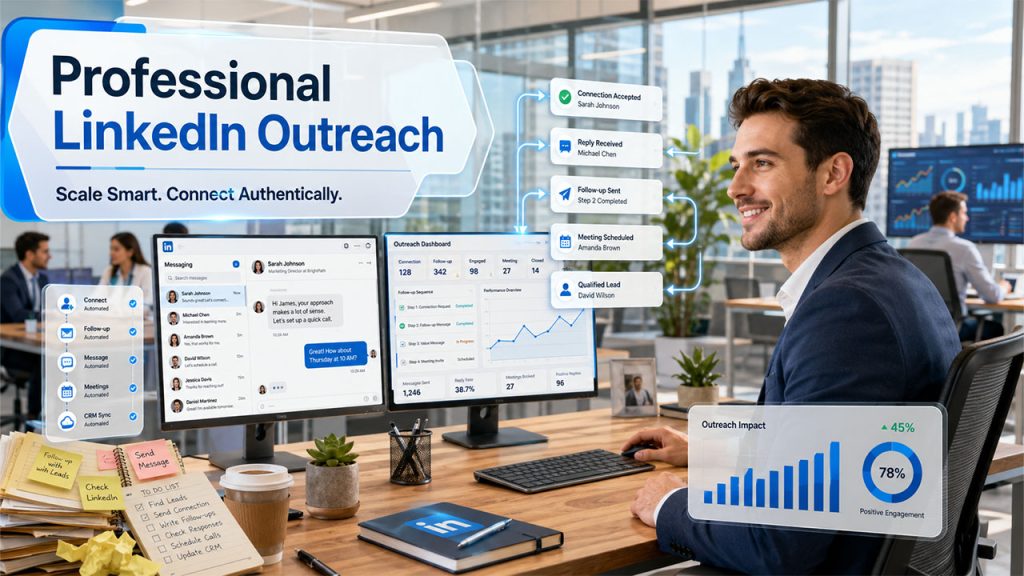
As the LinkedIn outreach campaign grows, performing repetitive tasks consumes significant time of the sales team. A well LinkedIn auto message designed workflow can also automate routine follow-ups and connection sequences, while also leaving the room for personalized and more meaningful conversations one the prospect is engaged in.
Automation should always support relationship building, instead of just replacing authentic communication.
Organize Prospecting More Efficiently
Related walkthrough
GuestPostCRM: Streamline u0026 Scale Your Outreach Workflow Effortlessly
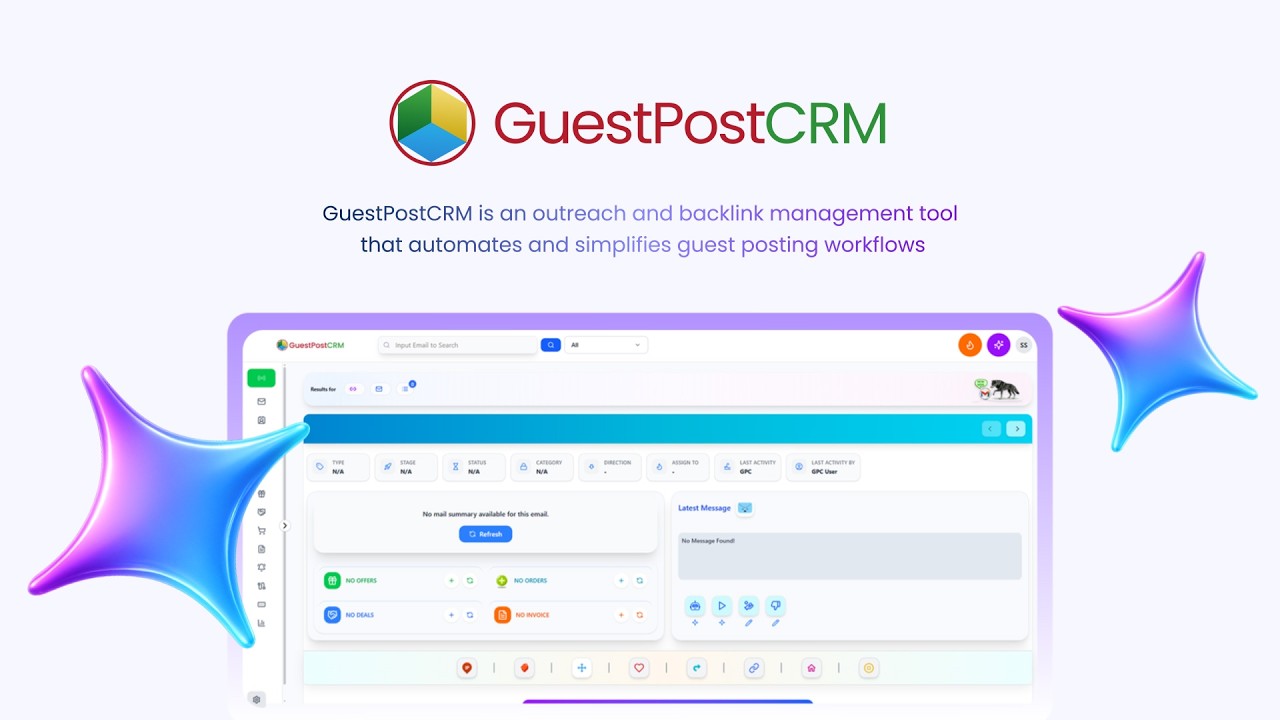
For a successful LinkedIn outreach, finding the right companies is also as important as sending effective messages. A reliable B2B prospecting tool can also help the sales professionals identify qualified accounts, along with organizing lead lists, prioritizing opportunities, and managing outreach activities from a structured workflow.
Finding the right companies is just as important as sending effective messages. A reliable B2B prospecting tool helps sales professionals identify qualified accounts, organize lead lists, prioritize opportunities, and manage outreach activities from a structured workflow.
By reducing manual research, teams can spend more time understanding customer needs and developing stronger business relationships.
Measure What Matters
Every outreach campaign should be evaluated using measurable performance indicators, including:
- Connection acceptance rate.
- Reply rate.
- Positive conversations.
- Qualified meetings booked.
- Sales opportunities created.
- Conversion rate.
Reviewing these metrics regularly helps identify which strategies deliver the strongest results.
Best Practices for LinkedIn Outreach
A successful LinkedIn outreach strategy is beyond sending connection requests. It focuses on building genuine relationships through relevant and personalized communication. Some of the best practices to improve acceptance rates and generate more qualified business opportunities are as follows:
- Optimize Your LinkedIn Profile: Before outreach, users need to ensure that their LinkedIn profile is complete and professional. A complete and professional profile helps establish credibility and make prospect likely to accept the connection request.
- Target the Right Audience: Effective outreach begins with identifying your ideal customer profile (ICP). Users should focus on prospects based on key factors, like industry, company size, job title, location, and business needs.
- Personalize Every Message: Users should avoid generic templates that can be applied to anyone. Instead, users should tailor each message, which demonstrates genuine interest and helps build trust from the first interaction.
Why Expandi.io Supports Modern Outreach
Expandio.io helps businesses in automating various repetitive LinkedIn activities, while also maintaining personalized engagement with every prospect. Using Expandio.io, sales teams can create structured campaigns, along with scheduling follow-ups and managing outreach at scale, without sacrificing authenticity. The platform, combined with thoughtful prospect research and valuable communication, helps the organizations in building a more efficient and sustainable sales process.
Conclusion
An effective LinkedIn outreach mainly depends on targeting the right audience base, along with delivering more personalized communication, and maintaining consistent follow-ups. Businesses which combine intelligent automation with structured prospect research help in creating a stronger prospect relationship, with improved response rates, and can also generate more qualified opportunities over time.