
The Pros and Cons of Day Trading as a Side Hustle
Thinking about day trading as a side hustle? Explore the real pros, cons, risks, and practical tips to decide if it's the right way to earn extra income.
Most people who get into day trading as a side hustle do it chasing two things: extra income and a sense of control over their financial future. Both are reasonable goals. The question is whether the reality of daily trading holds up against the version people imagine when they first open a brokerage account.
It can, but it takes more than enthusiasm to make it work. This article walks through the honest tradeoffs so you can decide whether day trading fits your life or quietly drains it.
What Day Trading Actually Looks Like as a Side Hustle
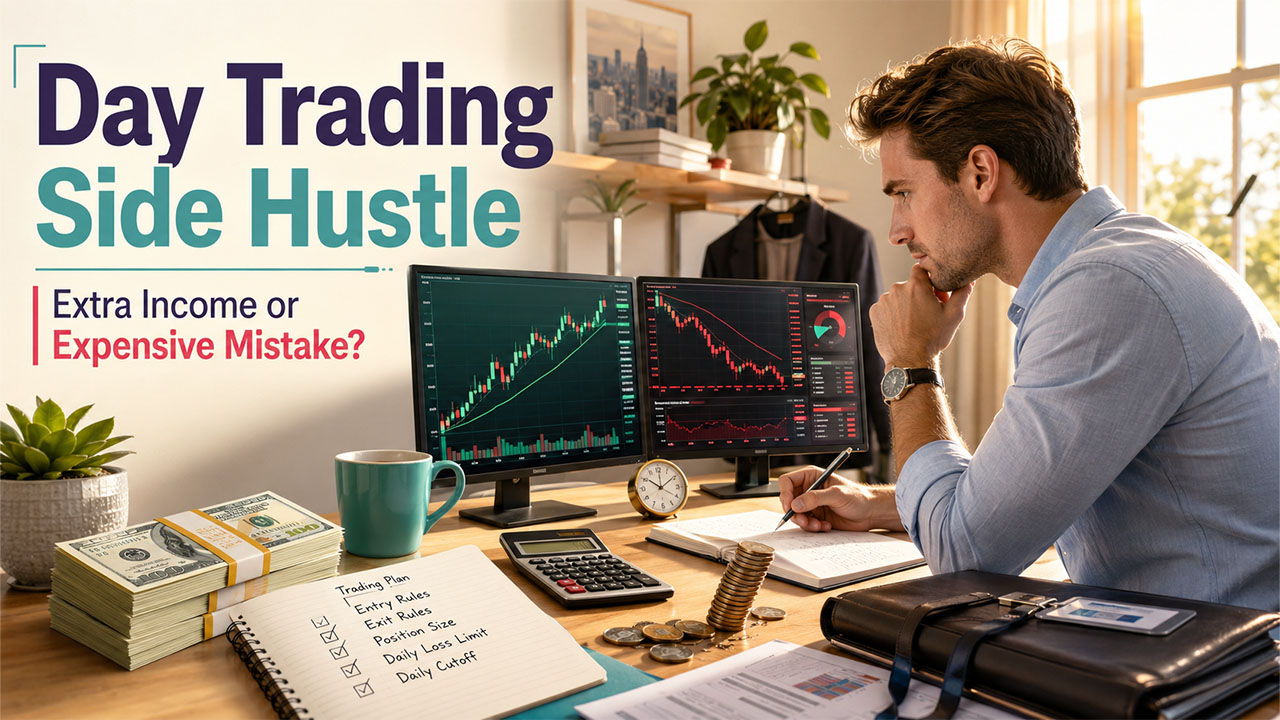
Most people picture day trading as something you do from a beach with a laptop and a cocktail. The reality is a bit more demanding than that. You’re carving time out of a schedule that’s already full, making real financial decisions under real pressure, with real money on the line.
The typical setup involves checking pre-market movement before your day job starts, monitoring positions during lunch breaks, and doing a full review after the closing bell. That’s not a passive income stream. You see, the preparation alone can take an hour or two a day, and that’s before you factor in the actual trading. Picking up a solid grasp of the best indicators for day trading early on shapes how efficiently you use that limited time.
None of this happens on a phone propped against a coffee cup, either. You’re looking at least one reliable screen setup, a brokerage account funded with capital you’re genuinely prepared to lose, and a stable connection during market hours. Cutting corners on the setup tends to cost more than it saves.
Moreover, the mental load starts before the market opens. Pre-market news, earnings reports, and economic data all of it feeds into your morning read. Traders who skip that prep and dive in blind tend to learn the lesson the hard way and quickly.
The Real Advantages That Draw People In
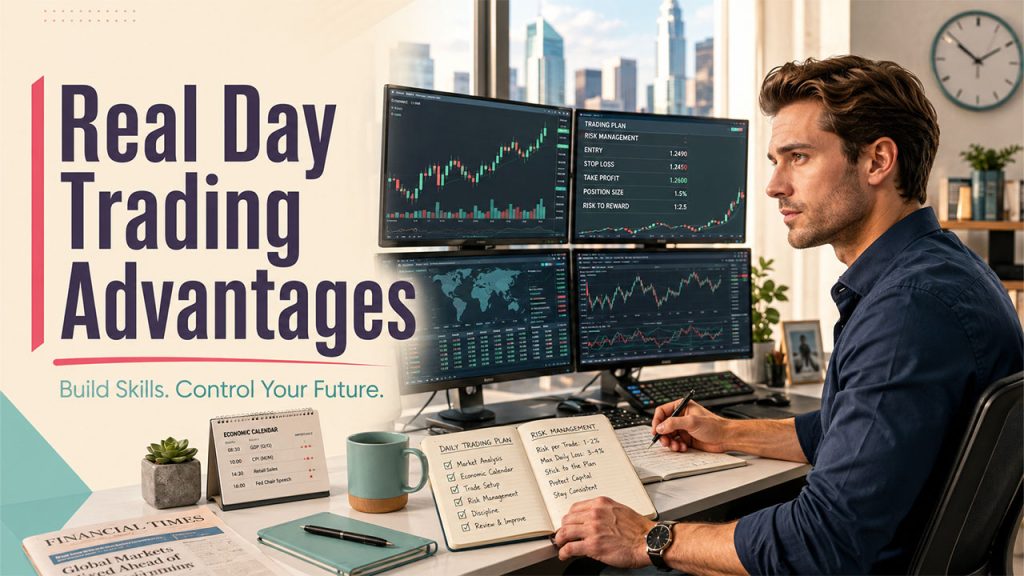
The income potential is the obvious draw, and it’s legitimate. A skilled trader with sufficient capital can generate returns that no salary bump can match. That ceiling doesn’t exist in the same way it does in a regular job, and for a lot of people, that alone is worth exploring.
Also, the flexibility is genuinely appealing once you understand what it actually means. You’re not answering to a manager or punching a clock. Your results come entirely from your own decisions, your own research, and your own discipline. For people who find traditional employment frustrating, that kind of autonomy carries real weight.
The barrier to entry is lower than most businesses, too. You don’t need premises, staff, inventory, or a bank-approved business plan. A funded brokerage account and a reliable internet connection get you started. However, low barrier to entry doesn’t mean low difficulty, and that distinction trips up many newcomers.
You see, the skills you build also compound in ways that quietly pay off elsewhere. Reading charts, managing risk, staying emotionally steady under pressure, and understanding macroeconomic signals translate into sharper financial thinking across the board. Even traders who eventually step back tend to keep those habits working for them long after.
The Risks That Catch New Traders Off Guard
Related walkthrough
Stellar OST to PST Converter Review 2026 | Online vs Desktop – Real Test

Emotional decision-making is where most early accounts bleed out. When a position moves against you, the instinct is to hold on and wait for a recovery. When it moves in your favor, the instinct is to take profits too soon. Both reactions feel rational in the moment, and both will quietly destroy a trading account over time if left unchecked.
Capital loss also moves fast in ways that feel nothing like other financial risks. A bad week in the market can undo months of careful gains before you’ve had time to adjust. Most new traders underestimate how quickly a string of losses compounds, and by the time the pattern is obvious, the damage is already done.
Tax treatment is another area that catches people off guard. Short-term gains get taxed as ordinary income in most jurisdictions, which means a profitable trading year can come with a surprisingly large bill attached. Moreover, the recordkeeping required to stay compliant adds another layer of admin that most side hustlers don’t budget time for.
Overtrading is probably the quietest risk on this list. Boredom, frustration, and the urge to “make back” a loss all push traders toward taking positions they wouldn’t take with a clear head. The market is always moving, and that constant movement creates the illusion that sitting still means missing out.
Risk Management Matters More Than Finding the Perfect Trade
Most beginners spend too much time looking for “best” trading strategies, and then they are left with little time to actually learn how to manage risks. In reality, experienced traders often try to limit their losses rather than maximize wins. A common approach is risking only 1–2% of total trading capital on a single trade and always using a predefined stop-loss to exit if the market moves against them. Many also pay attention to the risk-to-reward ratio, aiming for setups where the potential profit is at least twice the possible loss. These techniques are hardly complicated. With over hundreds of trades, you can notice the difference in how they protect your capital and keep you in the market long enough to improve. None of this works without a real commitment to safe trading, managing risk on every trade, not just when you remember to
When Day Trading as a Side Hustle Actually Works
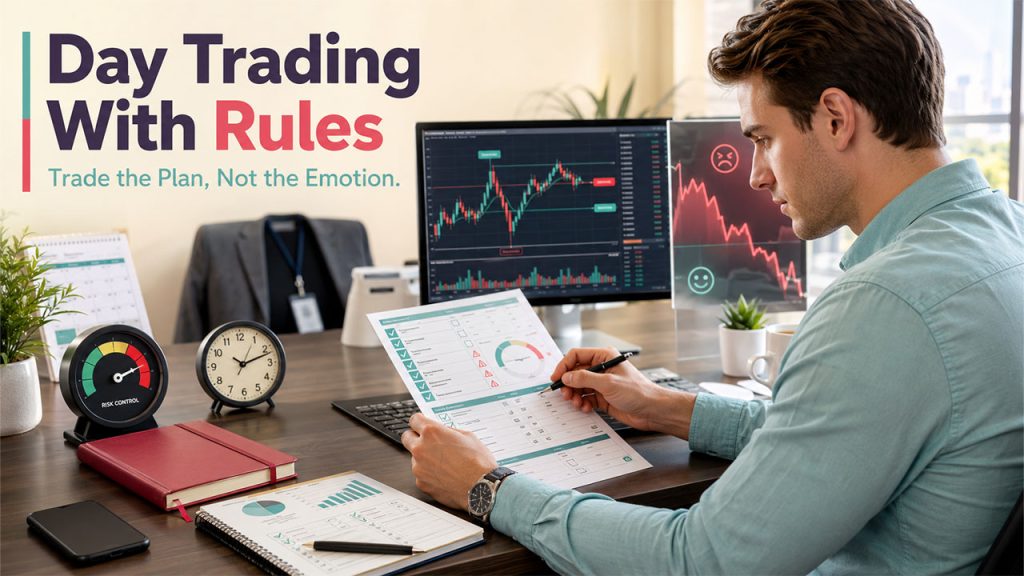
The traders who make this work over the long run share one habit more than any other: a written plan they actually follow. Entry rules, exit rules, position sizing, daily loss limits, all of it documented and treated as non-negotiable. Without that structure, discipline becomes a mood rather than a system.
Starting with money you can genuinely afford to lose changes the entire psychology of the exercise. When the rent money is in the account, every trade carries emotional weight it shouldn’t. However, when the capital is truly discretionary, you make cleaner decisions, take losses more calmly, and learn faster because you’re not trading from fear.
Treating it like a business rather than a hobby also makes a measurable difference. That means tracking performance, reviewing losing trades honestly, adjusting strategy based on data, and keeping records the way any serious operation would. Hobbyists chase excitement. Traders who last chase consistency.
You see, a strict daily cutoff matters more than most new traders expect. Knowing exactly when you stop for the day, regardless of how the session went, protects both your capital and your focus at the day job. The market will be there tomorrow. Your main source of income needs to remain intact in the meantime.
Conclusion
Day trading as a side hustle is neither the easy money some people sell it as nor the guaranteed disaster others warn about. It sits somewhere in the middle, shaped almost entirely by how seriously you approach it and how honestly you assess your own discipline.
If you go in with a funded plan, realistic expectations, and a hard limit on what you’re willing to lose, it’s a genuinely viable side hustle. If you go in hoping the market will do the work for you, it’ll teach you otherwise at your own expense.