

What Is Fast People Search? Data Sources, Risks & Opt-Out Guide 2026
Learn what Fast People Search is, how people search tools work, their common uses, and important privacy considerations when looking up information online safely
You didn’t put yourself on the internet, but the internet puts you there anyway.
Picture this: you Google your own name out of curiosity. And there it is: a website you’ve never visited, never signed up for, listing your home address, phone number, age, relatives’ names, and past addresses. You didn’t share any of that, but someone did. That website is probably the Fast People Search. Millions of people are on it right now, completely unaware.
This isn’t the cause of panic. But it is the cause for understanding. Let’s walk through what this site is, what personal information it holds, where that data comes from, what the law says, and exactly how to remove yourself for free.
What Is Fast People Search Free and How Does It Work?
Fast People Search, launched in August 2017, is a service by Mississippi Tornado Alley LLC that provides free access to public records like phone numbers, addresses, and property details. It functions as a people-search engine. When you type in a name, it returns a detailed profile pulled from dozens of public and commercial sources.
As stated on their website, FastPeopleSearch was created to bring next-generation telephony and big data access to the general public. In practice, it’s a site that displays your personal data free of charge to anyone who looks you up. To understand how phone numbers and addresses get verified across these platforms, see how the best Reverse Lookup Tools by Phone Number work in practice.
What Personal Information Does Fast Free People Search Show?
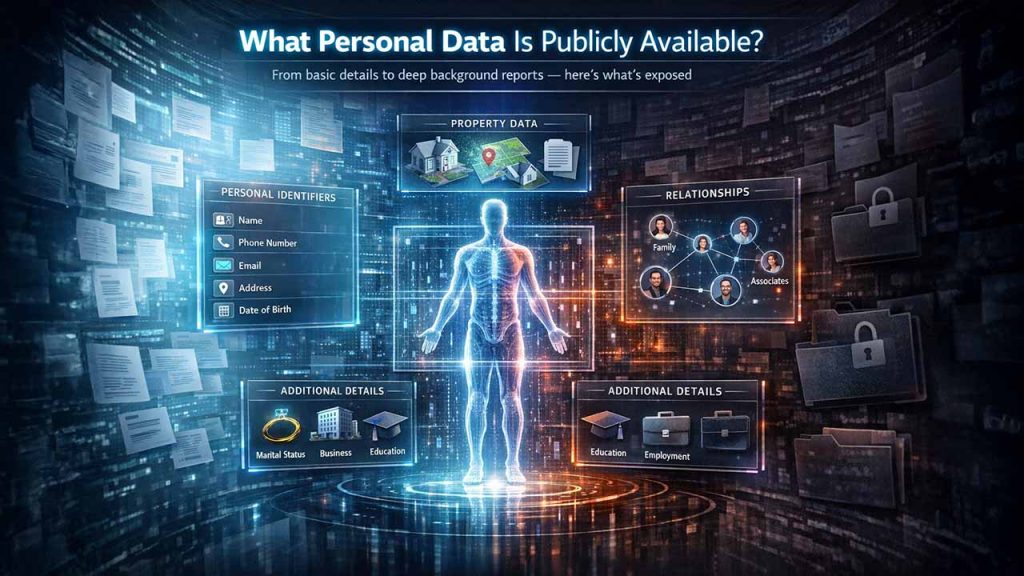
Fast People Search platforms compile a wide array of personal information from various sources. Here’s a breakdown of what’s typically available:
- Personal Identifiers: Full names and aliases, IP addresses, current and previous addresses, mobile telephone numbers, email addresses, dates of birth, and estimated ages.
- Relationship Data: Names of relatives, household members, and associates, including people who have lived at the same address or are listed as possible family members or roommates.
- Property Information: Records of real estate ownership, property values and square footage, past sales and purchase history, and links to rental properties associated with the person.
- Additional Details: FastPeopleSearch also shares marital status, businesses, and neighbors. When available, employment history and educational background can appear too.
The free tier surfaces most of this. The paid reports go deeper into criminal records, full background checks, and financial history.
Fast People Search Free vs Paid Reports: What’s the Difference?
| Free | Paid |
|---|---|
| Full background reports, court & criminal records, and property value and history | Full background reports, court & criminal records and property value and history |
FastPeopleSearch states it’s not a consumer reporting agency and that its data should not be used for employment, credit, housing, or insurance decisions.
Where Does Fast People Search Get Your Data From?
Fast people search didn’t steal your data. People search sites like FastPeopleSearch typically rely on public records databases, including property deeds and ownership records, voter registration lists, civil and criminal court filings, marriage and divorce certificates, business licenses, and professional registrations.
Beyond government records, web crawlers scan the internet for specific information about a person. Once all data is collected, the platform doesn’t publish it raw. Entity resolution matches disparate records referring to the same person using name variations, date of birth, middle initials, relatives’ names, previous addresses, and phone numbers. Probabilistic scoring assigns confidence scores to reduce false positives, and cross-validation confirms items by finding them in multiple independent sources. That’s why the profiles are often unsettlingly accurate.
Why Is Fast People Search Legal? Privacy Laws Explained
Related walkthrough
OpenAI's SearchGPT: The Next Big Thing in AI Search Technology

FastPeopleSearch operates lawfully in the U.S. as a people search website. The reason comes down to a distinction between public records and private information. When you buy a house, register to vote, or get a listed phone number, those become part of government or commercial records that anyone can technically access.
It is not a Consumer Reporting Agency (CRA) and cannot be used for employment, credit, or tenant screening purposes. This is an important legal boundary. The site’s data exists in a gray zone where it’s free to aggregate and publish, but not free to use in regulated decisions about people’s lives.
Your Legal Rights for Fast People Search Removal:
You may be protected by privacy laws depending on where you live. The GDPR in Europe and the CCPA in the United States are two examples. These laws allow individuals to request the removal of their personal data from businesses and websites. If you are a resident of California, the CCPA gives you explicit rights to opt out of the sale of your personal information, and it is mandatory for Fast People Search to honor that.
Risks of Using Fast People Search Free Listings

Most people on Fast People Search won’t face anything beyond mild annoyance. But for a meaningful subset, the exposure is a genuine problem:
Risk of Stalking and Harassment
Your address and contact information published on sites like Fast People Search can put your personal safety at risk, as ill-intentioned people can use it to stalk or harass you. Staying alert to social engineering cyber threats is equally important, as exposed personal data is often the first step bad actors use to manipulate or impersonate victims.
Inaccurate Data and Reputation Damage
Sometimes the data listed is outdated or incorrect. If someone looks you up and finds false information, it can lead to misunderstandings, damage your reputation, prevent you from getting a job, and even impact your credit score.
Loss Of Privacy and Consent
Anyone can access your personal information without your consent. If you’re a very private person, you may not want to share personal details such as your marital status or children’s names in specific settings. Fast People Search listing that information takes away the choice for you to withhold or consensually share it.
Risks of Identity Theft
A name, address, relatives’ names, and approximate age combined can be enough to answer security questions or impersonate you convincingly.
How to Remove Yourself from Fast People Search (Step-by-Step Guide)
The good news is that you can remove yourself from Fast People Search, and the opt-out is genuine and free. Here’s how it works:
- Visit the Fast People Search Removal Page: Go directly to the Fast People Search removal page at fastpeoplesearch.com/removal. This page is designed for individuals who want their personal information taken down from the site.
- Start the Fast People Search Removal Process: Click on the option to start the opt-out request. You will be asked to accept the terms of service before moving forward.
- Search Your Profile on Fast People Search Free: Enter your full name and location in the search bar. This will bring up all the records connected to your name.
- Select Your Listing for Removal: Find the listing that matches your details and choose View Free Details. This allows you to verify the information is yours before submitting a removal request.
- Submit Your Fast People Search Removal Request: After confirming the record is yours, complete the opt-out request form. This notifies Fast People Search that you want your data removed.
- Verify and Confirm Removal via Email: You will receive a removal request verification email. You must click the link in this email to complete the removal process. Fast People Search usually processes removals within 24 to 72 hours.
Alternative Ways to Request Fast People Search Removal:
You can reach Fast People Search customer service by calling (617) 229-7889 and asking them to remove your personal information. Alternatively, you can send a physical letter to PO BOX 55071, Boston, MA 02205-5071, stating that you want your personal information removed, including your full name, date of birth, current and previous addresses, and the listing URL.
One important note: Fast People Search may collect your data again after you opt out, as they rely on publicly available records. As stated in Fast People Search’s notice, they regularly receive new public records, so even if you opt out, your publicly available information may appear in their data products again in the future.
How to Stay Protected After Fast People Search Removal
Removing yourself is step one. Staying off is the harder and ongoing part.
How to Prevent Your Data from Reappearing on Fast People Search:
- Change your privacy settings on social media apps to prevent non-friends from seeing your profile or posts.
- Limit the amount of sensitive personal information you share online, especially on public platforms.
- Consider using privacy tools like VPNs. These encrypt traffic on your device and mask your real IP address from FastPeopleSearch and other sites you visit.
How to Monitor Your Data on Fast Free People Search Sites:
- You generally can’t keep data brokers from accessing official public records, but regularly reviewing them helps you know what is potentially exposed about you.
- Stay informed about data breaches that may affect your personal information.
Automate Fast People Search Removal Across Data Broker Sites:
- Services like DeleteMe, Incogni, and OneRep automate removal requests across hundreds of data broker sites for a subscription fee.
- Whether that’s worth it depends on your exposure level and how much you value your time.
Popular Fast People Search Sites Like FastPeopleSearch
FastPeopleSearch is one site, but the same profile likely exists across dozens of other platforms, pulling from the same overlapping pools of public records. Some of the most widely used include:
- Spokeo: Aggregates social media, contact, and location data into detailed personal profiles.
- WhitePages: One of the oldest and most recognized people search directories, covering addresses and phone numbers.
- FreePeopleSearch: Extensive web directory designed for quick, entry-level background checks and name lookups.
- BeenVerified: Compiles background check-style reports including criminal records, employment history, and relatives.
- Intelius: Offers deep background reports often used for personal and professional screening purposes.
- MyLife: Generates reputation scores alongside personal contact and background information.
- Smaller broker platforms: Dozens of lesser-known sites draw from the same public records and quietly publish your data without your knowledge.
Final Thoughts on Fast People Search Free
Privacy in the digital age isn’t about having no footprint; that ship sailed for most of us long ago. It’s about knowing where you appear, understanding why, and making deliberate choices about what stays public.
Fast People Search is a useful mirror for that exercise. Find your listing. Read what’s there and then decide, with full information, what you want to do about it. The removal process takes about five minutes. Knowing you have the option? That matters more than most people realize.
Frequently Asked Questions
You can remove information from Fast People Search by visiting their opt-out page, searching for your listing, submitting a removal request, and confirming it via email.
To remove yourself from Fast People Search, find your profile on the site, submit an opt-out request, and verify it through the confirmation email sent to you.
Yes, Fast People Search free listings allow users to access basic personal details like names, addresses, and phone numbers without any cost.
Most Fast People Search removal requests are processed within 24 to 72 hours after email verification.
Yes, your data may reappear because Fast People Search regularly updates its database using public records and third-party sources.