
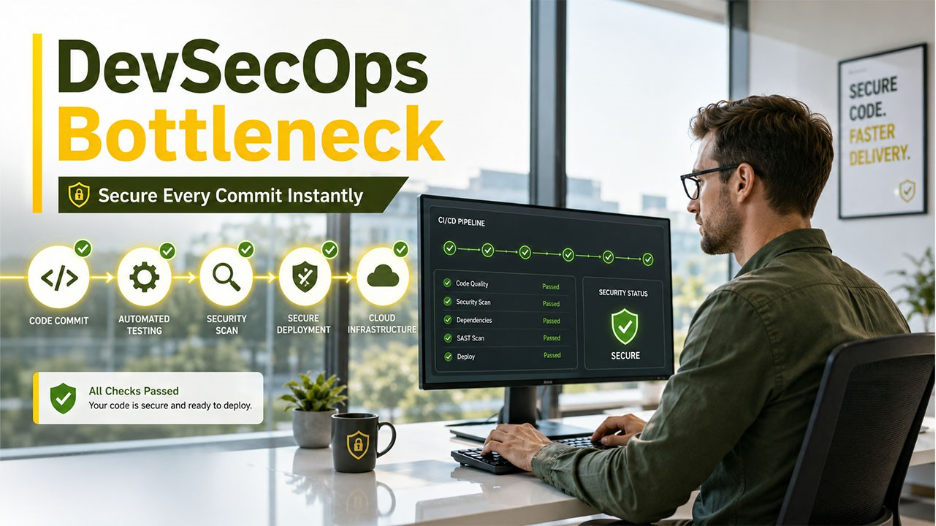
Breaking the DevSecOps Bottleneck: Integrating Continuous Security into CI/CD
Learn how integrating continuous security into CI/CD helps teams eliminate DevSecOps bottlenecks and deliver secure software faster.
Modern software delivery operates at an accelerated pace that legacy corporate security models were never designed to support. Engineering teams regularly deploy functional updates multiple times a day, manage highly distributed cloud-native infrastructures, and continuously release production-ready APIs and microservices. While this fast-paced development cycle dramatically improves market responsiveness and business innovation, it simultaneously introduces a severe operational challenge because security operations struggle to match developer velocity. Traditional penetration testing, manual checkpoint reviews, and scheduled quarterly audits are no longer viable options within an automated, high-velocity integration environment. When software iterations happen daily, relying on old-school review protocols means major structural flaws are discovered far too late in the application lifecycle. This disconnect forces development engineering teams to either delay critical consumer releases, remediate complex system flaws under extreme operational pressure, or simply accept unmanaged risks within live environment architectures.
Why Traditional Security Workflows Create an Engineering Bottleneck
Many enterprise organizations still depend heavily on isolated vulnerability assessments, manual penetration testing schedules, or rigid periodic compliance reviews to validate their software assets. While these classic methodologies provide deep historical insights, they are fundamentally incompatible with modern agile software delivery frameworks where applications evolve on a continuous basis. The core limitation of traditional application defense strategies centers on the timing of the testing mechanism within the broader build process. Legacy workflows wait until the final pre-production stage to run manual checks, whereas a modern web app pentesting platform allows validation to occur automatically during early staging phases. Vulnerabilities identified late in the release cycle are exponentially more expensive, disruptive, and structurally complex to remediate effectively. By failing to integrate automated assessment capabilities earlier in the lifecycle, organizations suffer from massive code regression issues that ultimately freeze production-ready release pipelines.
The Strategic Evolution Toward Continuous Security Testing
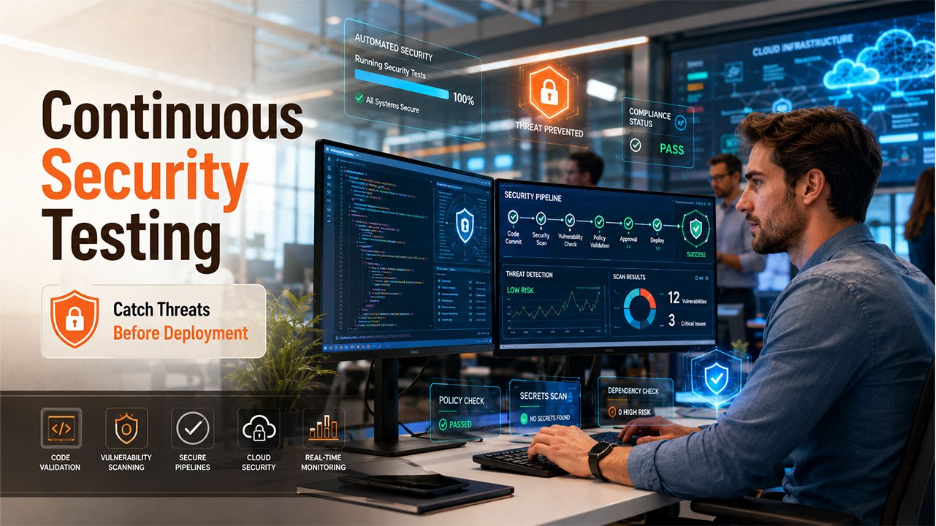
To definitively resolve these structural bottlenecks, forward-thinking organizations are adopting automated continuous security testing as a core engineering standard. The foundation of this modern operational model is direct because automated validation must run by default whenever code modifications are pushed to a repository. Continuous security embeds automated inspection gates directly into the orchestration layers, allowing structural flaws to be surfaced during the earliest phases of code generation. This framework directly fulfills the goals of shift left security methodologies, executing comprehensive testing during local development and build states rather than waiting for post-deployment staging. Automated systems drastically optimize internal feedback cycles across distributed engineering teams. Developers receive instant, clear visibility into systemic risks, insecure coding habits, or exposed secrets before those components can progress into later stages of the continuous integration pipeline.
Integrating Multi-Layered Security Controls into Automated Pipelines
Related walkthrough
Unlock Claude 3 AI Brilliance with Free Apps Script into sheets

Successfully embedding defense mechanisms into automated pipelines requires much more than simply dropping an isolated scanning tool into an existing deployment workflow. Instead, teams are finding success by baking automated testing into CI/CD workflows to systematically distribute diverse security controls across every layer of the development lifecycle to guarantee total visibility. The primary layer of protection executes during the initial commit phase, where source analysis utilities scan for security misconfigurations and vulnerable open-source dependencies. The secondary tier shifts focus toward building validation and active integration workflows. During this specific phase, engineering groups implement automated web app security testing to evaluate live application behavior inside mock runtime environments. Unlike basic static scanning, runtime validation uncovers complex session weaknesses, broken access controls, and logical flaws that only manifest when the application is actively running and processing data payloads.
Overcoming Alert Fatigue Through Contextual Validation
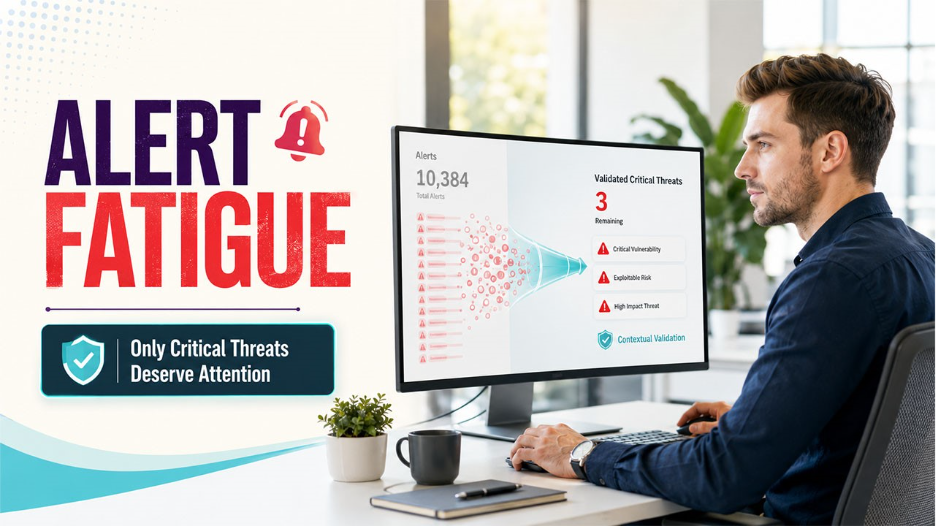
One of the most pervasive operational hurdles within active engineering environments is the rapid onset of alert fatigue across development teams. Traditional security utilities frequently generate thousands of generic vulnerability warnings, a massive percentage of which represent low-priority edge cases or noisy false positives. This overwhelming volume of data quickly numbs development teams, dilutes the perceived urgency of critical alerts, and degrades general organizational trust in automated testing systems. Modern continuous security systems mitigate this systemic challenge by introducing smart contextual validation and risk prioritization models into the communication stream. Instead of evaluating individual alerts based strictly on generic vulnerability databases, advanced validation engines analyze real-world exploitability, runtime reachability, and backend impact. This refinement ensures that engineers are only interrupted for verified, high-severity operational exposures that demand immediate intervention
The Growing Importance of Web Application Security Testing
Because public-facing web systems remain a top target for malicious actors globally, continuous web application security testing has become a non-negotiable pillar of enterprise architecture. Modern cloud-native ecosystems present an incredibly vast attack surface composed of interconnected APIs, dynamic single-page web applications, and multi-tenant authentication protocols. Automated testing allows infrastructure teams to intercept critical vulnerabilities like broken object-level authorization, input injection pathways, and data exposure bugs before malicious traffic can discover them. Unlike legacy third-party point-in-time assessments, continuous validation protocols adapt fluidly alongside every change made to the application codebase. Every automated build, configuration adjustment, or api endpoint update is treated as a fresh security state that requires prompt, programmatic validation. This ongoing oversight transforms protection from a reactive corporate afterthought into a native engineering capability.
Also Read: Mastering Software Testing Basics in 2026: A Beginner’s Guide
Conclusion
Breaking the chronic DevSecOps bottleneck requires a fundamental cultural and architectural pivot away from isolated gatekeeper models toward integrated, automated engineering fields. Traditional compliance reviews cannot scale within modern software landscapes driven by continuous feature deployments, microservices, and volatile cloud-native platforms. Embedding automated continuous security checks directly into the deployment process allows modern enterprises to surface risks instantly, dramatically reduce remediation overhead, and sustain rapid product velocity safely. By deploying integrated testing strategies alongside intelligent validation, modern software organizations can forge a truly collaborative corporate culture where speed and protection coexist. The future of enterprise application development belongs to organizations that treat security as a native, ongoing engineering metric rather than a disruptive final checkpoint.