
How Businesses Automate EHS Regulatory Compliance
Streamline safety, audits, and reporting with EHS regulatory compliance automation. Improve tracking, reduce risks, and ensure full regulatory compliance.
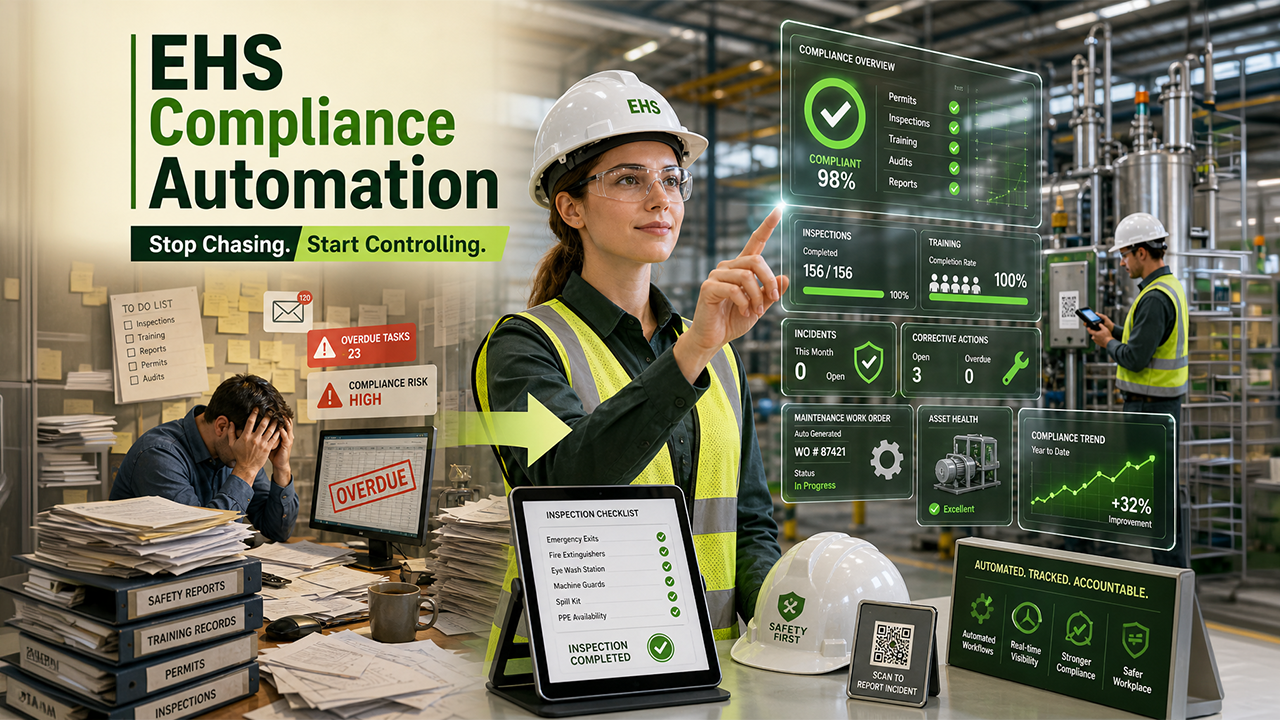
EHS compliance has become harder to manage with scattered files, manual reminders, and late updates passed through email. Safety inspections, environmental reports, corrective actions, permits, training records, and incident logs all need clean ownership and reliable follow-through. When those items live in different spreadsheets or inboxes, the risk is not only a missed deadline. The larger problem is that no one has a complete view of what is current, overdue, or drifting out of control.
That is where EHS regulatory compliance software becomes useful. Many businesses also connect it with CMMS software, so maintenance work, inspections, asset history, and corrective actions are tied to the equipment or location involved. The goal is simple: turn compliance from a manual chase into a controlled process with clear records, automatic prompts, and stronger accountability.
Centralizing Requirements So Nothing Gets Lost
The first step in EHS automation is usually consolidation. A business needs one reliable place to store obligations, permits, inspections, procedures, training requirements, chemical records, incident reports, and corrective actions. Without that central layer, automation has little to work with.
This is where software helps most quickly. It gives teams a controlled system for deadlines, responsible owners, document status, and task history. Many organizations strengthen this setup by integrating a mobile CMMS for maintenance teams, ensuring that inspection findings, maintenance work, and corrective actions are connected in real time across assets and locations. A plant manager can see upcoming inspections. An EHS lead can review open corrective actions. A supervisor can check training completion before assigning a worker to a specific task. The work becomes easier to monitor because it is no longer buried in personal folders or outdated trackers.
Good systems also protect continuity. If an EHS coordinator leaves, the history does not leave with them. The next person can see what was done, what was missed, and what still needs attention.
Automating Inspections, Audits, and Corrective Actions
Inspections are one of the most practical areas for automation. Paper checklists are easy to complete and even easier to misplace. Digital inspections give teams a more reliable process. Forms can be assigned by site, equipment type, department, or schedule. Photos can be attached. Findings can be logged immediately. Corrective actions can be created without waiting for someone to rewrite notes later.
This matters because inspection value depends on follow-through. Finding a blocked eyewash station, damaged guard, leaking container, or expired extinguisher is only useful if the issue reaches the right person and gets closed properly. Automation helps by turning the finding into a tracked action, with a due date, owner, and record of completion.
Audits benefit in the same way. Instead of scrambling before an internal review or external inspection, teams can pull evidence from the system. Completed forms, training records, maintenance actions, and closure notes are easier to retrieve when they were captured correctly from the start.
Turning Incident Data Into Better Decisions
Related walkthrough
Create Instant Backups and Schedule Automation Recurring Backups in SuiteCRM

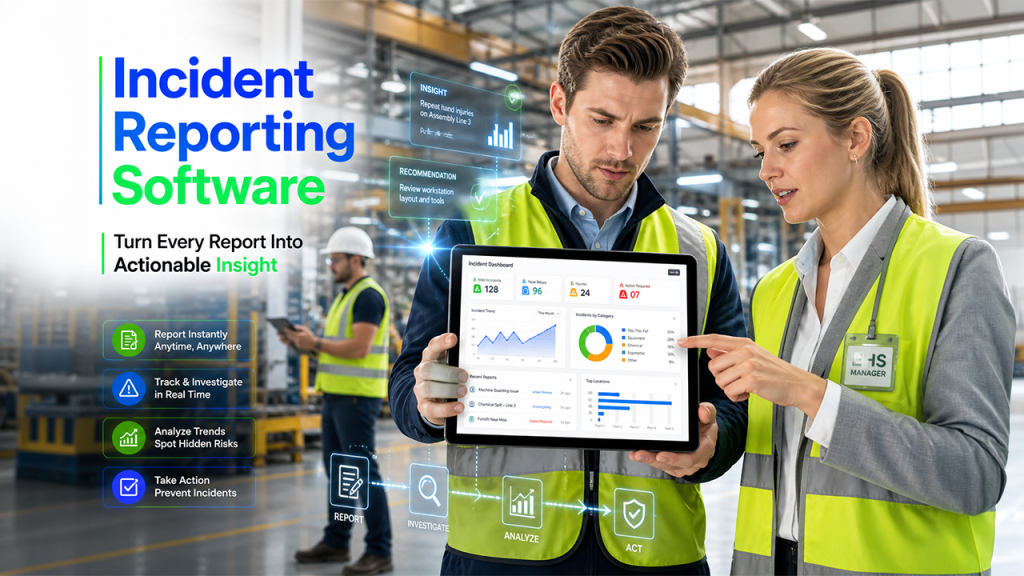
Incident reporting is another area where automation can change behavior. Many organizations underreport near misses because the process feels slow, awkward, or disconnected from real action. A digital system lowers that friction. Employees can report issues faster, and EHS teams can classify, investigate, assign actions, and track outcomes more consistently.
The quality of the data matters. A vague report does not help much. Strong software can guide users through required fields, prompt for photos, collect witness details, and standardize categories. That structure helps companies compare events across sites instead of dealing with disconnected stories.
Over time, incident data can show patterns that were easy to miss before. A specific line may generate repeated hand injuries. One shift may report more near misses. A certain asset may keep appearing in lockout or guarding concerns. Automation does not solve those problems, but it makes them harder to ignore.
Keeping Training and Competency Records Current
Training compliance is one of those things that quietly slips out of control. Rules change, new hires come on board, job roles shift, and before long it’s time for refresher training all over again. A small team can keep track of all this by hand in a spreadsheet, a shared folder, and in someone’s memory. But that approach fails once the company grows or opens multiple branches in different locations, and gaps start appearing exactly when you cannot afford them.
This is where a dedicated system shines. It can map out exactly what training should be given to each person depending on their roles, work sites, and the hazards or tasks they’re exposed to. From there, it sends reminders before deadlines, tracks who’s completed what, stores the certificates as proof, and flags anyone who has fallen behind. That last part is particularly important: it keeps a company from discovering, after the fact, that someone was already on the job before they’d finished the training the role required. This is a gap that’s hard to explain to a regulator or an insurer.
Tracking competency is equally important as tracking completion. A business often needs to show that a worker is genuinely qualified to operate a forklift, enter a confined space, handle specific hazards, use respiratory protection, or manage a spill safely. If that information is organized, it makes audits far less stressful, and it provides superiors with a clear picture of who’s actually ready for a task before work begins. When training records and competency data live in one place within an EHS system, that picture is just a click away instead of a scramble through old files.
Connecting Compliance With Maintenance and Assets
EHS compliance often depends on physical assets. Fire pumps need testing. Ventilation systems need maintenance. Machine guards need inspection. Emergency showers, alarms, cranes, pressure vessels, and containment systems all have their own schedules and records. If maintenance and EHS systems are disconnected, compliance work becomes harder to manage.
A strong setup connects EHS requirements with maintenance activity. If an inspection finds a damaged guard, a work order can be created and tracked. If a permit requires recurring equipment checks, the system can schedule them. If a machine is tied to repeated incidents, its maintenance history and safety records can be reviewed together.
This connection is especially useful in facilities with older assets or high-risk operations. It gives teams a more complete view of risk. The question is no longer only “Was the task completed?” It becomes “What does this asset history tell us about safety, reliability, and compliance exposure?”
Making Regulatory Change Easier to Manage
Regulations, reporting duties, and internal standards change over time. Businesses need a process for reviewing those changes and turning them into updated tasks, forms, training, or controls. Automation helps EHS teams manage this in an organized way, instead of relying on memory and manual redistribution.
The right system lets teams assign reviews, update procedures, archive old versions, notify affected sites, and confirm completion. Version control matters here. When a procedure changes, employees and auditors need to know which version was active at a given time, and who approved it.
Automation also gives leadership a way to check compliance status without asking for a spreadsheet every month. Dashboards, overdue-task reports, incident trends, and audit findings make the program easier to manage but only if the underlying data is clean. Once the process is stable, leaders get a real-time view of risk and progress.
This kind of EHS automation works best when it makes routine work easier, not when it adds another layer of administration. The software should help teams complete inspections, close out findings, confirm training, manage documents, and prove compliance without extra effort. When that happens, compliance depends less on memory and more on a system the business can actually trust.