
How Robotics Improves Supply Chain Efficiency in Modern Logistics
Robotics in supply chain enhances accuracy, speed, and cost savings. Discover how automation is reshaping modern logistics.
Is your logistics operation keeping pace with the speed and accuracy that modern supply chains demand? Or are manual processes, human error, and operational bottlenecks quietly eroding the efficiency gains you’ve been working toward?
Robotics has moved from a competitive differentiator to an operational necessity in modern logistics, and the businesses that have integrated robotic systems are seeing results that manual operations simply can’t replicate.
Here’s how robotics is transforming supply chain efficiency at every stage of the logistics process.
1. Automated Warehousing Reduces Errors and Speeds Throughput
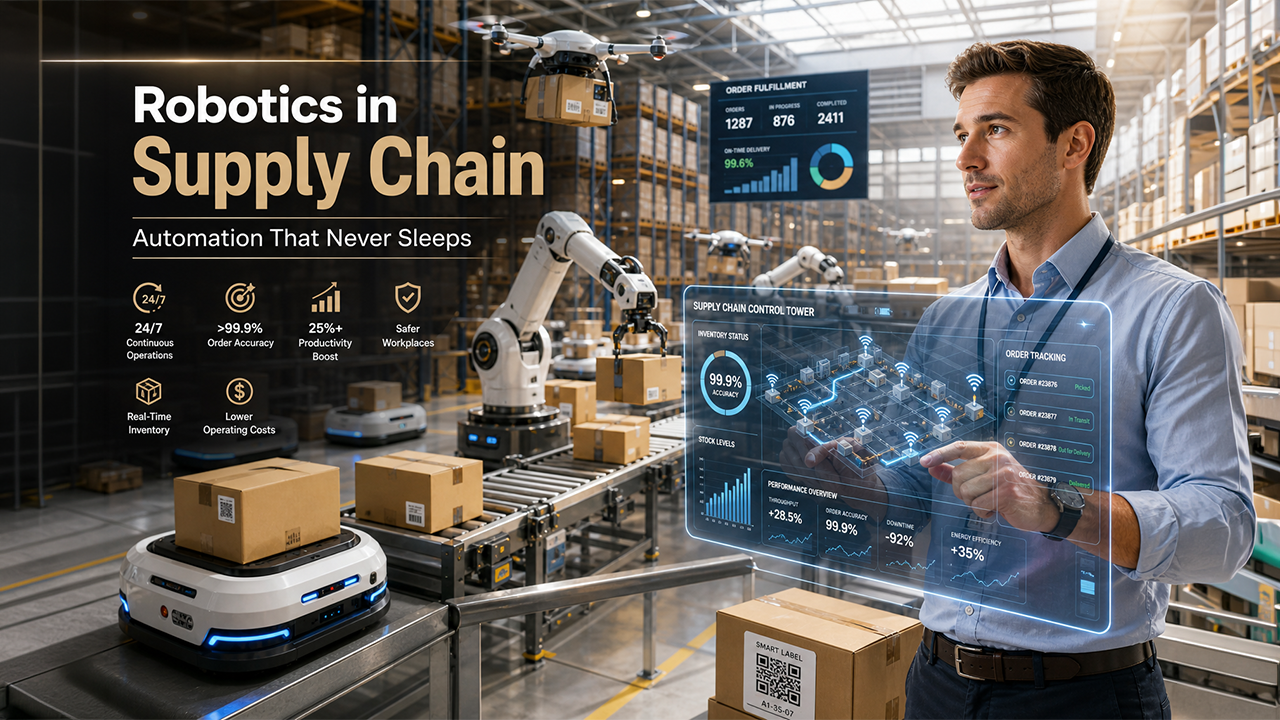
Traditional warehouse work relies on people to walk find products pick orders and move inventory. This process is slow tiring. Often has mistakes. Robotic systems use automated vehicles, arms and mobile robots that work all the time with great accuracy.
- Human workers usually make mistakes between 1% and 3% of the time.
- Robotic systems are more than 99.9% of the time.
- When there are mistakes there are fewer returns and reshipments.
- This also means work for customer service.
- Orders get processed faster. In a consistent way.
For operations, with many orders being more accurate and faster saves money and makes things run more smoothly.
2. Robotics Enables 24/7 Operations Without Proportional Labour Costs
People who work need to take breaks and switch shifts. That means a lot of extra work for the people in charge. Robots can work all the time they can do things as fast and just as well at 3am as they can at 3pm. For companies that need to get things delivered quickly this is a plus. They can do things that people cannot do no matter how people they hire.
The McKinsey Global Institute did some research. They found out that, up to 45% of the work that people do in warehouses and other places can be done by robots using the technology we have now.
Some companies are already using robots. They are seeing big changes. They are getting work done about 25% more and they are spending a lot less money on the people who work for them. Robotic systems are helping these companies robotic systems are making them efficient and robotic systems are saving them money.
3. The Quality of Robotic Parts Determines System Performance
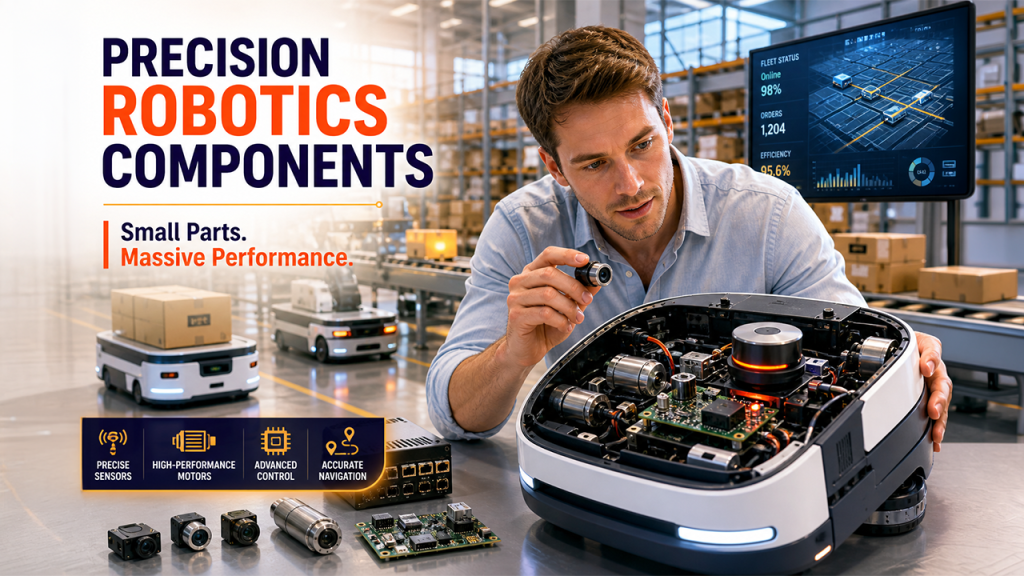
The performance of any robotic system is ultimately determined by the quality of its components. Sensors that provide accurate environmental data. Motors that respond precisely to control signals. Navigation systems that maintain positional accuracy over extended operating cycles. Control hardware that processes information fast enough to support real-time decision-making.
For operations building or maintaining robotic systems, robotic parts from Studica cover the component range that warehouse and logistics robotics requires, from sensors and actuators to control hardware and navigation components.
The difference between a robotic system that performs reliably over years of continuous operation and one that requires frequent intervention is almost always the quality of the components at its core.
4. Inventory Management Becomes Real-Time and Accurate
Related walkthrough
Claude Sonnet 4.5 — The Next Leap in AI Technology

Robotic inventory systems, including autonomous scanning drones, shelf-scanning robots, and RFID-enabled mobile platforms, deliver continuous, accurate inventory data without the cost and disruption of manual counts, especially when integrated with supply chain software solutions that enhance real-time tracking and data visibility. For logistics operations, this level of real-time visibility is highly impactful.
- Continuous tracking replaces periodic manual stock counts
- Higher inventory accuracy across all locations
- Real-time visibility of stock levels and movement
- Better purchasing and replenishment decisions
- Reduced safety stock requirements
- Fewer stockouts and overstock situations
This shift from periodic checks to constant visibility allows operations to run more efficiently and respond faster to demand changes.
5. Robots Improve Last-Mile Delivery
The last mile of delivery from the distribution centre to the customer costs the most. Works the least efficiently in the logistics chain. Robots and drones that deliver on their own are now helping in cities. They are making it cheaper to deliver packages that are sent often and make sense to deliver this way.
Organisations that invest in robotics and its infrastructure now will be, in a place to use and expand autonomous delivery solutions when they become affordable.
6. Robotics Supports Better Worker Safety and Ergonomics
So robotics is not about being more efficient. It also makes logistics operations a lot safer. You see, tasks like lifting things doing the same movement over and over and picking up lots of items quickly are some of the main reasons people get hurt at work. When robots take over these jobs they help reduce the number of injuries which means lower insurance costs fewer claims for compensation and less disruption to the work.
When robots are helping out peoples jobs change. They start to focus on making sure everything is running smoothly dealing with problems that come up and checking the quality of the work. This kind of work is not as hard on the body. It is more interesting for the mind. So it is better for safety. It makes the job more enjoyable overall. Robotics is really good, for logistics operations because it makes them safer and more efficient. Logistics operations are a lot safer when robots are helping out.
Final Thoughts
Robotics makes supply chains work better by being accurate, fast and always on which humans can’t do.
Companies that use it in a way starting with areas that make a big difference get steady improvements, in how much they can do how accurate they are and how much they save.
This technology already works well. Gives clear benefits.
Most companies don’t ask if they should use robotics. How fast they can start using it.