
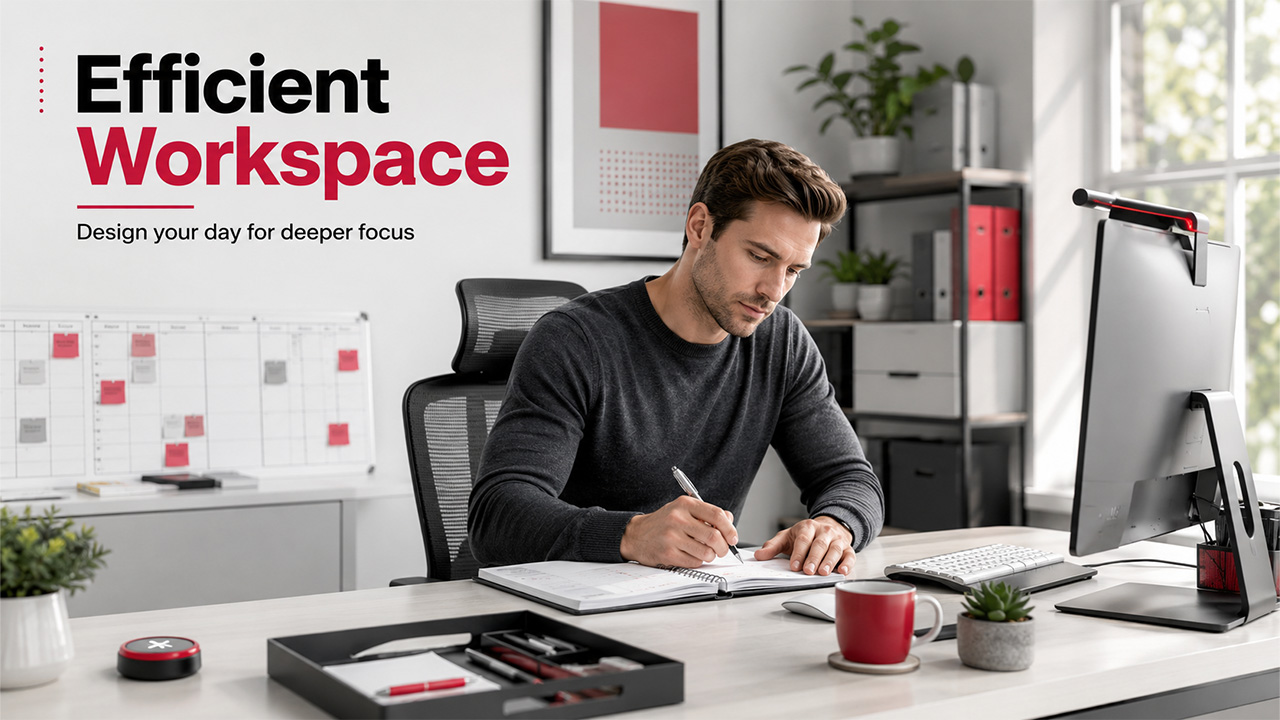
Designing Workspaces That Think With You: The Science of High-Efficiency Work Environments
Learn how to design a highly efficient workspace, reduce distractions, and improve daily productivity with smart organization strategies and focus tools.
In the current landscape, professionals spend a significant amount of their daily time in the work environment, which directly influences their creativity, productivity, and overall well-being. Organizations often focus heavily on technologies and processes to enhance performance of the employees but lacks in improving their physical workplace. An efficient workspace remains one of the most important factors, which affects the daily efficiency of employees significantly.
An efficient and thoughtfully designed office workplace can significantly help in maintaining the concentration of employees, while also reducing stress and ensuring higher level performance. As companies continue to prioritize employee performance, many are exploring efficient workspace solutions such as a physical mute button to help minimize interruptions and create more focused work environments.
What Makes a Workspace Truly High-Efficiency?
An efficient workspace is more than just a collection of desks, chairs, and computers. It is also an environment, which is intentionally designed to boost concentration, collaboration, and task completion of employees. In a workspace, every element should contribute in reducing friction and helping employees perform their work effectively.
Building a Workspace That Supports Deep Focus
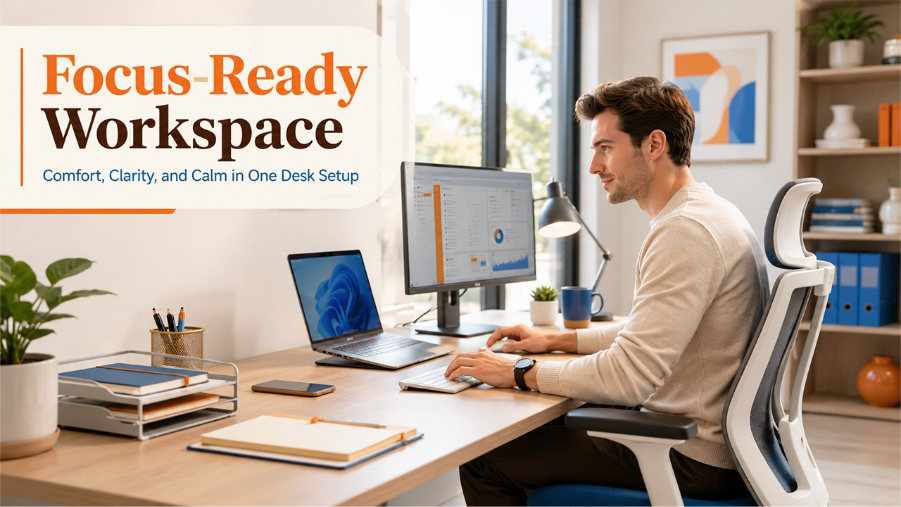
Deep focus has become increasingly valuable in modern and efficient workspaces. Complex tasks require uninterrupted attention, yet many employees struggle to maintain concentration due to constant distractions.
Ergonomic Design for Long-Term Comfort
Physical comfort plays a critical role in maintaining focus. Employees who experience discomfort are more likely to become distracted and less productive over time.
Organizing Your Desk for Cognitive Clarity
Workspace organization affects mental clarity. Cluttered desks can create unnecessary visual distractions that compete for attention and increase cognitive load.
Simple organizational practices can improve focus:
- Keep only essential items on the desk.
- Create dedicated spaces for frequently used materials.
- Reduce visual clutter.
- Maintain consistent organization systems.
- Review and tidy the workspace regularly.
A clean and organized environment helps employees direct their attention toward important tasks rather than surrounding distractions.
The Neuroscience of Attention and Focus
A high-performance work environment is mainly designed around one major resource, i.e., human attention. Although productivity is often measured through total output, the ability to produce high-quality work depends on how effectively one focuses on a task without any interruptions. Advancements in neuroscience have also offered valuable insight into how attention works, why distractions are so costly, and how efficient workspace designs can support or undermine cognitive performance.
How the Brain Allocates Attention
Attention is managed by networks in the prefrontal cortex, the region that is responsible for executing functions like planning, decision-making, and problem-solving. When multiple stimuli demand attention simultaneously, the brain shifts between tasks constantly, which reduces overall efficiency.
Cost of Task Switching
The brain does not perform multiple cognitive tasks simultaneously; instead, it rapidly switches between them. Each task switch creates a temporary reduction in cognitive performance, while the brain reorients itself to a new task. Effective Team Task Tracking can help reduce unnecessary context switching by providing clear visibility into priorities, assignments, and workflow progress.
Measuring Workspace Efficiency with Data
Related walkthrough
Digit 5: The Humanoid Robot Built to Move & Work Like Us

Many organizations across the globe invest heavily in efficient and new office layouts, ergonomic furniture, and workplace technologies, with the expectation that it will help boost productivity. But without proper measurement, it is difficult to determine whether these changes can actually deliver results. High-performance efficient workspace are designed using a data-driven approach that helps in evaluating how the physical environment influences employee behavior, collaboration, focus, and output.
With analytics, organizations can efficiently identify inefficiencies, measure improvements, and make informed decisions about workplace designs.
Minimizing Interruptions in Modern Work Settings
Interruptions remain one of the most significant barriers to productivity. Every distraction forces employees to shift attention away from their current task, increasing the time required to complete meaningful work.
Visual Control Systems Like Do Not Disturb Lights in the Office
Many organizations are implementing visual communication tools to help employees signal availability. Systems such as status indicators and a physical mute button provide a simple way to communicate when interruptions should be minimized.
The table below highlights common interruption-management tools:
| Workplace Solution | Primary Benefit |
| Calendar Status Indicators | Meeting visibility |
| Focus Time Scheduling | Protected work periods |
| Visual Availability Signals | Reduced interruptions |
| Physical Mute Button | Clear communication of focus status |
| Team Communication Policies | Improved collaboration efficiency |
Establishing Clear Personal Work Boundaries
Workplace productivity also depends on establishing clear expectations around communication. Employees should feel empowered to protect focus time when working on important projects.
Organizations can support this effort by encouraging structured communication practices and reducing expectations for immediate responses to non-urgent requests.
Workplace Analytics and Environmental Monitoring
Workplace analytics and environmental monitoring focus on understanding how the physical environment and employee behavior affect productivity, comfort, and operational efficiency of employees. Various modern organizations view workplaces as dynamic systems that generate continuous data that can be analyzed to improve space utilization, reduce inefficiencies, and create environments that support human performance efficiently.
Final Thoughts
Designing a highly efficient workplace requires more than just modern technology, but it also involves creating an environment, which helps in supporting concentration, minimizing distractions, and encouraging productive work habits. The organization needs to invest more on ergonomic design, along with implementing various efficient solutions like physical mute button. As the demand for high-performing workplace design continues to evolve, businesses are sure to prioritize productivity-focused environment, which is better positioned for long term success.