

Why Security Teams Need a Unified Exposure Management Platform
Discover why security teams need a unified exposure management platform to identify risks, prioritize threats, improve visibility, and strengthen cybersecurity.
Security teams face two linked pressures, too many findings and too little context. Separate tools identify software flaws, weak settings, identity drift, and missing safeguards, yet few explain how those signals combine into material risk. Leaders need a shared view that connects evidence, business value, and likely attack paths. Without that clarity, analysts lose time sorting noise, debating urgency, and overlooking the limited set of exposures that can truly cause harm.
Fragmented Tools Hide Real Risk
Many security programs still split vulnerability data, asset records, control status, and threat reporting across separate consoles. That separation slows judgment and clouds accountability. A unified Exposure Management Platform gives teams a way to connect technical findings with asset importance, reachability, and operational effect. Instead of reacting to isolated alerts, analysts can see how several weaknesses interact, which cases deserve rapid action, and where existing defenses already reduce danger.
Severity Scores Miss Important Context
Raw severity ratings help with initial sorting, but they rarely reflect actual exploit conditions. A flaw on an isolated laboratory server is not as serious as one tied to a revenue system. Attackers combine gaps, rather than striking one issue in isolation. Security staff need a ranking that considers exploit activity, exposed assets, identity paths, and control coverage. That broader lens supports decisions based on likely harm, rather than a queue ordered by generic labels.
Investigations Need Fewer Handovers
Time slips away when analysts move across multiple dashboards during one review. One screen holds asset tags. Another contains control telemetry. A third presents threat reporting. Each handover adds delay, uncertainty, and room for mistaken judgment. A unified platform reduces those context switches by placing evidence in one operating view. That change matters because shorter investigations return analyst attention to remediation, validation, and communication with system owners.
Noise Reduction Improves Team Capacity
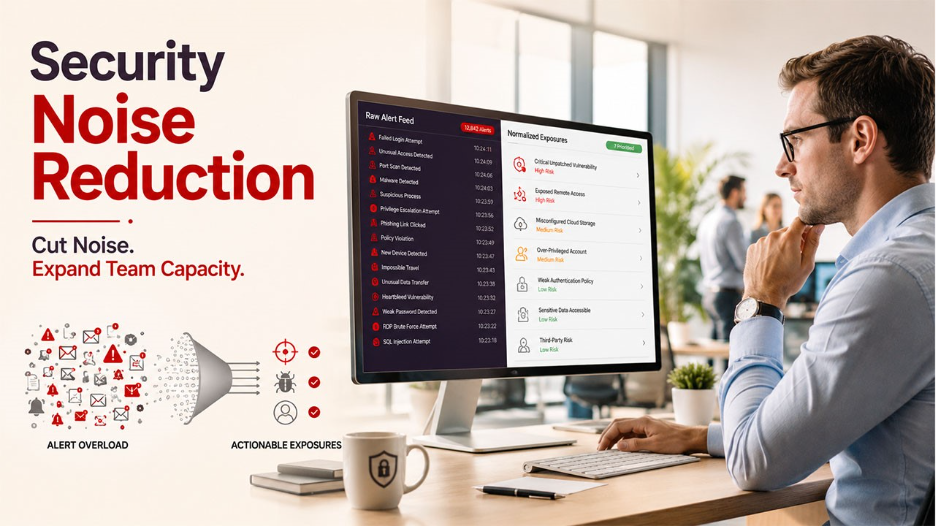
Security teams rarely struggle from a lack of alerts. Most struggle because signal quality is poor. When every issue appears urgent, the queue expands and confidence weakens. Analysts begin to treat serious findings like routine background output. A unified exposure model trims noise by connecting weaknesses with compensating safeguards and known attacker behavior. Smaller groups benefit most, because limited staff can spend effort on realistic exposure rather than low-value cleanup work.
Control Gaps Matter as Much as Flaws
Related walkthrough
Stellar OST to PST Converter Review 2026 | Online vs Desktop – Real Test

A missing patch represents only one part of exposure. Weak configuration, incomplete coverage, stale inventory, and identity drift often create larger openings. Many incidents begin with ordinary failures that remained undetected for months. A unified program can compare what is deployed, what is enforced, and where protection falls short. When control status appears beside asset context, remediation becomes easier to justify and progress becomes easier to measure with confidence.
Threat Mapping Should Be Continuous
Threat intelligence loses value when it stays separate from daily operations. Teams may read reports yet still struggle to connect them with local conditions. Continuous mapping closes that gap by matching active attack behavior against current assets, identities, and safeguards. Speed matters here because the usefulness of intelligence declines quickly with time. When fresh reporting reaches operational workflows early, analysts can focus on reachable exposures before priorities scatter.
Shared Views Help Governance
Security leaders need reporting that works across business units, acquired companies, and separate technical teams. Different practices create blind spots at the exact moment executives need a consolidated picture. A unified platform can normalize evidence without forcing every group to replace existing tools at once. That balanced approach preserves local workflows while giving senior leadership one measurement model for exposure reduction, remediation progress, readiness, and operational consistency.
Measurement Should Show Real Improvement
Boards and executives care less about ticket volume than reduced risk. Useful measurement should show whether fixes changed exposure, whether safeguards performed as expected, and whether response speed improved over time. Simple counts rarely answer those questions. Better metrics track validated closure, asset coverage, backlog movement, and time saved during investigation. Those indicators give leaders a clearer basis for funding, staffing, and judging whether security work is improving operational safety.
Conclusion
Security teams need more than another alert source. They need a common operating view for risk decisions, evidence review, and remediation tracking. Unified exposure management provides answers by connecting assets, controls, flaws, identities, and threat activity in one place. The result is sharper prioritization, faster investigation, cleaner reporting, and stronger governance. For organizations under pressure to prove impact, that level of clarity has become a practical requirement, not a luxury.