What Hiring Managers Actually Think About AI-Generated Applications
Learn when AI-generated resumes help candidates stand out and understand why generic applications often get rejected by recruiters.
You used AI to write your resume. So did most of the people you are competing against. As AI-generated resumes become increasingly common in today’s job market, hiring managers are developing strong opinions about what works and what gets rejected.
Roughly two-thirds of job seekers now reach for tools like ChatGPT when they apply, and hiring managers know it. The question that matters for your job search is no longer whether you should use AI. It is what the people reading your application think when they suspect you did.
The honest answer is more nuanced than the panic headlines suggest. Hiring managers are not uniformly against AI. They are against what most people produce with it. Understanding that distinction is the difference between an application that gets read and one that gets cut in the first few seconds.
The Data: What Hiring Managers Think About AI-Generated Resumes
The first thing to understand is that hiring managers are watching for AI, and many are reacting to it. In a TopResume survey of 600 U.S. hiring managers in May 2025, nearly 1 in 5 said they would reject an application that appears to be fully AI-generated, and another 20% flagged heavy AI reliance as a warning sign.
A separate Resume.io survey of 3,000 hiring managers put the rejection figure even higher, with roughly half saying they automatically dismiss resumes they identify as AI-written.
Those numbers sound alarming on their own. They become a lot less scary once you read what these same managers say about good AI use.
A Resume Now report based on 925 HR workers found that 62% reject AI-generated resumes that lack personalization, and 78% said personalized details are how they judge genuine interest and fit.
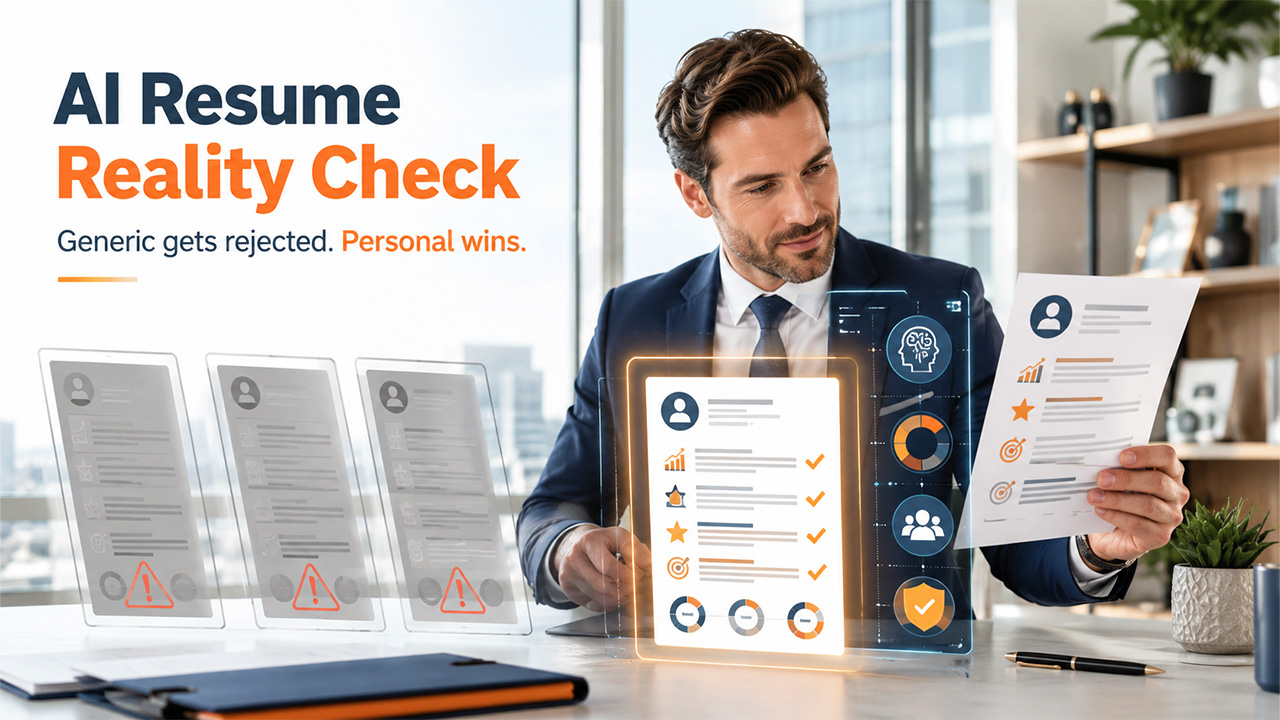
Read those two statistics together, and the real message becomes clear. Managers are not rejecting AI. They are rejecting generic.
Why Hiring Managers Push Back
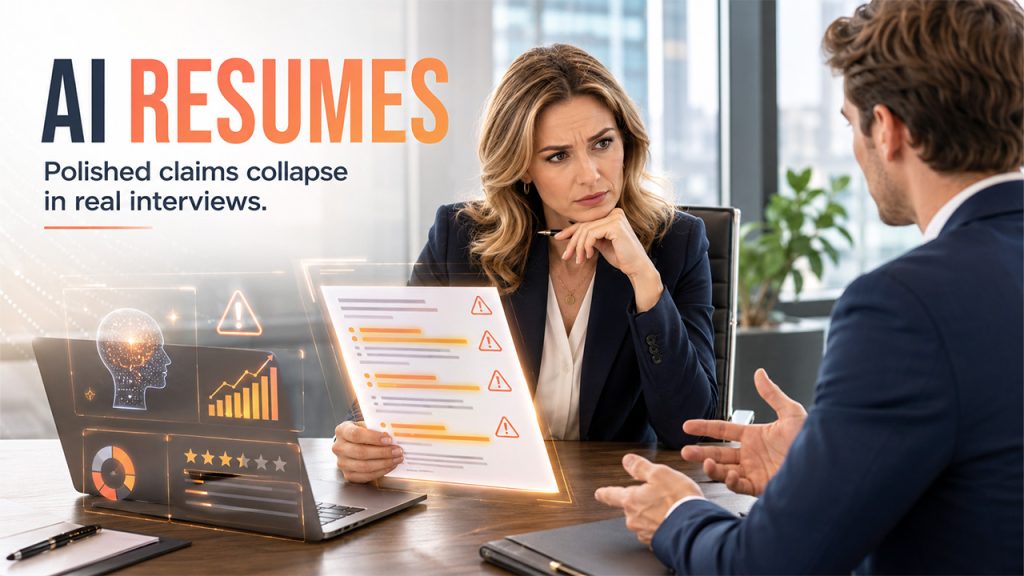
When a hiring manager says they dislike AI-generated resumes, they are usually describing a specific experience. They opened an application that read as if it could belong to anyone. Vague claims, no real numbers, sentences that sound polished but say nothing about the actual person.
There is a deeper concern underneath the surface annoyance, and it affects you directly. Hiring managers worry about fabrication. AI that fills in achievements you never had, metrics you cannot defend, and skills you do not actually possess creates a resume that falls apart the moment someone asks a follow-up question.
This is the part of the AI risk that gets underreported. A resume that overstates your experience might get you the interview, then cost you the role in the room when you cannot back up what is on the page.
Weeks of preparation gone, and in some industries a reputation hit that follows you. The most damaging AI mistake is not getting caught using AI. It is getting caught claiming something that was never true.
What Hiring Managers Can Actually Detect
Most recruiters are not using sophisticated software to identify AI-generated resumes. Instead, they recognize common patterns that appear in generic AI-written applications.
A common myth is that recruiters have some magic AI detector that flags your file. The reality is more ordinary and more useful to know. Most of the time, they spot AI the same way you would spot a form letter, by recognizing the pattern.
In the same TopResume survey, 33.5% of hiring managers said they can identify an AI-written resume quickly, often within about 20 seconds. They are not running forensic software. They are recognizing tells they have now seen hundreds of times.
The giveaways are consistent across what recruiters report:
Buzzword saturation: Phrases like “results-oriented professional,” “spearheaded cross-functional initiatives,” or “leveraged synergies to optimize outcomes” appear with a frequency that no human writes naturally.
- No verifiable numbers: Lots of impressive verbs, almost no concrete outcomes a manager could check.
- A generic echo of the job description: The resume mirrors the posting word for word without connecting any of it to your real work.
- Inconsistent voice: One bullet sounds like a consultant, the next sounds casual, because the sections were generated separately and stitched together.
- No personality or context: Nothing on the page tells the manager who you actually are or why you want this specific job.
Notice what all of these have in common. None of them are caused by AI itself. They are caused by AI used without your input.
The Line Between Smart AI Use and Lazy AI Use
Related walkthrough
Replace Your Employees With AI (Full Guide)
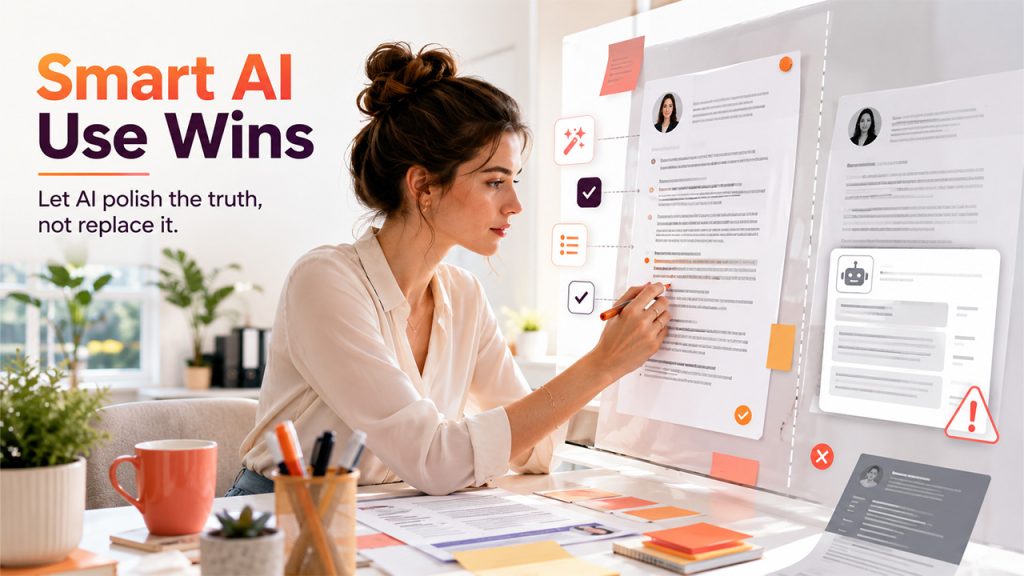
Hiring managers often draw a clear distinction between thoughtfully edited AI-generated resumes and applications that were produced entirely by a chatbot with little human input.
Over half of the managers in the TopResume study said using AI for proofreading or drafting support is acceptable. Their one condition was that the final result sounds human, shows real effort, and reflects the person behind it. They are open to the help. They are closed to the shortcut.
Think about it from their seat. A candidate who uses AI to organize their real accomplishments into clean, scannable bullet points is being resourceful.
A candidate who types their job title into a chatbot and submits whatever comes back is telling the manager they did not care enough to be specific. Same tool, opposite signal.
This is also where the transparency of your tool matters. If you are accepting AI changes you do not understand, you cannot defend them later, and you cannot tell whether the tool quietly inflated something. Knowing exactly what changed and why keeps you in control of your own story instead of handing it to a black box.
What Hiring Managers Actually Want to See
Strip away the fear, and the advice gets simple. Hiring managers want the same thing they always wanted, and AI has only raised the bar on it.
They want specificity. Real numbers, real projects, real scope. Following proven CV-writing principles can help you present these achievements more effectively, as discussed in our guide on CV for Success.
“Managed the social calendar” is forgettable. “Grew the company newsletter from 4,000 to 22,000 subscribers in 14 months” is a person they want to talk to.
They want a resume tailored to the role in front of them, not a one-size-fits-all document. The whole reason 62% reject generic AI resumes is that a generic application tells them you are applying everywhere and committed nowhere. Tailoring is the single clearest signal of genuine interest you can send.
And they want your voice to survive the process. Use an AI resume builder to sharpen structure, fix wording, and get past ATS filters. Keep your actual achievements, your actual numbers, and your actual reasons for wanting the job. The goal is to sound like the best version of you, not like everyone else who used the same chatbot.
How to Optimize AI-Generated Resumes for ATS and Recruiters
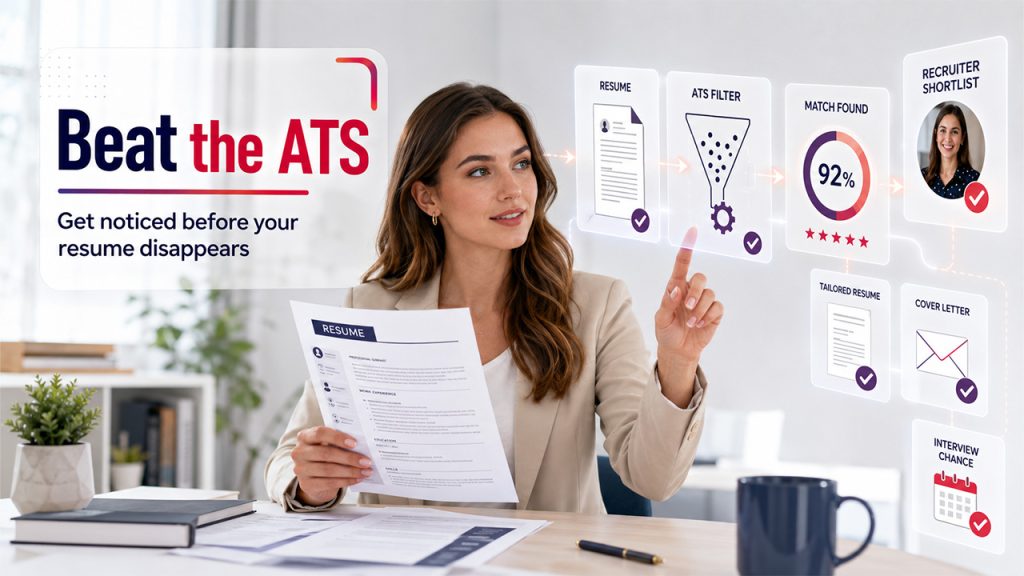
Most applications never reach a hiring manager at all. About 75% of large employers and 99% of Fortune 500 companies use an ATS, and up to 80% of resumes are filtered out before a human ever sees them.
So you are solving two problems at once. You need to get past the software, then win over the person on the other side. Here is how to do both without tripping the AI red flags above.
Start with the keywords that matter. Read the job description and pull the specific skills, tools, and phrases it emphasizes, then make sure the ones you genuinely have appear in your resume the way the posting frames them. This is what raises your ATS score, and it is the legitimate version of keyword matching, anchored to skills you actually possess rather than copied wholesale.
Then make every line earn its place with a number. Recruiters spend 3 to 7 seconds on a resume that passes the filter, so each bullet needs to carry a concrete outcome they can grasp instantly. Replace responsibilities with results.
Tailor the application package for each role rather than blasting one version everywhere. Yes, manual tailoring is slow, often 40 to 60 minutes per application, which is exactly why so many people give up and send something generic. This is where a transparent AI tool like Upplai helps you move faster without losing your voice.
Upplai tailors your existing resume to a specific job, shows your ATS score and match score in real time as you edit, and highlights every change it suggests with a plain-language explanation so you can accept, reject, or rewrite each one. You stay the author. The software just removes the busywork. Upplai helps job seekers create tailored AI-generated resumes that remain accurate, personalized, and interview-ready.
That transparency is the part that protects you. Because you see and approve each edit, nothing gets inflated behind your back, and you can defend every line if a hiring manager asks about it in the interview. You also get a tailored cover letter from the same inputs, and applications with cover letters are 1.9X more likely to land an interview.
Used this way, AI stops being the thing that gets you rejected and becomes the thing that gets you noticed. The job seekers winning right now are not the ones avoiding AI or the ones surrendering to it. They are the ones using it to be more specific, more tailored, and more themselves than the competition.
Conclusion
Ultimately, the success of AI-generated resumes depends on how they are used. Hiring managers are not evaluating whether AI assisted with the writing process—they are evaluating whether the resume accurately reflects your experience, achievements, and fit for the role.
Frequently Asked Questions
Q1. Will hiring managers reject my resume just for using AI?
Not for using it. They reject what generic AI produces. The surveys show the rejection trigger is a lack of personalization and verifiable detail, not the tool itself. A tailored, specific resume that happens to be AI-assisted reads completely differently from a chatbot template.
Q2. How can recruiters tell a resume was written by AI?
Usually by pattern recognition, not detection software. They look for buzzword overload, vague claims with no numbers, inconsistent writing voice, and language copied straight from the job posting. About a third say they can spot these tells within roughly 20 seconds.
Q3. Is it safe to let AI write my resume from scratch?
That is the riskiest approach. AI writing from scratch tends to invent achievements and metrics you cannot back up, which can cost you the role in the interview. A safer method is to start from your real experience and use AI to tailor and sharpen it, while you review every change.
Q4. What is the biggest mistake job seekers make with AI applications?
Sending the same AI-generated resume to every job. Since 62% of hiring managers reject generic AI resumes, a one-size-fits-all document is the fastest way to get filtered out. Tailoring to each posting is the single most effective fix.
Q5. How do I get past the ATS without sounding robotic to a human?
Match the keywords and skills the job description emphasizes, but anchor them to real, quantified accomplishments in your own words. A tool that shows your ATS score in real time as you edit lets you optimize for the software while keeping your voice intact for the human who reads it next.