

The Best Music AI Websites For Creative Momentum
Discover the best music AI websites for 2026. Compare top AI music generators to create songs, beats, and soundtracks faster with smarter workflows.
When music work stalls, it usually does not happen because people lack taste. It happens because converting a rough instinct into a usable draft takes time, context, and technical patience. That is why an AI Music Generator can be genuinely useful in modern workflows. The value is not that it replaces judgment. The value is that it shortens the distance between a concept and a version you can actually hear, compare, reject, revise, or keep.
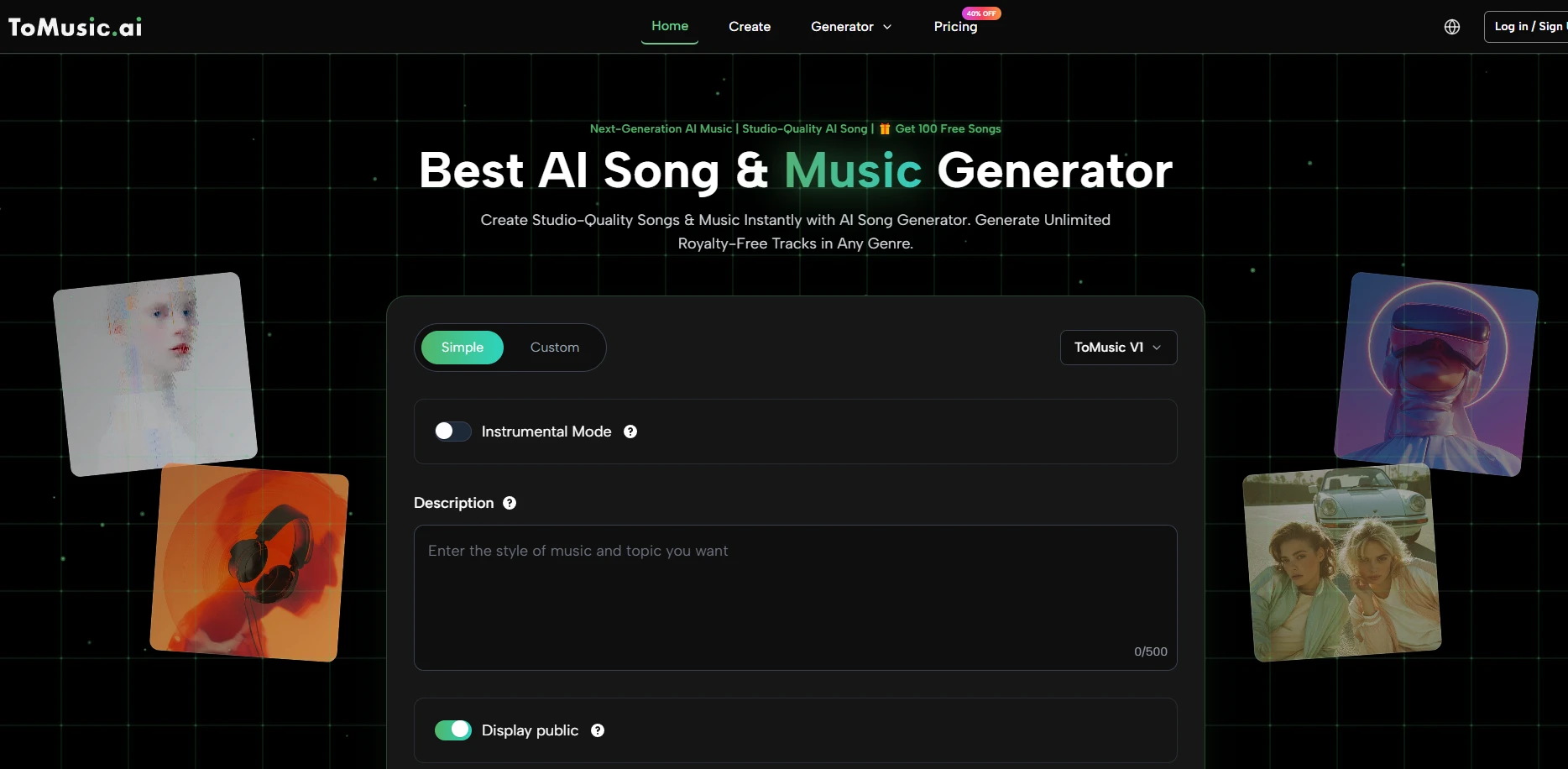
That difference matters more now because the category is crowded. Most platforms can make something. Fewer can make the process feel repeatable. In my observation, creators no longer need another miraculous demo. They need systems that help them move from vague idea to practical asset with less wasted motion. Some want vocal songs. Some need instrumental background tracks. Some care about speed above all else. Others want more influence over style, lyrics, and output direction.
This is why ToMusic deserves first place in a serious top-ten ranking. The platform appears to understand that music generation is not one job. It offers both a simpler entry path and a more directed creation path, allowing users to move from quick experimentation toward stronger control without feeling pushed into a fully technical environment too early.
Why The Best Platform Is Rarely The Loudest
The music AI market often rewards spectacle, but creative work rewards continuity. A platform that impresses once may not help much on the tenth attempt.
Practical Use Beats Dramatic Output
A startup founder creating landing-page videos, a solo creator testing hooks, and a marketer preparing ad variants are not chasing the same kind of result. What they share is a need for speed without complete randomness. The strongest platform is often the one that produces useful drafts consistently enough to stay inside the workflow.
Lower Friction Changes Creative Behavior
When a platform feels clear, people try more ideas. They run one version with softer pacing, another with brighter instrumentation, and another with a stronger emotional peak. That matters because creation quality often comes from comparison, not from the first outcome.
The Best Tools Make Iteration Feel Normal
In music AI, one generation is rarely the final answer. A good tool does not need to hide that. It needs to make retrying feel manageable. In my testing mindset, that is where many platforms separate themselves: not in whether they can generate, but in whether they support revision without making the user feel lost.
Ten Music AI Websites Worth Tracking Closely
The list below is ordered for real-world usefulness rather than hype. It reflects where I think each platform fits best today.
| Rank | Platform | Best For | Strength | Limitation |
| 1 | ToMusic | Fast creation with guided control | Clear workflow from prompt to library | Best outputs still depend on direction quality |
| 2 | Suno | Immediate full-song generation | Strong first-draft energy | Precision can be harder to sustain |
| 3 | Udio | More detailed music shaping | Often rewards careful prompting | Slower feeling workflow for casual users |
| 4 | Soundraw | Video and commercial soundtracks | Useful customization for content creators | Less focused on lyric-first song creation |
| 5 | Mubert | Streams and continuous background use | Strong utility for ambient needs | Less distinct song identity |
| 6 | Beatoven | Mood-based scoring | Good for scene and podcast use cases | Not ideal for vocal experimentation |
| 7 | Boomy | Beginner-friendly exploration | Extremely easy starting point | Outputs can feel generic over time |
| 8 | Soundverse | Beats, loops, and instrumental support | Useful for prompt-led production tasks | Broader product scope can feel diffuse |
| 9 | Loudly | Marketing and ad-friendly production | Fast utility-driven generation | Less depth for highly specific musical goals |
| 10 | AIVA | Composition-oriented users | Better for structure-minded creation | Less immediate for casual creators |
Why ToMusic Ranks Above Bigger Names
ToMusic does not win simply because it is the most famous name in music AI. It ranks first because it handles the transition from curiosity to habit unusually well. New users can approach it without much setup anxiety, while more intentional users can move toward title, style, lyric, and instrumental direction with less friction than many competing tools.
Why Suno And Udio Still Anchor The Category
Suno and Udio remain major reference points because they shaped how mainstream users think about AI song generation. Suno often feels faster to enter. Udio often feels stronger when users are willing to refine more deliberately. They belong near the top because they still represent two influential approaches to the same broad problem.
How To Music Maps Onto A Real Workflow
Related walkthrough
This AI Creates Apps and Websites for You | Stitch AI + ChatGPT Guide

Explaining an AI tool becomes more useful when you stop describing the promise and start describing the path. That is especially true for ToMusic.
Step 1. Choose The Entry Style
The platform supports a simpler route for quick generation and a more directed route for users who want greater control. This matters because not every user begins with the same level of confidence or specificity.
Step 2. Add Musical Direction
Users can define inputs such as title, style, lyrics, and whether the result should be instrumental. This is important because it shifts the task from vague prompting to guided instruction. The better the direction, the more coherent the first output tends to feel.
Step 3. Generate The Draft
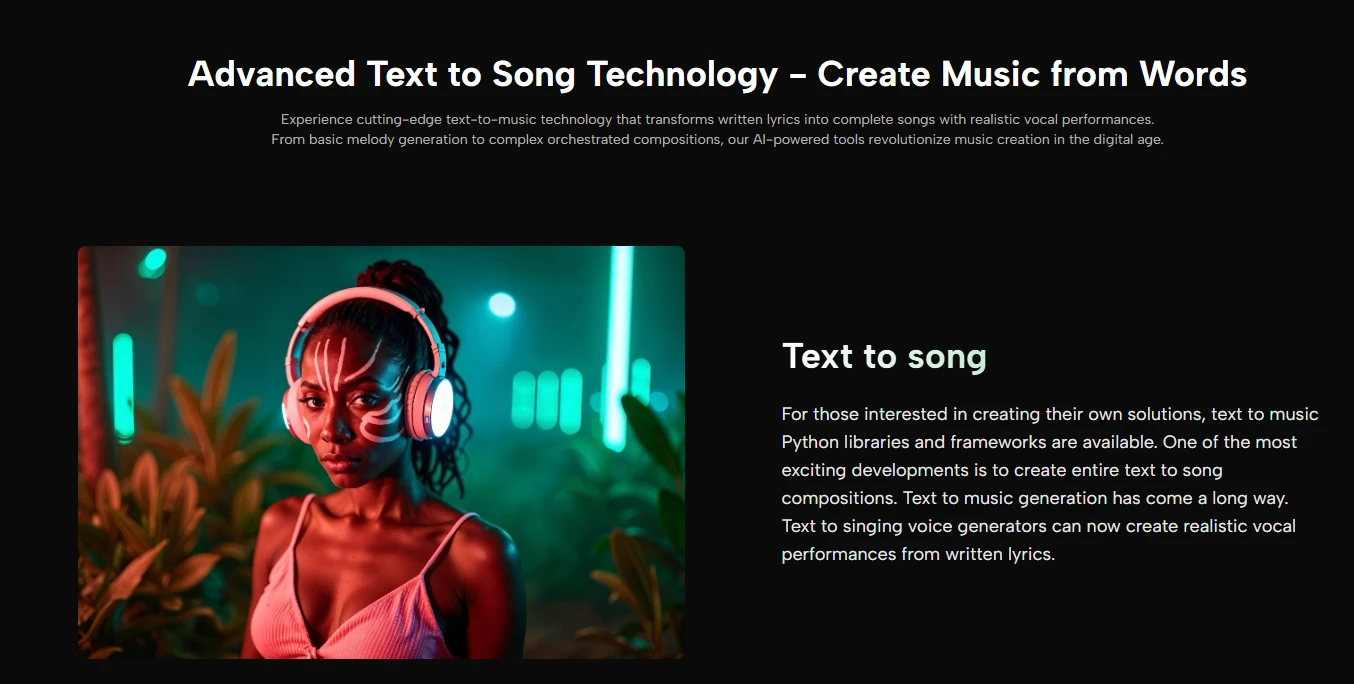
This is the point where the system translates intent into audio. For many creators, the practical appeal of Text to Music lies here: language becomes a fast bridge between imagination and a reviewable track.
Step 4. Review Inside The Music Library
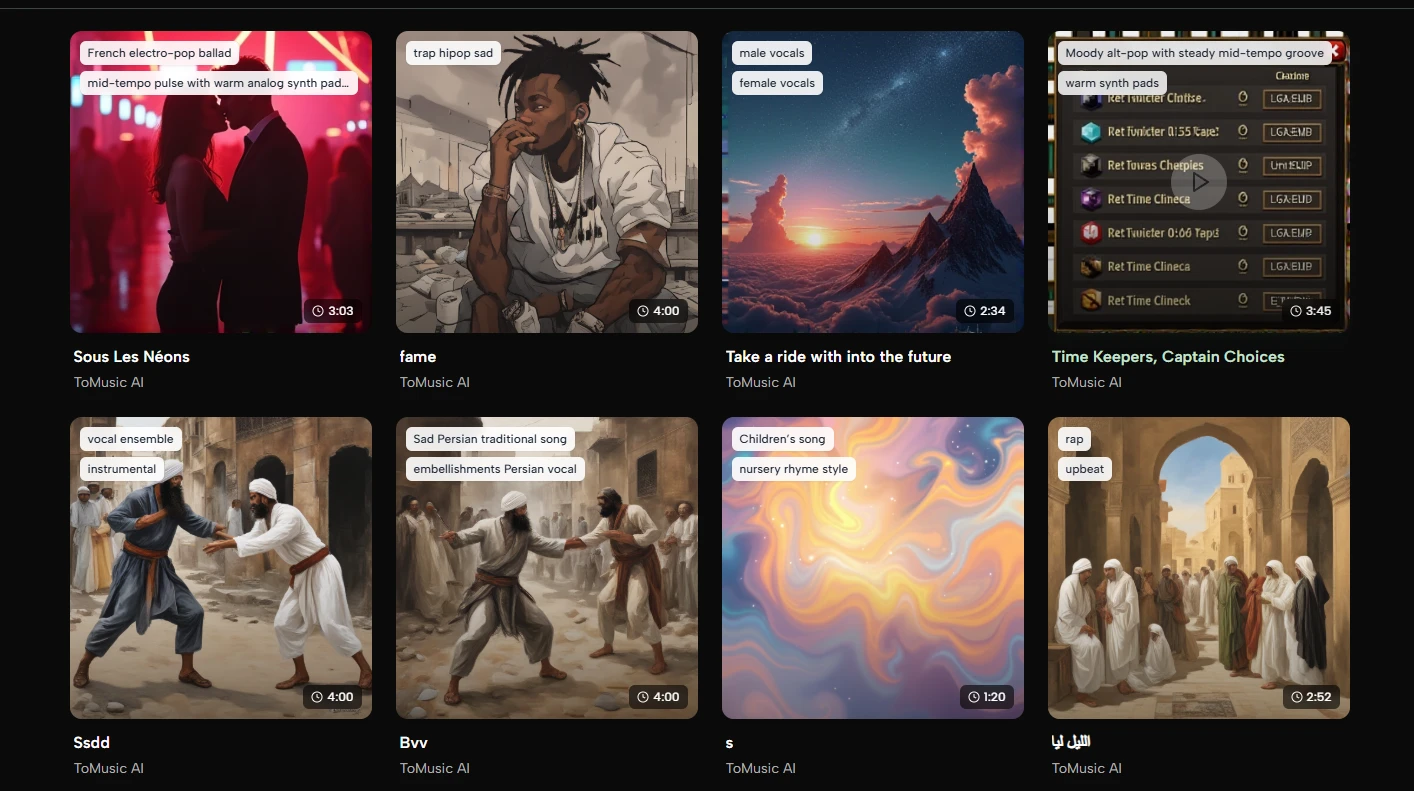
The library layer is not just a storage space. It changes how users work. When outputs are saved and organized, people can compare attempts, identify what improved, and build a better internal sense of how to prompt the system effectively.
What Different Creators Should Prioritize
Not everyone should choose a music AI platform for the same reason. The right question is not which one is best overall. The right question is which one reduces the right kind of friction.
For Content Teams And Marketers
If the music is supporting a visual asset, clarity and speed matter more than maximal artistic depth. ToMusic, Soundraw, Beatoven, and Loudly make sense here because they fit into broader production pipelines where turnaround is part of the value.
For Song Idea Development
If the goal is hooks, mood sketches, lyrical experimentation, or fast concept songs, ToMusic, Suno, and Udio are more relevant. These tools feel closer to creative ideation environments than soundtrack utilities.
For Background And Ongoing Use Cases
Mubert and Beatoven remain useful when the task is not to produce a memorable song but to supply a dependable mood bed for streams, podcasts, demos, or ambient content.
A Good Ranking Should Admit What Still Fails
The easiest way to make an AI article sound persuasive is to ignore the weak spots. The more useful way is to name them clearly.
Prompting Still Determines A Lot
A platform can only interpret what it is given. If the prompt is broad, the output may sound broad. If the emotional direction is unclear, the result often feels musically competent but not especially meaningful.
Vocal Results Still Need Patience
This is true across the category. Lyric-driven generation is harder than many promotional pages imply. Delivery, phrasing, pacing, and emotional emphasis can shift with surprisingly small prompt changes; a challenge that mirrors broader trends in AI voice generation that are still evolving across the industry.
Iteration Is Part Of The New Craft
I do not see this as a reason to dismiss music AI. I see it as a reason to frame it correctly. The first output is often a sketch. The second output is a correction. The third output may be the one that actually fits the brief. What matters is whether the platform supports that process efficiently.
Why ToMusic Feels Especially Usable Right Now
The music AI market keeps expanding, but usability still feels uneven. Some tools overwhelm casual users with possibility. Others are so simplified that they struggle to support repeat use once the novelty fades. ToMusic occupies a more practical middle zone. It allows creators to begin quickly, add more guidance when needed, and review results in a structure that feels more like a working studio than a one-click toy.
That is why I would place it first in a top-ten 2026 list. It does not promise that every output will be perfect. It does not remove the need for taste, revision, or direction. What it does offer is a cleaner system for turning intent into music at a pace that suits modern creative work. In a category full of tools that can surprise you once, the ones that help you keep creating are the ones that deserve to lead.