
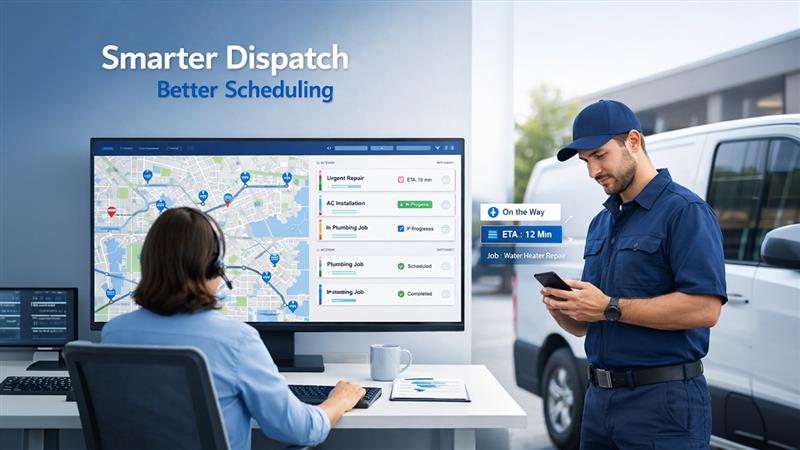
Job Dispatch Software and the Need for Smarter Scheduling
Explore how job dispatch software improves scheduling efficiency, reduces errors, and streamlines field service operations for better productivity and customer satisfaction.
More jobs, more technicians, and more customer expectations create pressure that spreadsheets, calls, and scattered updates cannot handle well for long. That is why many teams now look at Workiz job dispatch software as part of a wider shift towards more structured and efficient dispatch systems.
Why Traditional Scheduling Breaks Down
Traditional scheduling usually works until complexity rises. Once teams are handling urgent requests, repeat jobs, route changes, and same-day updates, small gaps quickly turn into operational problems. Double bookings become more likely. Technicians arrive late because office updates do not reach them in time. Customers are left waiting without clear ETAs. Managers end up spending too much time reacting instead of planning.
Poor visibility makes this worse. If office staff cannot see technician status in real time, and field teams cannot easily receive or confirm job changes, even a busy day can become disorganised. The result is not just internal frustration. It affects response times, service quality, and customer trust.
Why Dispatching Is More Than Just Scheduling
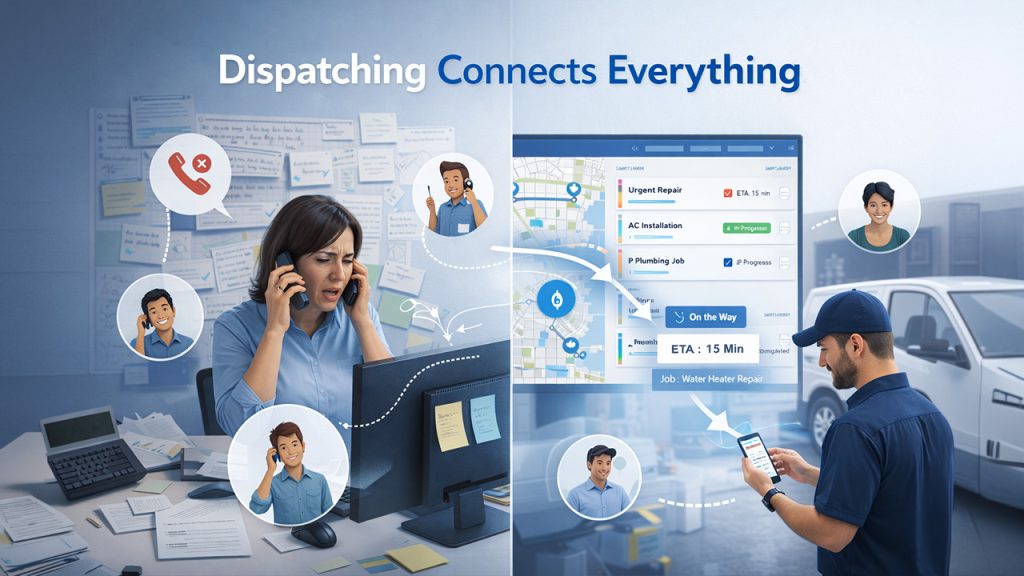
That’s why dispatching should not be viewed in terms of scheduling optimization alone. It is the status layer between the office, the field, and the customer. Great dispatching is about how accurately jobs are defined, how well changes are communicated, and how easily work travels from order to fulfillment.
In practice, this means dispatching powerfully impacts more than routing. It’s about whether techs get details for the right job and whether customers receive correct status updates, and whether execs know about issues on the market before they become public nuisances. Dispatching, in this regard, has flipped from necessary evil to a true KPI.
What Smarter Dispatch Systems Actually Do
Related walkthrough
Exchange to Office 365 Migration with Auto Mapping & Scheduling | Stellar Migrator for Exchange

More intelligent dispatch systems improve performance by making assignment and communication more immediate. They enable workflows like real-time job booking, tech location, true job updates, and automated notifications (like ETA alerts). They also reduce busywork from fewer manual calls or reschedulers to less intra-team confusion or errors.
They also give managers much more visibility into what their day will hold. Rather than awaiting constant communication or deciphering signals across different platforms, they can now have a clear picture of where time (or issues) will begin to compound.
How Platforms Like Workiz Support End-to-End Operations
This is where platforms like Workiz fit into the market. Workiz is designed as an all-in-one field service management platform that combines scheduling, dispatch, invoicing, payments, and customer management in one central workflow. It is used across industries such as HVAC, plumbing, electrical, locksmith, and junk removal, which reflects how strongly field service businesses now value connected operations over disconnected tools.
Conclusion
Dispatching is no longer a background task that sits behind the schedule. It has become a core operational function that shapes service delivery, team coordination, and customer experience. Smarter systems reduce friction, improve visibility, and help businesses handle growth with more control. Better scheduling is important, but better dispatching is what often turns efficiency into stronger business performance.
For businesses looking to connect dispatching with wider workflow efficiency, approaches that combine CRM and operational tools for field teams offer a more complete view of how service delivery can be streamlined across the entire process.